U.S. Intelligence vs White House: Washington Divided As Intel Officials Offer Conflicting Iran War Claims
India Today
At a crucial Senate hearing, US intelligence contradictions and careful wordplay expose deep divisions, raising serious doubts over the White House's justification for the Iran war
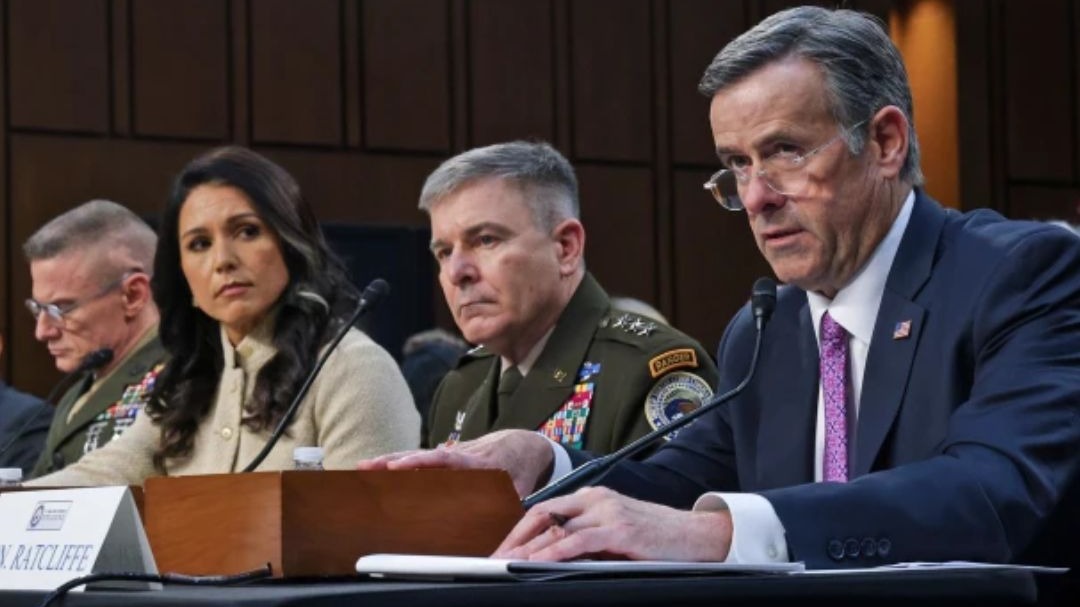
Washington is witnessing a growing divide at the highest levels of government, as top intelligence officials appear to contradict the White House’s justification for the Iran war, while choosing their words with striking precision.
At a Senate Intelligence Committee hearing this week, Director of National Intelligence Tulsi Gabbard submitted a written statement, publicly released, asserting that Iran’s nuclear enrichment program had been effectively obliterated, with facilities destroyed and no signs of reconstruction. However, when she addressed lawmakers, she notably skipped that critical section.
The omission did not go unnoticed. Senator Mark Warner immediately challenged Gabbard, accusing her of leaving out the one portion that directly undermines the administration’s rationale for military action. Pressed on whether the intelligence community still stands by that assessment, Gabbard responded in the affirmative.
The implication is stark. If Iran’s nuclear program had already been neutralised, the White House’s claim that the war was necessary to stop an imminent nuclear threat would become increasingly difficult to sustain.
Complicating matters further is the language used by senior officials. Gabbard avoided describing Iran as posing an “imminent threat.” CIA Director John Ratcliffe instead referred to an “immediate threat,” a distinction with significant legal and strategic implications. Secretary of State Marco Rubio offered yet another justification, framing U.S. involvement as a preemptive move aligned with an anticipated Israeli strike.


The latest parliamentary polls have delivered yet another near-perfect score for North Korea's Kim Jong Un, and the internet, unsurprisingly, has a lot to say.

Amid the war in Iran, the US aircraft carrier Gerald R Ford is retreating to a port in Greece for repairs. The ship was plagued by clogged toilets, and a fire that burnt through the vessel's laundry system and sleeping quarters. While the first has been blamed on the crew, the other could also be their handiwork of soldiers trying to skip war duty.

Since the start of the US-Israeli war on Iran, Tehran has disrupted maritime transit through the strait for vessels it says are linked to its war adversaries and their allies.

An American woman celebrated her 96th birthday with a fun and laid-back get-ready-with-me video, showing her bold personality and party spirit, leaving the internet smiling and applauding her energy.

Iran will see biggest strikes again today: Pete Hegseth says Gulf war will end on US's terms

A man confronted a woman he claimed was attempting to steal from another shopper's purse in Delhi, which sparked debate online about safety and intervention in crowded spaces.


A video of a woman identifying as a stay-at-home daughter in Mumbai has gone viral, starting conversations about the role of women who choose to focus on caregiving rather than traditional employment.


The video, shot by Sriram Murali, showed thousands of Chestnut-headed Bee-eaters perched on a tree, filling the air with a chorus of chirps.

Iran's Foreign Minister mocked the US for the mounting expenditures and said that the citizens have to pay the cost due to Israel.

In an Instagram post titled, "The metro comparison nobody talks about," she described an experience that caught her off guard.

The world is facing an energy crisis as Iran blocked supplies passing through the Strait of Hormuz after strikes by the US and Israel. Vital subsea cables that carry global internet traffic also pass through Hormuz. Any damage to them could trigger internet outages and hit financial systems across countries, including in India.