Internet ban during Amalapuram riots a grim reminder of life that once existed in J&K, says Chandrababu Naidu
The Hindu
Internet ban during Amalapuram riots a grim reminder of life that once existed in J&K, says Chandrababu Naidu. Chief Minister Jagan Mohan Reddy succeeded in converting the serene Konaseema into ‘kalahala seema’, alleges JSP chief Pawan Kalyan. He promises to make sincere efforts to get the Konaseema railway line project commissioned as it was the dream of former Lok Sabha Speaker G.M.C. Balayogi.
P. GANNAVARAM
Telugu Desam Party (TDP) national president N. Chandrababu Naidu on April 11 (Thursday) said the ban imposed on Internet during the Amalapuram riots in 2022 reminded one of the life that once existed in Jammu & Kashmir.
In May 2022, people of the erstwhile Konaseema district marched to the district headquarters to protest against the YSRCP government’s proposal to name the district after B.R. Ambedkar, which had triggered riots in Amalapuram. No casualty was reported in the riots.
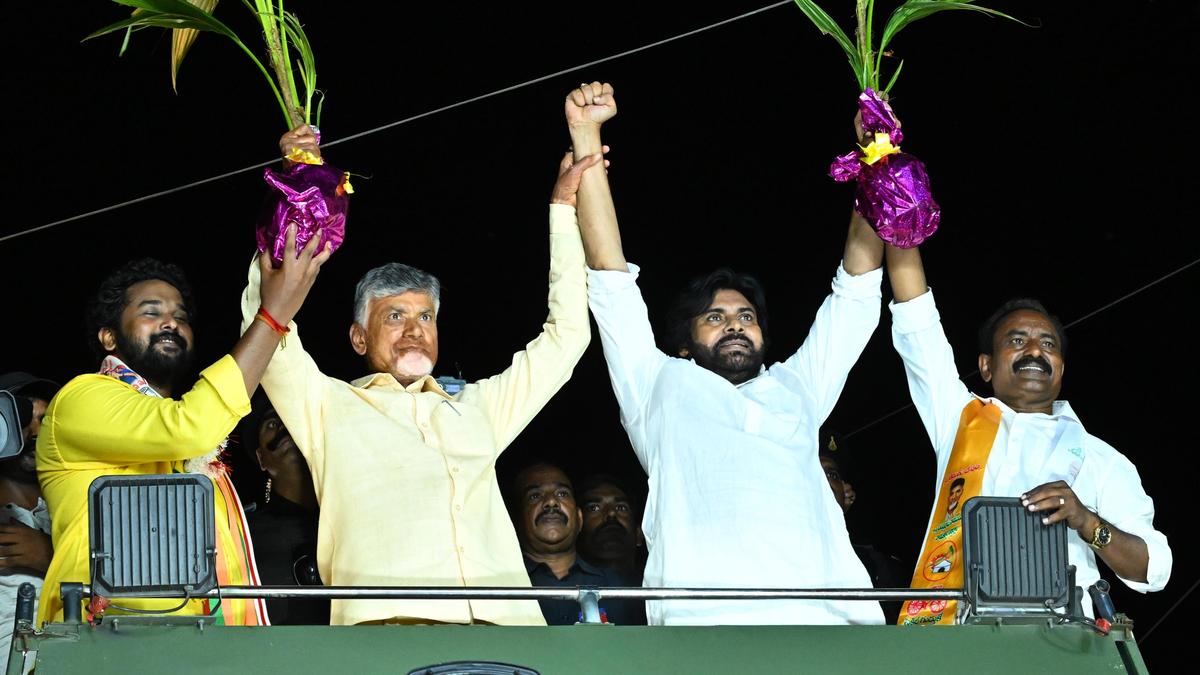
Addressing a joint election campaign at P. Gannavaram in Dr .B.R. Ambedkar Konaseema district, Mr. Naidu said, “The way Chief Minister Y.S. Jagan Mohan Reddy came up with the proposal to rename the district led to tension across Konaseema. The government also imposed a ban on Internet services then.”
Promising to take steps for the uplift Dalits, Mr. Naidu assured to offer MLC post to a leader belonging to the Madiga sect. Mr. Naidu alleged that Mr. Jagan Mohan Reddy attempted to discourage inter-caste marriages by withdrawing financial aid.
In his address, JSP president Pawan Kalyan alleged that Mr. Jagan Mohan Reddy had succeeded in converting the serene Konaseema area into “kalahala seema” (land of riots) by sowing the seeds of hatred over renaming of the district.
“Post the Amalapuram riots, we strived to ensure harmony among all communities in the region. The TDP-BJP-JSP alliance will continue to strive for harmony and peace in the Konaseema region,” he said.


AIADMK reveals its first candidate list for Tamil Nadu Assembly election, featuring familiar names and few surprises.

A study reveals antibiotic resistance causes 87% of India's typhoid economic burden, significantly impacting children and families.

How Dikshitar was inspired by Vaduvur Rama to come up with a composition in a raganga raga

Lok Sabha passes Finance Bill 2026 with amendments, completing its budgetary approval before Rajya Sabha's consideration.

Karnataka government to consult legal experts on pursuing action against Adani Group's ACC Ltd. over ₹850 crore in disputed dues.

The FCRA amendment bill aims to create an authority for managing NGO assets after license loss, addressing misuse of foreign funds.

Telangana Minister assures adequate petroleum stocks for three months, warns against illegal fuel carrying amid panic buying rumors.

TMC calls for the removal of Bhabanipur returning officer, citing alleged ties to BJP and concerns over neutrality.

Kerala CM Pinarayi Vijayan condemns UDF's misogynistic attacks on CPI(M) legislator U. Prathibha, highlighting political degeneration.

Selected from 9,400 submissions across 37 countries, the 100 photographs on display traverse intimate and political terrains. In MRC Nagar, photographer Swastik Pal captures life in the Sundarbans, where severe climate change has brought humans and wildlife into closer contact. Shane Hynan’s Beneath Beofhod reflects on Ireland’s boglands as sites of memory and restoration, while Mateo Trevisan’s More than the Sun examines the impact of coal-driven industrialisation in the Western Balkans.

Hyderabad officials assure sufficient fuel supply for 60 days, warn against misinformation and illegal sales amid panic buying.

Telangana MP urges Centre to expedite ₹1,270 crore dues transfer from Andhra Pradesh for financial fairness and development.

A Karnataka man was detained with ₹62.5 lakh in cash during election checks on NH 544, claiming it was from a property sale.