How Tamil theatre raised funds for the Ramakrishna Mission Students Home in Chennai
The Hindu
How Tamil theatre raised funds for the Ramakrishna Mission Students Home in Chennai
Thanks to the huge patronage it enjoyed, Tamil theatre was actively involved in raising funds for various charitable and public causes. Many theatre groups staged dramas whose proceeds were used for educational institutions, hospitals, benefit funds and calamity reliefs. During World War II, the Madras Governor’s War Fund greatly benefitted by the staging of several Tamil plays. For instance, M.K. Thyagaraja Bhagavathar’s performance of Pavalakkodi in 1941 at the Sun Theatre in T. Nagar raised a sum of Rs 7,000 which was donated to the cause. One of the prominent institutions to have been immensely supported by Tamil theatre was the Ramakrishna Mission Students Home in Mylapore — thanks to the efforts of C. Ramanujachariar.
Born in 1875, Ramanujachariar graduated with a BA from the Presidency College and joined the Madras Secretariat as a clerk. While still in college, he became part of the group of followers who gathered around Swami Vivekananda during the latter’s stay in Madras in early 1893, before he left for Chicago to participate in the Parliament of World Religions. When Vivekananda was given a grand reception in the city in February 1897 upon his return from the West, Ramanujachariar got an opportunity to closely interact with him and was drawn into the Ramakrishna movement.
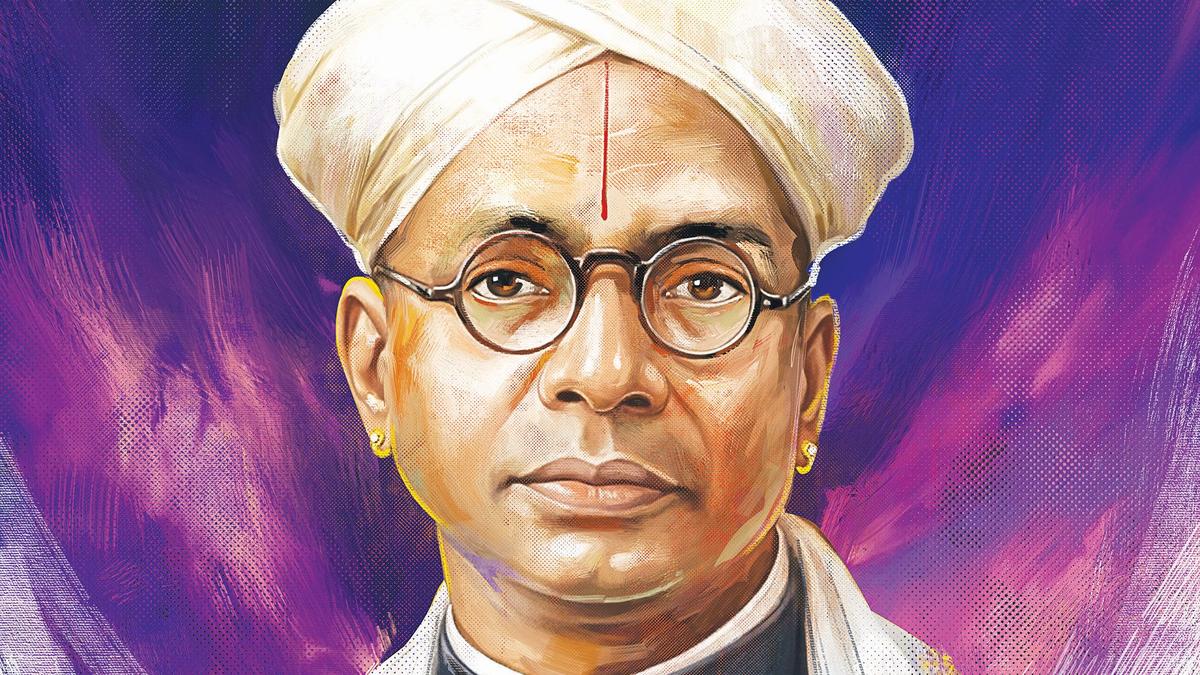
One of the prominent institutions to have been immensely supported by Tamil theatre was the Ramakrishna Mission Students Home in Mylapore — thanks to the efforts of C. Ramanujachariar. | Photo Credit: The Hindu Archives
When Swami Ramakrishnananda, who was sent by Swami Vivekananda to spread the message of Sri Ramakrishna in South India, came to Madras in March 1897, Ramanujachariar became one of his ardent supporters. In 1905, Ramanujachariar’s cousin C. Ramaswamy Iyengar was moved by the plight of four boys from Guntur who had come to the city seeking help for their studies but found none. This gave the impetus for the founding of a home to provide free boarding and lodging for indigent students coming to the city for their studies, and thus was born the Ramakrishna Mission Students Home, with the blessings and guidance of Swami Ramakrishnananda. Ramanujachariar became closely involved with the activities of the Home since its inception and after Ramaswamy Iyengar’s demise in 1932 became its secretary.
In 1917, Ramanujachariar founded a drama troupe called the Madras Secretariat Party, comprising his colleagues, to use theatre to support charitable causes, particularly the Students’ Home and the Ramakrishna Math. Ramanujachariar was the director, lead actor and composer...all rolled into one. When Swami Brahmananda, the first president of the Ramakrishna Order, came to Madras on three occasions, Ramanujachariar used the proceeds of a benefit drama to purchase the land on which the old shrine of the Mylapore Math stands today. During his 1921 visit, Swami Brahmananda watched a performance of Mira Bai staged by the Madras Secretariat Party at the Victoria Public Hall, in which Ramanujachariar played the part of Rana. Later, on Swami’s suggestion, Ramanujachariar translated and performed the Bengali drama Bilvamangal in Tamil.
Besides Ramanujachariar’s colleagues, the Madras Secretariat Party comprised members such as renowned violinist Parur Anantharaman and several residents of the Students Home such as Mannargudi Sambasiva Bhagavathar, who would later became a noted harikatha exponent, and Anna N Subramanian, who went to become a renowned author of religious books. In his reminiscences, noted philosopher TMP Mahadevan, who was also a resident of the Home in the 1920s, states that rehearsals used to be held in the campus on Sunday mornings and were much awaited occasions.


Tamil actor Soori has teamed up with director R Ravikumar (Of Indru Netru Naalai and Ayalaan fame) for his upcoming film, tentatively called Soori 07

GV Prakash Kumar, along with debutant director Maria Raja Elanchezhian, speaks about his upcoming comedy-drama ‘Happy Raj’, completing 20 years as a composer, and how it is impossible to predict the effectiveness of film promotions

Disney's live-action Moana trailer reveals Dwayne Johnson as Maui, showcasing iconic moments ahead of the film's July release.

Aamir Khan’s sports comedy-drama Sitaare Zameen Par will be released on Sony LIV on April 3, the streamer announced on Monday, March 23, 2026. Directed by RS Prasanna, the film was released in theatres on June 20 last year.

Artist Kapila Nahender explores notions of belonging, growth and memories in her show Pockets of Resistance

BTS's comeback concert in Seoul drew over 100,000 fans, featuring their new album "ARIRANG" and a global livestream.

Prasads Multiplex Hyderabad unveiled one of India’s largest HDR cinema auditoriums, the PCX HDR by Barco

From staged funerals to rented fatherhood, Brendan Fraser turns rented intimacy into something disarmingly real in Hikari’s poignant Tokyo fable

Meet Nivrritii Mahesh, a Bharatanatyam dancer who dances with Cochlear implants

In a surprising turn of events, Urvashi theatre, one of Bengaluru’s iconic single screens, has re-opened, with the much-talked-about Dhurandhar: The Revenge running to a full house in the theatre. After the expiry of the 45-year lease, it seemed like curtains would come down on the king-size theatre but for now, it’s good news for fans.

The thrilling ‘Peaky Blinders’ finale is a farewell tour tailored for Tommy Shelby, while passing the baton to a new generation

BTS's comeback concert in Seoul drew over 100,000 fans, featuring their new album "ARIRANG" and a global livestream.

Khalid Rahman is reuniting with Malayalam superstar Mammootty after Unda (2019). The Thallumaala director has teamed up with the veteran for Mattancherry Mafia.