‘Peaky Blinders: The Immortal Man’ film review: Cillian Murphy bids farewell to Tommy Shelby
The Hindu
The thrilling ‘Peaky Blinders’ finale is a farewell tour tailored for Tommy Shelby, while passing the baton to a new generation
It has been less than half a decade since Tommy Shelby bid adieu to our screens in 2022. Four years later, Cillian Murphy returns as the Birmingham gangster, to give his final farewell in Peaky Blinders: The Immortal Man. The film serves almost exclusively as a vehicle to provide Tommy with a proper goodbye, but the signature Peaky Blinders beats still manage to deliver a thrilling film.
In 1940, Tommy Shelby has sheltered himself away from the Birmingham alleys he once ruled, in a remote mansion, with only Johnny Dogs (Packy Lee) for company. It is also the year when the Nazis are spreading their war across Europe. But away from all this, Tommy’s daily routine now features him poring over the autobiography he is writing. When not doing that, the retired gangster finds himself being tormented by the deaths of his brother Arthur and his daughter Ruby.
Meanwhile in Birmingham, Tommy’s son Duke (Barry Keoghan) has taken over the Peaky Blinders, and fashioning himself (quite literally) after his father. But much to his aunt Ada’s chagrin (Sophie Rundle) he is also raiding ammunitions factories, and stealing morphine from hospitals. When Nazi footsteps reach the Garrison Pub, as John Beckett (Tim Roth) attempts to rope in Duke in the plan to make Britain lose the war, it finally sends alarm bells ringing all the way to Tommy’s cottage.
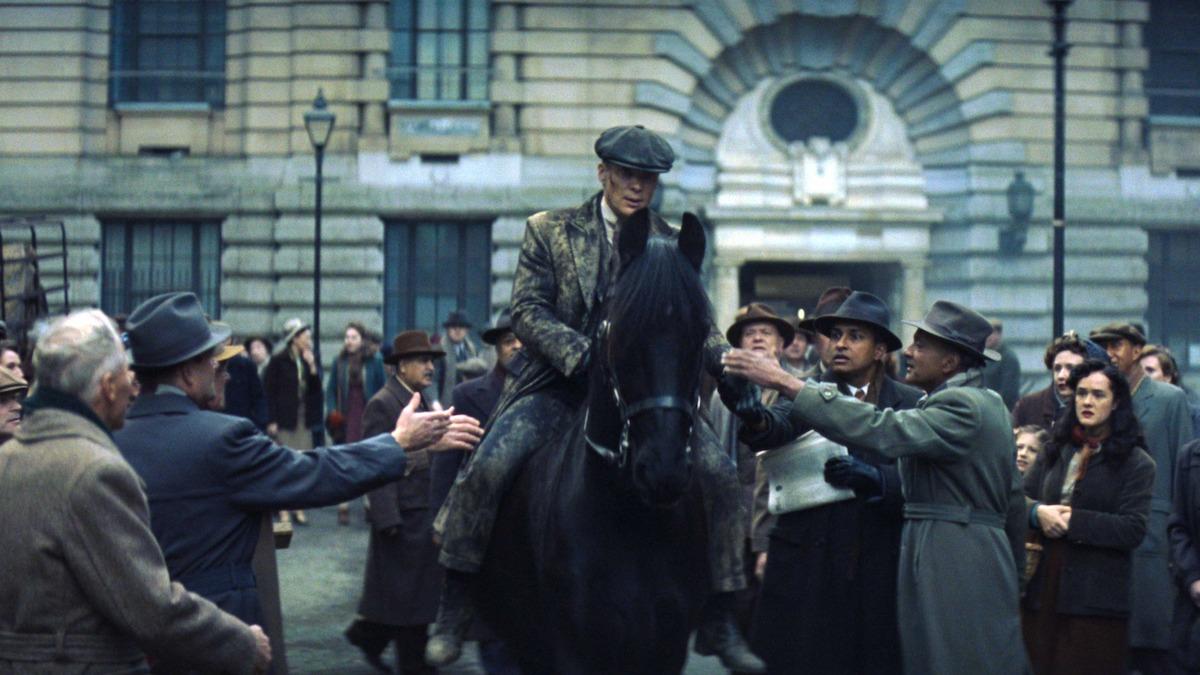
A still from ‘Peaky Blinders: The Immortal Man’ | Photo Credit: Netflix
A visit from Zelda’s sister Kaulo (Rebecca Ferguson) manages to stir Tommy enough, as he races back to Birmingham to take part in his final battle against the Nazis. He is going to save his son from himself, save Britain from the fascists, and go out in a blaze of glory. Spoiler alert: he does, but not before some serious self-referencing that dishes out enough majestic scenes, and broody dialogues to serve the Peaky Blinders fans twice over.
Besides the timeline, there is not much new on offer from the film. But that does not mean it’s all bad. Steven Knight’s screenplay, predictable enough, is made interesting because of how it approaches the nostalgia around the show. It is just self-mythologising enough to be reverent of its successful past, but stops short of completely losing sight of the future.


The actor, along with director Sushant Shah, speak about their upcoming series ‘Chiraiya’, Divya’s process of working on the dialect, Sushant’s approach to telling a story about women, and more

An independent video, ‘Feel the Spark’ by Raleigh Rajan with vocals by Ciera Dumas that celebrates Tamil literary giants, garnered 1.4 million views in less than 36 hours.

In ‘Jack Ryan: Ghost War’, John Krasinski is back as the savvy CIA analyst, diving headfirst into a high-stakes mission that unravels a deadly conspiracy and pits him against a rogue black-ops unit

Shriram Bharatiya Kala Kendra’s Shankarlal festival showcased rare ragas, radiant artistry, and inclusive performances, from Pt Madhup Mudgal’s serene morning ragas to Ramana Balachandran’s Saraswati veena.

Explore "Threads that Bind: The Kantha Project," an exhibition in Delhi reimagining kantha as a medium of repair and renewal.

Sean Penn skips the Oscars to meet Ukraine's Zelenskyy, who praises him as a "true friend" amid the war.

The teaser of Tamil star Suriya’s much-awaited film with director Venky Atluri, titled Vishwanath and Sons, was unveiled by the makers on Monday

A 'Golden' moment for a K-pop track at the Oscars.

Parvathi Nayar’s new exhibition, The Primordial, in Mumbai, traces oceans, pepper and climate change
Opened on March 12, the exhibition marks the artist’s first solo show in Mumbai in nearly two decades. Known for her intricate graphite drawings and multidisciplinary practice spanning installation, photography, video, and climate change, her artistic journey has long engaged with the themes of ecology, climate change and the natural world. In this ongoing exhibition, these strands converge through a series of works centred on water, salt, and pepper — materials that carry natural and historic weight across centuries.

Explore the highlights and key winners of the 98th Academy Awards, featuring memorable moments and historic achievements from Oscars 2026.

Spring season celebrated at Ramakrishna Mission Institute, Kolkata, with ‘Evening of Basant’

The Spirit of the Land, a solo show by artist Shivakumar Sunagar, is a vista of Nature-inspired emotions

Tal Fry is all set for an exciting new performance season