Distant dwarf galaxy formation spotted, Tezpur researcher part of team
The Hindu
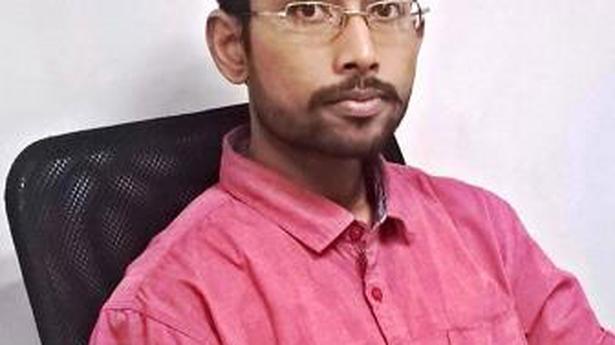
Anshuman Borgohain, the research scholar was a member of the team of astronomers from India, the USA and France which conducted the study
A first of its kind study has found new stars forming beyond the visible boundaries about 1.5 to 3.9 billion light years away from the Earth, according to an article by a research scholar of Tezpur University.
Anshuman Borgohain, the research scholar was a member of the team of astronomers from India, the USA and France which conducted the study. He is the lead author of the article. “It is still unclear how dwarf galaxies of the past have evolved into the ones in the present day. Hence, capturing their assembly process over the cosmic ages is considered as one of the important links to complete the picture of galaxy formation and evolution,” said the research article which was published in the multidisciplinary science journal ‘Nature’ this month.
Bruce Elmegreen, a principal research staff in USA’s IBM research division who too was involved in the study, said that it has been a mystery how some small galaxies like these can have such active star formation.
The study was conceived using the ultra violet imaging telescope (UVIT) onboard AstroSat, India’s first dedicated multi-wavelength space observatory, a release issued by Tezpur University said. The AstroSat/UVIT’s imaging capabilities have opened up promising avenues in the field of extragalactic astronomy, it added.
Borgohain works under the joint supervision of Rupjyoti Gogoi of Tezpur University and Prof Kanak Saha of Pune-based Inter University Centre for Astronomy and Astrophysics who are co-authors of the article.
The resolving power of the ultra violet imaging telescope onboard AstroSat, India’s first dedicated multi-wavelength space observatory and UV deep field imaging techniques have been the key to spotting these very young, faint and large star forming clumps, Saha said.
The current work is an inspiration for young researchers of the country as this utilizes data from India’s indigenous satellite AstroSat, Gogoi said.


Community Health Officers in Vijayawada protest for reduced workload and continued incentives amid growing dissatisfaction over salary changes.

Telangana faces 13,929 healthcare vacancies, primarily in doctors and nurses, as recruitment efforts aim to address the shortage.

For most patients with TB who are severely underweight, nutritional support is an essential and not optional part of treatment

Family of custodial death victims demands harsh punishment for nine convicted policemen to prevent future abuses of power.

Rajinikanth refutes TVK leader's claims about DMK threats preventing his political entry, expressing gratitude to supportive political figures.

CM announces Cabinet Sub-Committee on Musi rejuvenation; rehabilitation for all displaced

Ramanathapuram identifies 145 polling stations as sensitive, ensuring security with paramilitary forces ahead of assembly elections, says DEO.

BJP Puducherry president V. P Ramalingam files nomination for Raj Bhavan, joined by Union Minister Mandaviya and Khushbu Sundar.

History-sheeter 'Thoppai' Ganesh shot dead by police in Chennai after attacking officers during attempted escape.

The government plans to amend the FCRA, introducing new regulations for NGO asset management and accountability for key functionaries.

The draft policy for “Responsible Digital Use Among Students”, released on Monday by the Department of Health and Family Welfare, has recommended that parents set structured routines with clear screen-time rules and prioritise privacy, safety, and open conversation with children on digital well-being.

Police Observer Sushant Kumar Saxena conducts surprise inspection at Shencottai police station, reviewing warrants and security arrangements ahead of elections.

Andhra Pradesh government to launch key projects in April, focusing on industrial growth and infrastructure development, says Nara Lokesh.