Committee to be formed for amendments to Cooperative Societies Act in Maharashtra, says CM Fadnavis
The Hindu
Maharashtra Chief Minister and Union Minister propose amendments to Cooperative Societies Act for economic growth and development.
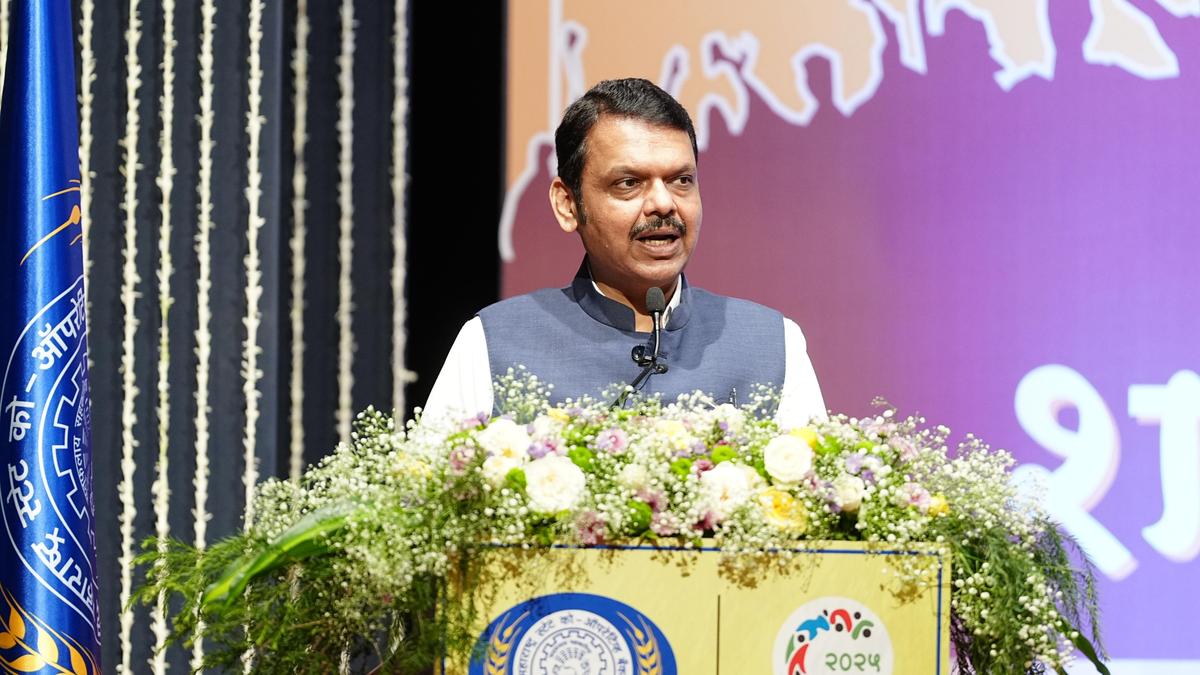
Maharashtra Chief Minister Devendra Fadnavis on Monday (May 12, 2025) announced the formation of a committee to look into amendments to the Maharashtra Cooperative Societies Act, 1960.
“The existing Cooperative Societies Act needs to evolve with times. To do so, new chapters related to each sector will be included in the law,” Mr. Fadnavis said.
Union Minister of Road Transport Nitin Gadkari recommended the formulation of a new law for the cooperative sector in the State to factor evolving economic conditions and market competition. Mr. Gadkari also suggested a detailed study to examine the socio-economic impact of the cooperative movement in the State.
“The capital market is so huge. The government should give it a push. The organisation which works well — let them sell the stock in the market. If they are doing well, their share value will increase; otherwise (it will) fall,” Mr. Gadkari said, addressing a seminar organised by the Maharashtra State Cooperative Bank.
“There is no alternative to it,” Mr. Gadkari said, hailing capitalism.
Mr. Fadnavis gave China as an example. “With time, ideologies dominating politics gradually became weaker. So, with time, we should adapt. Earlier, communism was the fashion, now everything [has] disappeared,” Mr. Fadnavis said, adding that China still had a “red flag” (a reference to communism) but accepted liberal economic thinking, leaving behind Marxist ideology for the sake of the development of the country.
Mr. Gadkari reflected on the image of the cooperative movement outside Maharashtra, stating that the story of the cooperative sector was “image versus reality, ground reality versus perception”.


Residents of Chettichavadi express concerns over deteriorating groundwater quality due to long-standing garbage dumping issues in Salem West.

Community Health Officers in Vijayawada protest for reduced workload and continued incentives amid growing dissatisfaction over salary changes.

Telangana faces 13,929 healthcare vacancies, primarily in doctors and nurses, as recruitment efforts aim to address the shortage.

For most patients with TB who are severely underweight, nutritional support is an essential and not optional part of treatment

Family of custodial death victims demands harsh punishment for nine convicted policemen to prevent future abuses of power.

Rajinikanth refutes TVK leader's claims about DMK threats preventing his political entry, expressing gratitude to supportive political figures.

CM announces Cabinet Sub-Committee on Musi rejuvenation; rehabilitation for all displaced

Ramanathapuram identifies 145 polling stations as sensitive, ensuring security with paramilitary forces ahead of assembly elections, says DEO.

BJP Puducherry president V. P Ramalingam files nomination for Raj Bhavan, joined by Union Minister Mandaviya and Khushbu Sundar.

History-sheeter 'Thoppai' Ganesh shot dead by police in Chennai after attacking officers during attempted escape.

The government plans to amend the FCRA, introducing new regulations for NGO asset management and accountability for key functionaries.

The draft policy for “Responsible Digital Use Among Students”, released on Monday by the Department of Health and Family Welfare, has recommended that parents set structured routines with clear screen-time rules and prioritise privacy, safety, and open conversation with children on digital well-being.

Police Observer Sushant Kumar Saxena conducts surprise inspection at Shencottai police station, reviewing warrants and security arrangements ahead of elections.