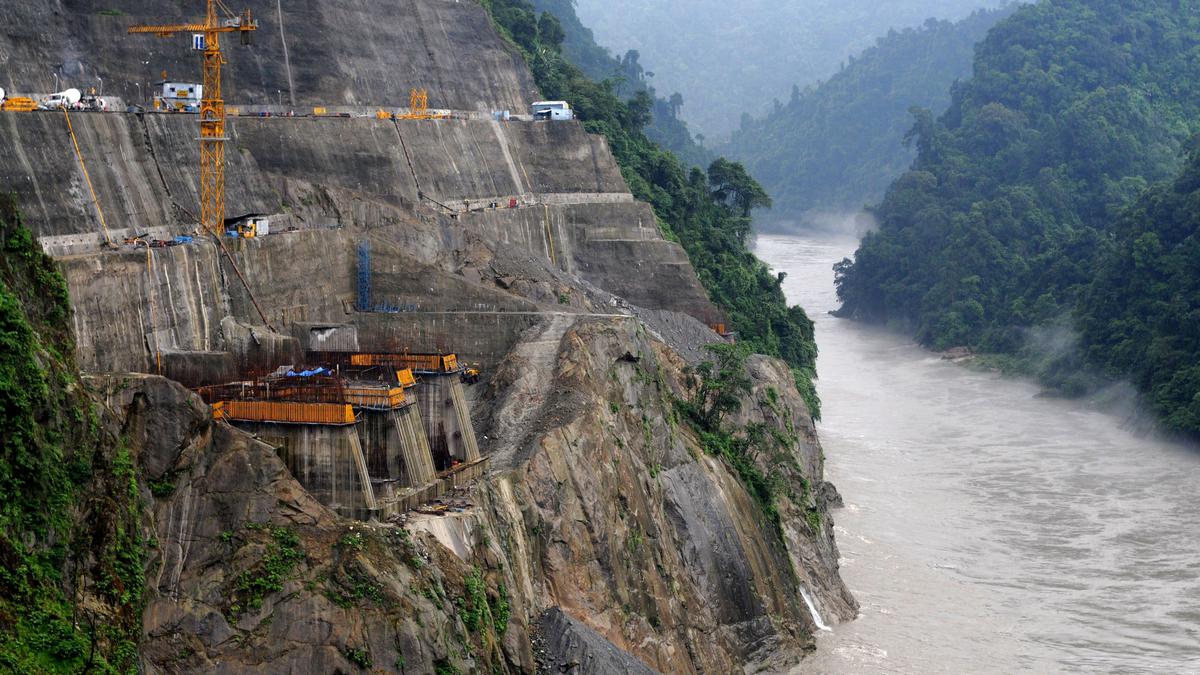
Arunachal Pradesh farmers’ body rejects 10,000 MW hydropower plan on Siang River
The Hindu
Two Arunachal Pradesh-based organisations, including a farmers’ collective, have asked the State Government to scrap a deal for executing a proposed 10,000 MW hydropower project on the Siang River.
Two Arunachal Pradesh-based organisations, including a farmers’ collective, have asked the State Government to scrap a deal for executing a proposed 10,000 MW hydropower project on the Siang River.
Flowing down from Tibet, Siang is one of three rivers that meet to form the Brahmaputra in Assam downstream.
Accusing the State Government of inking a deal with the National Hydropower Power Corporation for the mega-dam without taking the local people into confidence, Siang Indigenous Farmers’ Forum (SIFF) and the Indigenous Rights Advocacy Dibang (IRAD) threatened to launch a stir if the project is not scrapped.
Also Read | India plans ‘buffers’ in proposed Arunachal hydropower project to counter ‘China threat’
SIFF president, Tasik Pangkam said the Adi community in the Siang River belt will never accept the mega project that would threaten their existence and make them landless. He cited the example of the Chakma and Hajong people who were displaced by the Kaptai Hydroelectric Project in present-day Bangladesh in the 1960s and were forced to take refuge in India.
“Apart from submerging villages downstream and displacing the tribal people in Arunachal Pradesh, the 10,000 MW project will affect neighbouring Assam irreversibly. We have been fighting against mega dams for 13 years and will not give up easily,” Mr. Pangkam said.
He said the authorities should have consulted the people and organised public hearings before going ahead with the project.


AIADMK reveals its first candidate list for Tamil Nadu Assembly election, featuring familiar names and few surprises.

A study reveals antibiotic resistance causes 87% of India's typhoid economic burden, significantly impacting children and families.

How Dikshitar was inspired by Vaduvur Rama to come up with a composition in a raganga raga

Lok Sabha passes Finance Bill 2026 with amendments, completing its budgetary approval before Rajya Sabha's consideration.

Karnataka government to consult legal experts on pursuing action against Adani Group's ACC Ltd. over ₹850 crore in disputed dues.

The FCRA amendment bill aims to create an authority for managing NGO assets after license loss, addressing misuse of foreign funds.

Telangana Minister assures adequate petroleum stocks for three months, warns against illegal fuel carrying amid panic buying rumors.

TMC calls for the removal of Bhabanipur returning officer, citing alleged ties to BJP and concerns over neutrality.

Kerala CM Pinarayi Vijayan condemns UDF's misogynistic attacks on CPI(M) legislator U. Prathibha, highlighting political degeneration.

Selected from 9,400 submissions across 37 countries, the 100 photographs on display traverse intimate and political terrains. In MRC Nagar, photographer Swastik Pal captures life in the Sundarbans, where severe climate change has brought humans and wildlife into closer contact. Shane Hynan’s Beneath Beofhod reflects on Ireland’s boglands as sites of memory and restoration, while Mateo Trevisan’s More than the Sun examines the impact of coal-driven industrialisation in the Western Balkans.

Hyderabad officials assure sufficient fuel supply for 60 days, warn against misinformation and illegal sales amid panic buying.

Telangana MP urges Centre to expedite ₹1,270 crore dues transfer from Andhra Pradesh for financial fairness and development.

A Karnataka man was detained with ₹62.5 lakh in cash during election checks on NH 544, claiming it was from a property sale.