A twisting mystery of electrons, vibrations and heat Premium
The Hindu
Scientists have observed the thermal Hall effect in insulators, leading to an important open question in condensed-matter physics.
High-school physics: When charged particles enter an area where there is a magnetic field, a force deflects them away from their path.
This is how the thermal Hall effect emerges in an electrical conductor: when you apply a temperature gradient in the material in one direction, another temperature gradient appears in a perpendicular direction in the presence of a magnetic field. The electrons in the material carry both electric charges and thermal energy, and the magnetic field deflects them, giving rise to the perpendicular gradient.
But scientists have observed the thermal Hall effect in insulators as well, especially terbium oxides, strontium titanate and twokinds of cuprates. Electrons in insulators aren’t involved in transferring heat or electricity, so what could explain this? This is an important open question in condensed-matter physics.
A leading candidate for an answer involves a particle called the phonon, and a paper published on December 21 advances a new idea: while phonons can’t be deflected by the magnetic field – they have no electric charge – they are affected by the electrons that are deflected by the magnetic field.
Subroto Mukerjee, an associate professor in the Department of Physics, Indian Institute of Science, called the study a “solid piece of work, for sure”. (He wasn’t involved in the study.)
What are phonons?
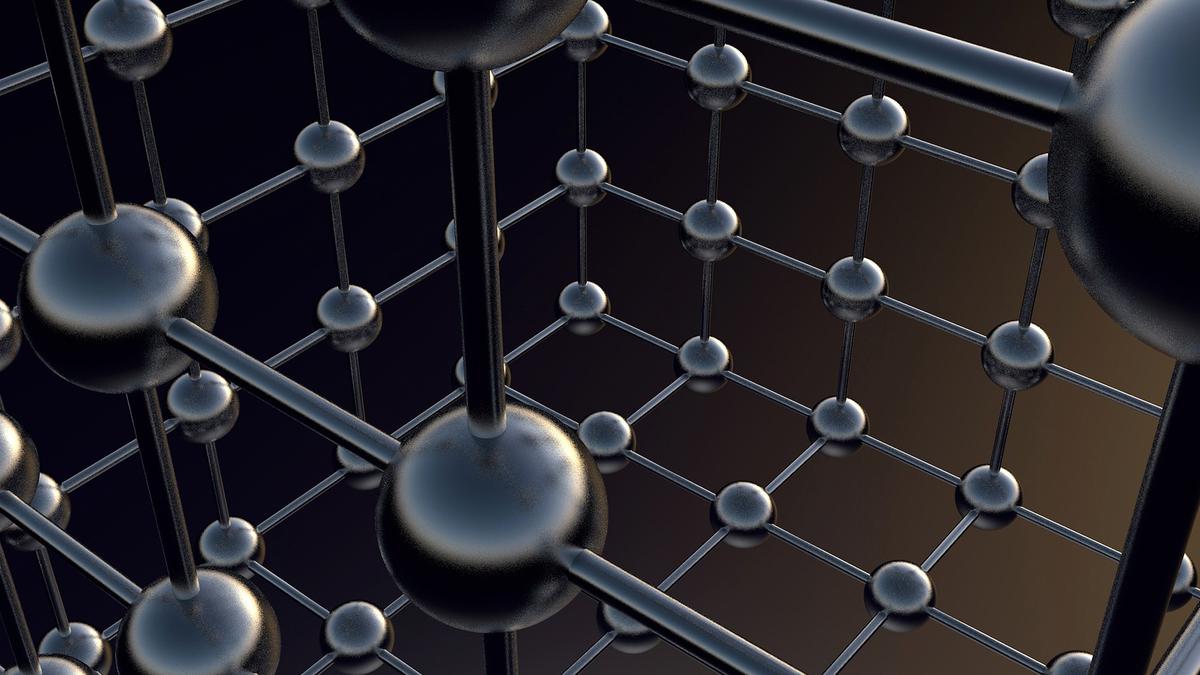
Technically, phonons aren’t particles; they’re quasiparticles – packets of energy that behave like particles in a system. A phonon is a quasiparticle of vibrational energy. When the grid of atoms that make up the material vibrates, it releases this energy, and physicists encapsulate it in the form of phonons.


51 couples take thebig plunge at Udaipur mass wedding event

A bridge collapse in Roop Nagar kills a woman; Delhi government forms a probe panel amid rising safety concerns.

Tribunal halts Colonel Purohit's retirement, pending promotion decision after his acquittal in the 2008 Malegaon blast case.

Pinarayi Vijayan launches his election campaign in Dharmadam, aiming for a third consecutive term amid tightening competition.

Delhi Speaker Vijender Gupta has written to Lieutenant-Governor Taranjit Singh Sandhu seeking directions to instal audible signals at traffic intersections across the city to ensure the safety of mobility-impaired individuals and senior citizens.

GVMC council concludes its five-year term, highlighting significant development projects and global events that enhanced Visakhapatnam's recognition.

Karnataka SC/ST Commission discusses internal reservation issues amidst confusion over reduced quotas for Scheduled Castes and Tribes.

President Droupadi Murmu serves Akshaya Patra’s 5 billionth meal, highlighting child nutrition and education at Rashtrapati Bhavan.

PM Modi and UAE President agree on ensuring safe navigation through the Strait of Hormuz amid regional tensions.

JNU student leaders face severe repercussions for activism, risking their academic futures amid allegations and online abuse.

India Post launches 24-hour and 48-hour Speed Post services in Bengaluru, ensuring urgent delivery across major metro cities.

A 24-hour control room in Krishnagiri monitors the Model Code of Conduct and manages election-related complaints ahead of polls.

Madurai Collector inaugurates voter awareness campaign