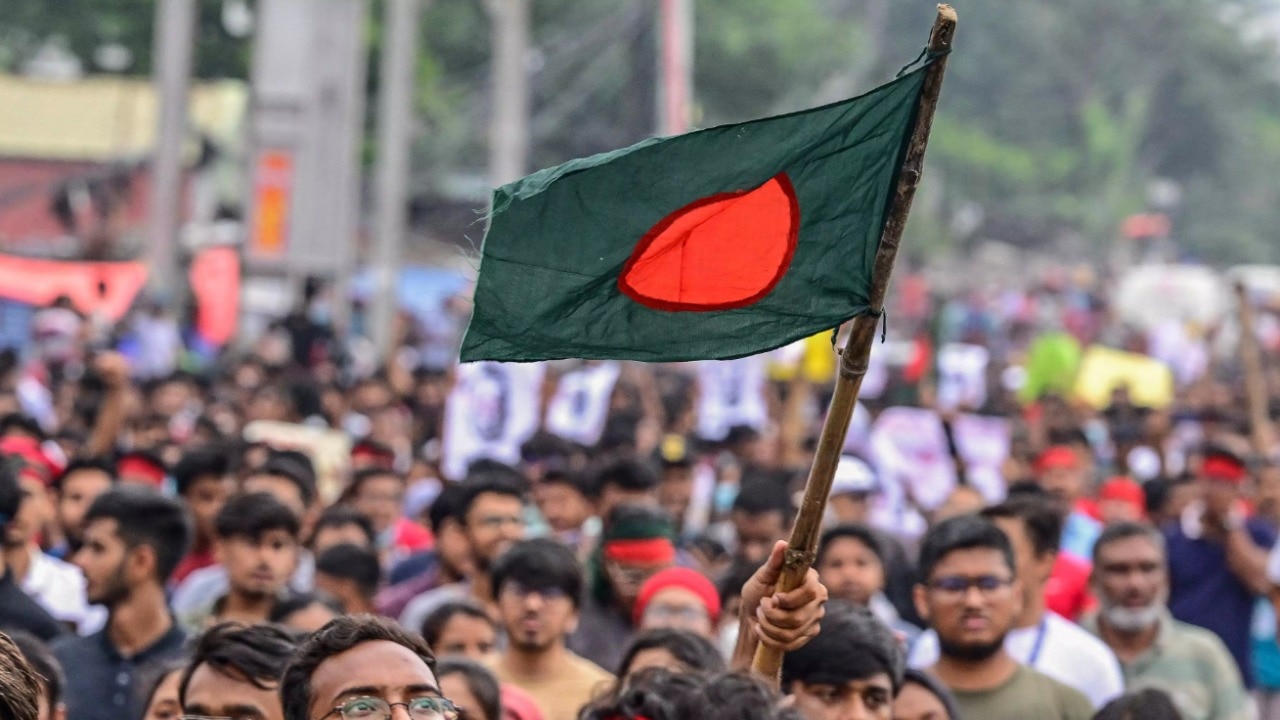
3 days to poll, Bangladesh streets turn violent; 40 injured in BNP-Jamaat clash
India Today
With just days left before Bangladesh's crucial general election, escalating violence highlights the intense political rivalry and uncertainty gripping the nation. The upcoming vote is seen as a pivotal moment promising significant change after years of political dominance by the Awami League.
With just 72 hours to go before Bangladesh votes in a high-stakes general election, fresh violence has erupted, underlining the volatility of the campaign in a country undergoing its most dramatic political shift in decades.
More than 40 people, including women, were injured late last night in clashes between workers of the Bangladesh Nationalist Party and Jamaat-e-Islami, after accusations of cash distribution at a Jamaat programme spiralled into street violence. The incident comes days before polling on February 12 and hours before campaigning is set to end on February 10 at 7.30 am.
The violence broke out after BNP workers accused Jamaat-e-Islami of distributing money to attendees at a late-night programme. According to accounts from the scene, BNP activists reached the venue to lodge a protest, following which Jamaat mobilised its own supporters.
What followed was a fierce confrontation that continued into the night, leaving over 40 people injured. This is being described as the most violent episode of the ongoing election campaign between the two rival camps.
Over the past six weeks, more than five people have been injured in election-related violence across Bangladesh, signalling a steady escalation as polling day approaches.
The February 12 general election is widely seen as a bipolar contest between the BNP and a coalition led by Jamaat-e-Islami. More than 127 million voters are eligible to cast their ballots in what analysts describe as the most consequential election since 2009.


A minute-long ATC recording lays bare the confusion and urgency before a runway collision in New York. Controllers issued frantic warnings as a plane struck a vehicle, forcing a complete airport shutdown.

Tucker Carlson says he might cry listening to him. Millions call him a prophet. But who exactly is "Professor Jiang" — and what is he not telling you?

In a symbolic act of wartime messaging, Iran placed stickers carrying anti-war remarks by Spanish Prime Minister Pedro Sanchez on ballistic missiles bound for Israel as the Middle East conflict enters it fourth week.

The announcement was made a day after North Korea convened the first session of its Supreme People's Assembly. The assembly, the isolated nation's rubber-stamp legislature, formally approves state policy.


Indian Railway staff's swift action turned a medical emergency involving a toddler into relief aboard a train from Bengaluru to Gujarat.

Leon Panetta said Iran war was not an unexpected risk. He pointed out that for years, US security officials have known Iran could disrupt global oil supplies by blocking the Strait of Hormuz. According to him, this was a well-known danger, but one that appears to have been overlooked in the current conflict.

Sri Lanka raised fuel prices by about 25% for the second time in a week as the Gulf conflict disrupts global oil supplies via the Strait of Hormuz.

Iran has warned it is ready to respond. Parliament Speaker Mohammad Baqer Qalibaf warned that if Iran's infrastructure is targeted, then key facilities across the region could be "irreversibly destroyed."

Indian Railway staff's swift action turned a medical emergency involving a toddler into relief aboard a train from Bengaluru to Gujarat.

In a post on Truth Social, Donald Trump said ICE personnel would assist Transportation Security Administration (TSA) officers who have continued to work despite uncertainty over funding.

In the viral video, a bus driver named Harish is seen stopping his bus mid-route, not for a passenger, but for a group of hungry puppies waiting by the roadside.

An NRI's creative replica of the Statue of Liberty in Jalandhar sparks cultural interest and local pride.