Zoo chills as mercury soars
The Hindu
Thiruvananthapuram
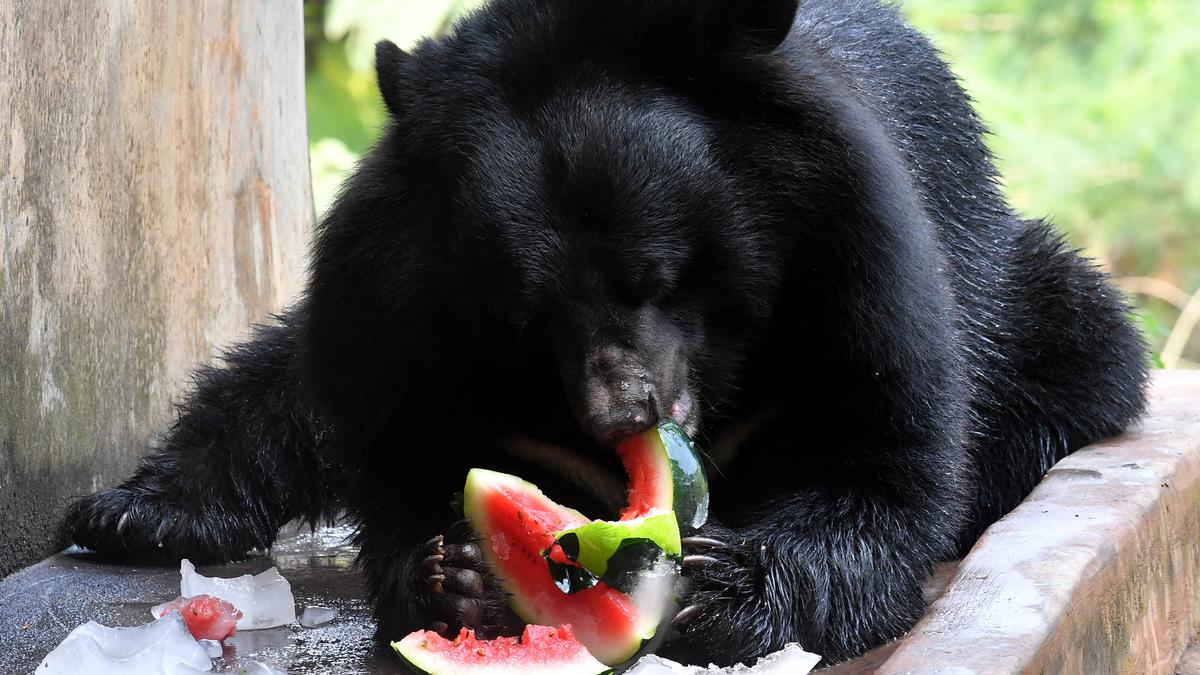
Kohima swiftly the block of ice-encased watermelon placed in his enclosure. After all, he is a Himalayan bear, one of the pair at the city zoo. Then, he concentrates on the fruit, savouring every bite, looking up only occasionally. When nearly through, he gets up, gives its back a good rub against the walls, and paces back and forth a little before standing on his hind feet, putting up a show for anyone who cares to click him. The frozen fruit seems to have put the black Kohima in a good mood.
Kohima’s neighbours, the sloth bears are not as lucky to get iced watermelon. They just get supplied the plain one. No wonder they do not seem as amiable as the Himalayan bear.
Kohima and his female partner Dimapur best exemplify the special treatment the zoo animals receive as mercury soars. Between them, they require 4.5 kg of watermelon alone. Besides iced watermelon, they are fed plain watermelon, grapes, bananas, cucumber, rice mixed with honey, and so on.
The zoo authorities have adopted a slew of measures to help reduce heat-related stress experienced by animals and birds. A significant one is the tweaking of diet charts.
Animals such as gaur, nilgai, spotted deer and sambar deer are now fed more quantity of greens, such as grass and spinach leaves, and Bengal and green gram sprouts, and reduced amount of cattle feed. Fruit and leaves intake have been increased for some animals, including monkey, and birds.
The meat intake of big cats has seen a cut, but they are given varied fare, such as chicken.
Dietary changes apart, animal enclosures too are going through a change with the advent of summer. Fans and sprinklers have been set up to reduce the heat and make the animals more comfortable. There are fans in enclosures of birds, such as ostrich, and bears. In enclosures without fans, the inhabitants are closely monitored for heat stress. If they show any symptoms, then fans are switched on.


The government plans to amend the FCRA, introducing new regulations for NGO asset management and accountability for key functionaries.

The draft policy for “Responsible Digital Use Among Students”, released on Monday by the Department of Health and Family Welfare, has recommended that parents set structured routines with clear screen-time rules and prioritise privacy, safety, and open conversation with children on digital well-being.

Police Observer Sushant Kumar Saxena conducts surprise inspection at Shencottai police station, reviewing warrants and security arrangements ahead of elections.

Andhra Pradesh government to launch key projects in April, focusing on industrial growth and infrastructure development, says Nara Lokesh.

Lok Sabha refers the Corporate Laws (Amendment) Bill to a JPC amid opposition concerns over CSR provisions dilution.

SHG members in Kanniyakumari use snakes and ladders to raise election awareness and boost voter turnout.

Government accelerates consultations for early implementation of the Women’s Reservation Act to ensure women’s representation in 2029 elections.

CM A. Revanth Reddy distributes ₹1 crore insurance cheques to families of deceased Electricity department employees, enhancing financial security for workers.

The Bengaluru Traffic Police (BTP) registered 634 cases of drunk driving during a week-long special enforcement drive conducted across the city between March 16 and March 22.

GHMC intensifies action against property tax defaulters, seizing properties and offering a One Time Settlement scheme for payments.

CCB arrests three drug peddlers in Mangaluru, seizing ₹2.5 lakh worth of MDMA and other valuables.

TVK's 28 candidates in Puducherry include former BJP MLAs, a sitting Independent, and a retired police IG.

BRS submits notice on private member bill to Speaker