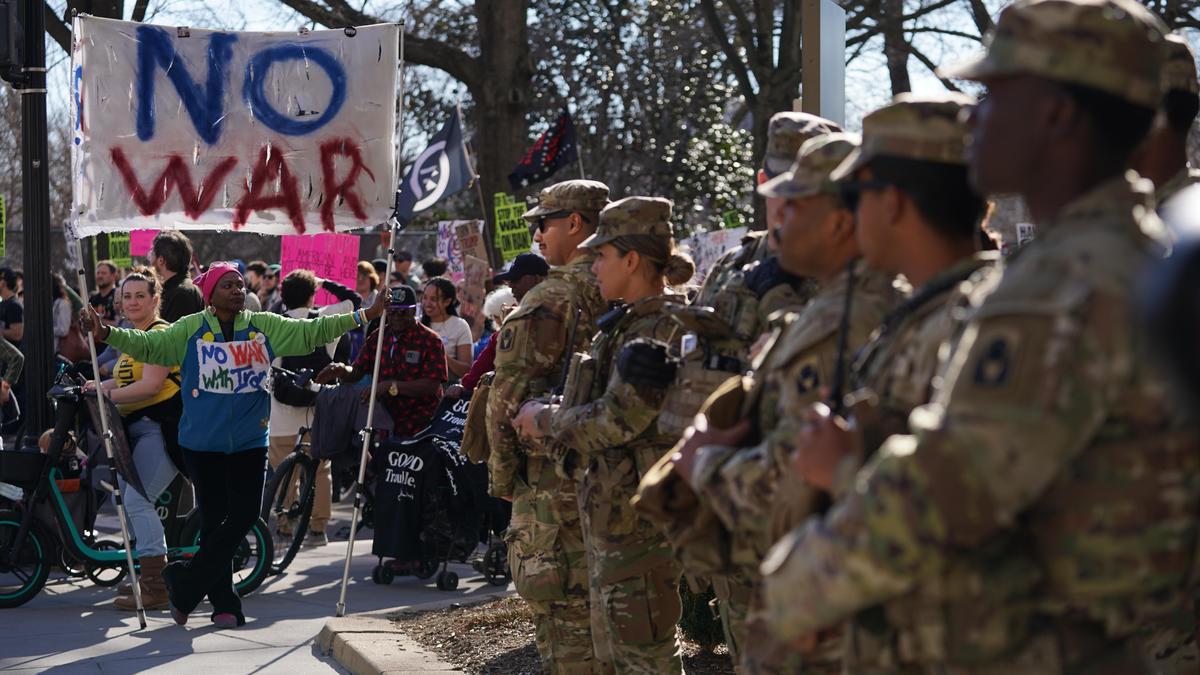
World leaders react cautiously to U.S. and Israeli strikes, death of Iran Ali Khamenei
The Hindu
World leaders cautiously respond to U.S. and Israeli strikes on Iran amid fears of escalating conflict following Khamenei's death.
How long will it last? Will it grow? What will the conflict and the reported death of Iran's Supreme Leader Ayatollah Ali Khamenei mean to us, and to global security overall? Those questions echoed across the Middle East and the planet on Saturday (February 28, 2026) as world leaders reacted warily to U.S. and Israeli strikes on Iran.
U.S. President Donald Trump said on social media that Khamenei was dead, calling it “the single greatest chance for the Iranian people to take back their Country.” Iranian state media said early Sunday (March 1, 2026) the 86-year-old leader had died without elaborating on a cause.
Iran-Israel conflict LIVE: Iran Guards vow ‘most ferocious offensive operation’ against U.S. bases, Israel after Khamenei killed
Israeli officials previously told The Associated Press on condition of anonymity that Khamenei was dead. And Israeli Prime Minister Benjamin Netanyahu, in a televised address, said there were “growing signs” that Khamenei had been killed when Israel struck his compound early Saturday (February 28, 2026).
The apparent demise of the second leader of the Islamic Republic, who had no designated successor, would likely throw its future into uncertainty — and exacerbate already growing concerns of a broader conflict. The UN Security Council scheduled an emergency meeting.
Perhaps cautious about upsetting already strained relations with Mr. Trump, many nations abstained from commenting directly or pointedly on the joint strikes but condemned Tehran's retaliation. Similar to Europeans, governments across the Middle East condemned Iran's strikes on Arab neighbours while staying silent on the U.S. and Israeli military action.


Opposition raises concerns over electoral roll irregularities in Gujarat Assembly, prompting limited discussion on the special revision exercise.

India anticipates a hotter-than-normal summer with increased heatwave days, impacting temperatures and agricultural yields.

The Hindu cartoon delhi hc on delhi excise policy case on March 1, 2026

Ivan D’Souza seeks ₹1,500 crore from CM Siddaramaiah for Mangaluru's underground drainage repairs and other development projects.

UN chief António Guterres condemned U.S.-Israeli airstrikes on Iran, calling for immediate negotiations to prevent regional escalation.

Experience the vibrant cultural showcase of 24 states and international performances at VIT's Riviera 2026 event, Akiya.

Karnataka government initiates recruitment for 56,432 posts without internal reservation, disappointing Dalit Left communities seeking equity.

Congress govt. pushed Hyderabad to lows in all sectors: KTR

AIDWA backs Anganwadi workers' strike in Ongole, demanding higher salaries and better support for the Integrated Child Development Services.

Tamil Nadu inaugurates its first eco-tourism campsite in Anamalai Tiger Reserve, promoting regulated trekking and community livelihoods.

Forensic scientist K.P.C. Gandhi emphasizes the importance of science and moral courage in nation-building at ALC's 72nd annual celebrations.

MCEME Secunderabad's seminar focuses on robotics and autonomous systems to enhance India's future-ready defense capabilities.

Chief Minister Naidu announces ₹20 lakh ex gratia for firecracker blast victims, suspends officials, and plans safety reforms.