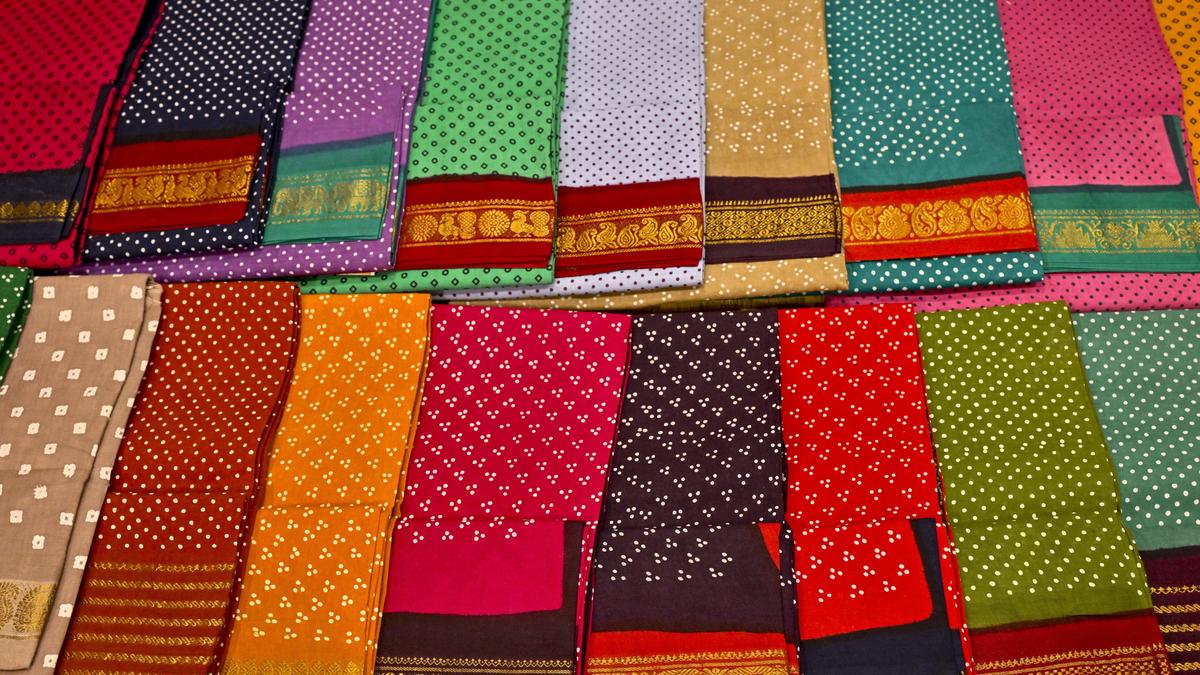
In Frames | Sungudi shimmer
The Hindu
A look into the process behind Madurai's traditional tie-dye Sungudi saris, perfected by Saurashtrians.
Folklore tells of two handloom weavers who were resting on the banks of the Vaigai river. Inspired by the star-spangled night sky, they invented the tie-and-dye motif that has now become synonymous with Madurai. This signature styling on traditional cotton saris was awarded the GI tag on December 12, 2005.
Perfected by the Saurashtrian community that had migrated from Gujarat to Madurai in the 17th century, these iconic saris reveal the artistic and exquisite talent of the weaver.
On a base cloth mostly woven with a zari border, artisans painstakingly hand-knot the required patterns. This is then dyed in various shades. Later, the knots are untied and after a final wash to remove excess dye, it is starched and left to dry in the sun. It is then that the sari reveals an intricate design, with some bearing more than 15,000 quirky white dots.
Now, these breathable garments are a must-have in the wardrobes of both the young and the old. For a cotton sari to transform into a sungudi, it takes more than 15 days.
With prices ranging from Rs. 500 to even Rs. 20,000 depending on the thread count, this timeless handloom art needs the much-needed nudge to be showcased in international fashion shows.
Text by Beulah Rose


Opposition raises concerns over electoral roll irregularities in Gujarat Assembly, prompting limited discussion on the special revision exercise.

India anticipates a hotter-than-normal summer with increased heatwave days, impacting temperatures and agricultural yields.

The Hindu cartoon delhi hc on delhi excise policy case on March 1, 2026

Ivan D’Souza seeks ₹1,500 crore from CM Siddaramaiah for Mangaluru's underground drainage repairs and other development projects.

UN chief António Guterres condemned U.S.-Israeli airstrikes on Iran, calling for immediate negotiations to prevent regional escalation.

Experience the vibrant cultural showcase of 24 states and international performances at VIT's Riviera 2026 event, Akiya.

Karnataka government initiates recruitment for 56,432 posts without internal reservation, disappointing Dalit Left communities seeking equity.

Congress govt. pushed Hyderabad to lows in all sectors: KTR

AIDWA backs Anganwadi workers' strike in Ongole, demanding higher salaries and better support for the Integrated Child Development Services.

Tamil Nadu inaugurates its first eco-tourism campsite in Anamalai Tiger Reserve, promoting regulated trekking and community livelihoods.

Forensic scientist K.P.C. Gandhi emphasizes the importance of science and moral courage in nation-building at ALC's 72nd annual celebrations.

MCEME Secunderabad's seminar focuses on robotics and autonomous systems to enhance India's future-ready defense capabilities.

Chief Minister Naidu announces ₹20 lakh ex gratia for firecracker blast victims, suspends officials, and plans safety reforms.