Women, minority representation at two-decade low in Bangladesh
The Hindu
Bangladesh's recent elections show the lowest representation of women and minorities in over two decades, highlighting urgent electoral reform needs.
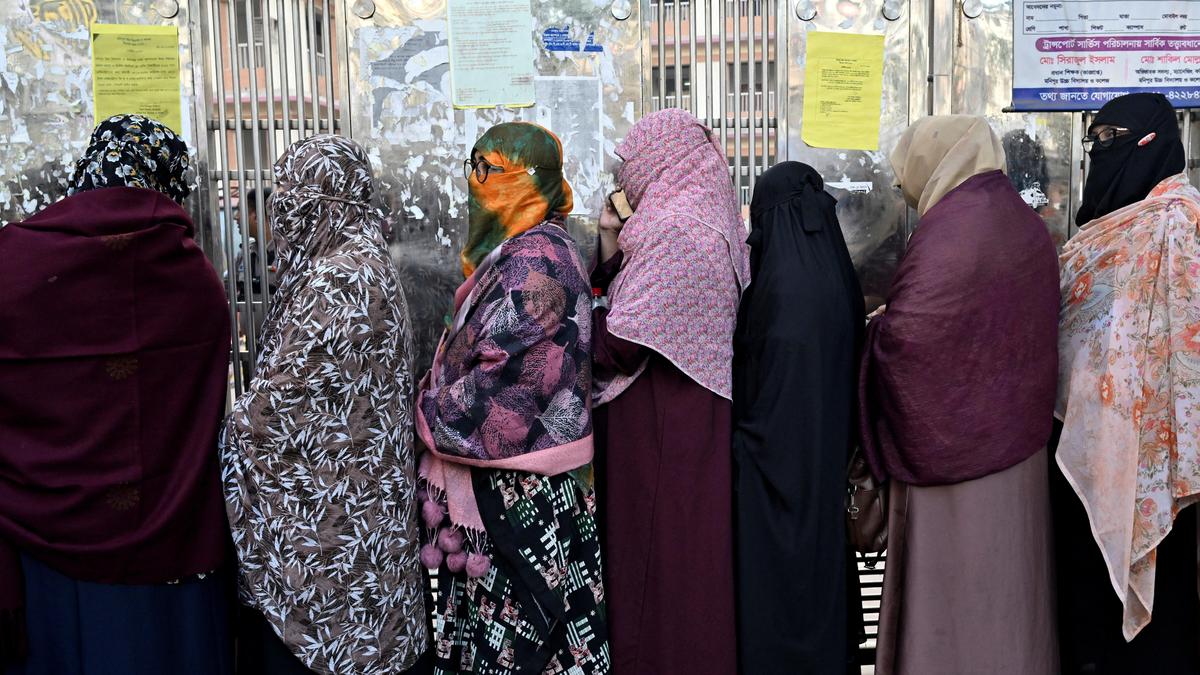
As the Bangladesh Nationalist Party (BNP) secured a landslide victory, the 13th national polls have recorded the lowest representation of women and ethnic minorities in Bangladesh in over two decades. Only seven women have been directly elected to Parliament, while representation from religious and ethnic minority communities has also fallen, with just four candidates elected.
Bangladesh election results LIVE: ‘Yes’ vote for national referendum wins clear majority, says Election Commission; BNP pushes for Sheikh Hasina’s extradition
Of the seven women elected, six are BNP nominees. The seventh is an independent candidate who was expelled from the BNP ahead of the polls.
This election marks a significant decline in women’s representation in the national Parliament compared to recent polls. In the 12th national election in 2024, 19 women won general seats. The numbers were higher in the two preceding parliaments, with 22 women elected in 2018 and 18 in 2014. The highest figure in the past two decades was recorded in 2008, when 19 women were elected. The latest polls have produced the lowest number since 2001.
According to Election Commission data, only 84 women contested the election accounting for barely 4.08% of the total candidate pool. Among party nominees, the BNP fielded 10 women, the National Citizen Party (NCP) three, the Jatiya Party six, and Gono Odhikar Parishad three. Jamaat-e-Islami and Islami Andolan Bangladesh did not nominate any woman candidates.
The four candidates from religious and ethnic minority communities who won the election are from the BNP. They are Goyeshwar Chandra Roy (Dhaka-3), Nitai Roy Chowdhury (Magura-2), Saching Pru (Bandarban), and Dipen Dewan (Rangamati).


7-Eleven expands its Global Solution Centre in Bengaluru, enhancing innovation and technical expertise for global operations and customer experience.

Malaysia encourages Indian airlines to expand routes beyond Kuala Lumpur to popular tourist destinations like Langkawi and Penang.

Hyderabad Metro Rail Phase II faces challenges due to legacy issues, outstanding debts, and scrutiny over project approvals.

Karnataka High Court scrutinizes a transport official's seizure of a Lamborghini from private premises without notice to the owner.

Bengaluru sees a surge in women autorickshaw drivers, growing from 100 to 2,000, empowering them economically and socially.

ECI reviews electoral preparedness in Puducherry, ensuring transparency, security, and accessibility for the upcoming Assembly polls.

BJP accuses Rahul Gandhi of undemocratic behavior in Parliament, demanding his stance on Vande Mataram singing notification.

Six lakh names may be removed from West Bengal's voter list, raising concerns over the electoral roll revision process.

Children’s rights must be prioritized, says Karnataka Commission chairman during inspection of Belagavi’s Special Police Unit for Children.

Experts emphasise early diagnosis, long-term care and policy support for people living with epilepsy
Experts advocate for early diagnosis, long-term care, and policy support to improve epilepsy management and reduce stigma.

Coimbatore increases security measures for 1998 bombings anniversary, deploying 2,000 police personnel and specialized teams across the city.

Law and Order: Panangal Road to be widened to remove bottleneck near GRH

Pawan Kalyan advocates for apolitical temple trust boards and inaugurates a new Giri Pradakshina route around Srikalahasti temple.