Why psychological warfare matters more than missiles, drones in West Asia crises
India Today
In the US–Iran confrontation, the contest over perception has become central. Both sides use public threats, political messaging, and media narratives to project strength and influence decision-making in Washington, Tehran, and across West Asia.
The escalating confrontation between the United States and Iran is often portrayed through images of missile strikes, drone attacks, and naval deployments in the Gulf. Yet the most decisive battlefield may not be military at all. Increasingly, the conflict is being shaped by psychological warfare, a struggle over perception, deterrence, narrative, and political signalling that can determine strategic outcomes without constant escalation on the ground.
Psychological warfare seeks to influence how leaders, populations, and allies interpret events. In modern geopolitics, shaping perception can be as powerful as destroying military targets. Narrative warfare, a key component of psychological operations, is designed to manipulate public opinion, undermine adversaries, and reinforce political legitimacy.
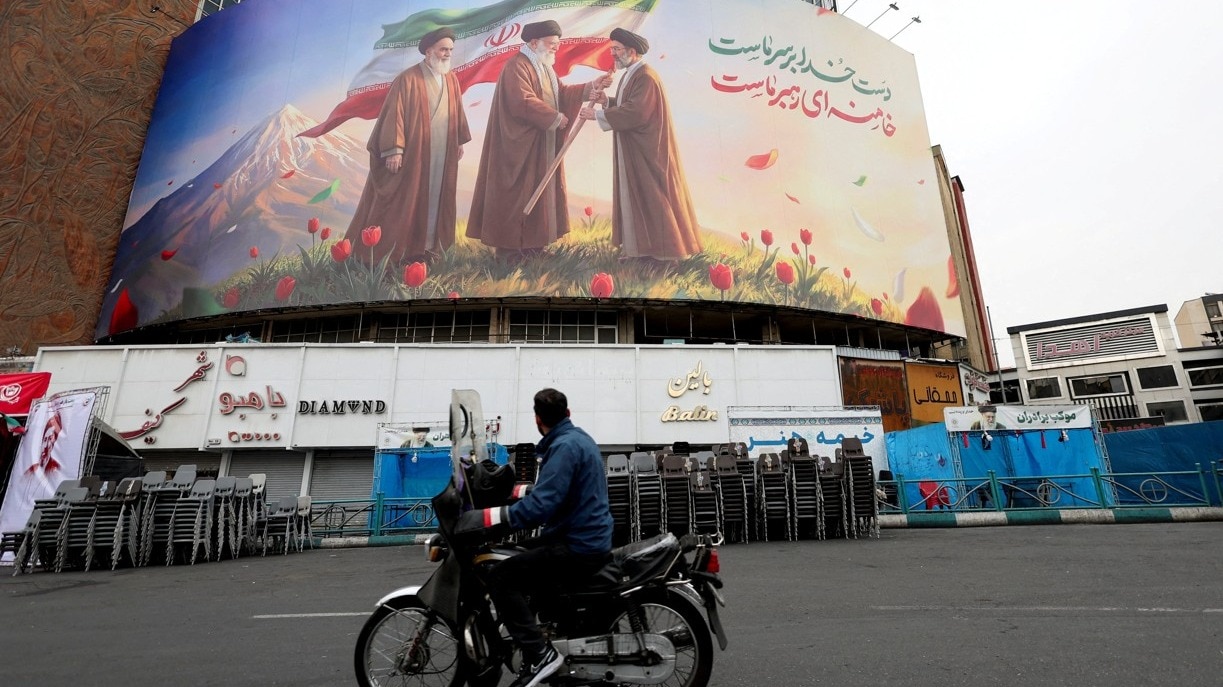
In the US–Iran confrontation, this contest over perception has become central. Both sides use public threats, political messaging, and media narratives to project strength and influence decision-making in Washington, Tehran, and across West Asia.
One of the clear examples of psychological warfare is the rhetoric coming from US leadership. According to a report by The Wall Street Journal, US President Donald Trump told aides he would support the killing of Mojtaba Khamenei, newly appointed Iranian Supreme Leader and the son of Ayatollah Ali Khamenei, if he refused to comply with American demands, sending a powerful signal beyond the battlefield. Iran's new Supreme leader, Mojtaba Khamenei (File Photo- Reuters)
Even if such statements never translate into action, their purpose is strategic. Threatening a leadership figure introduces uncertainty within Iran’s ruling elite and signals that Washington is prepared to escalate far beyond conventional military pressure.
Psychological warfare operates precisely through such ambiguity. The goal is to make the adversary question the limits of escalation, potentially forcing political concessions without firing additional missiles.


The profiles of at least three of China's leading nuclear, missile and radar experts were scrubbed from the website of the Chinese Academy of Engineering, the country's most prestigious academic body. This comes as a series of purges under Premier Xi Jinping's anti-corruption campaign have decimated the upper echelons of China's military and scientific community.

The aircraft had also been used by senior Iranian officials and military figures for both domestic and international travel, and for coordinating with allied countries, the Israeli military said. Meanwhile, Dubai International Airport has resumed flight operations after a temporary suspension of about seven hours caused by a drone strike near a fuel tank facility.

A government school teacher's gesture of buying a new uniform for an orphaned student has received widespread attention after a video of the act was shared on Instagram.

A father travelling with his toddler addressed fellow passengers ahead of a flight, asking for patience and understanding if his child became unsettled.

The lottery system for a segment of Green Cards, known as the Diversity Immigrant Visa programme, has been restarted. However, the stricter rules being enforced by the US won't impact Indian Green Card aspirants. Here's why.

Instead of putting an end to rumours, the video has triggered another wave of speculation about Netanyahu's fate. Several users on 'X' (formerly Twitter) have claimed that the video posted on 'X' was an AI-generated deepfake.

US jets strike military facilities near Iran's Chabahar free trade zone

The video, recorded inside the train coach, shows the compartment littered with snack packets, water bottles, soiled spoons and bedsheets scattered on the floor.

The US is planning to deploy a third aircraft carrier in the Middle East amid the war with Iran. Aircraft carriers, one of the most expensive defence systems, are floating military bases that project power. Here's how aircraft carriers are used and where India stands.

Donald Trump warned that Nato could face a 'very bad' future if member states fail to help reopen the Strait of Hormuz, and to support Washington's efforts amid the ongoing US-Israeli war with Iran.

When we look at Iran through the prism of religion and see a Shia Islamic country, we negate its thousands of years of rich pre-Islamic Persian culture. A dive into the world of Zoroastrianism and Vedas shows us how Indians and Iranians have been sharing languages, Gods, sciences and a sacred fire for thousands of years.

Israeli Prime Minister Benjamin Netanyahu responded directly to his death rumours by releasing a new video intended to show he was alive and continuing his duties.

A couple and two children were killed when Israeli fire hit their car in the West Bank. Two injured boys survived, their story reveals the terrifying final moments inside the vehicle.