Why It Took India 13 Years to Let Harish Rana Go: Lessons For A Nation
India Today
The Harish Rana verdict is a landmark. What it reveals about us is far more important than what it decides.
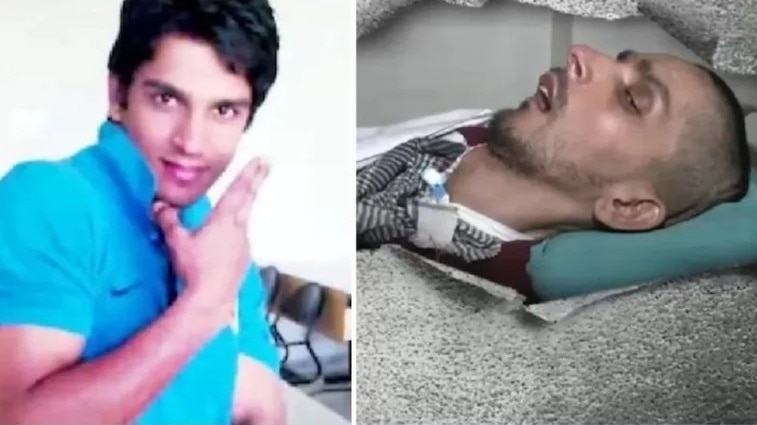
Today, the Supreme Court of India gave a family permission to let their son die. The boy's name is Harish Rana. He was pursuing BTech at Panjab University. On 20th August 2013, he fell from the fourth floor of his PG accommodation and suffered severe brain damage. He slipped into a permanent vegetative state. The doctors said there was no coming back. Yet, for more than 12 years, he was kept alive using Clinically Assisted Nutrition and Hydration (CANH) via a PEG tube. The parents kept waiting for a system to tell them what to do next.
On Wednesday, a bench of Justices JB Pardiwala and KV Viswanathan finally did. They allowed Harish's parents to withdraw the medical treatment keeping their son alive — marking the first time in Indian legal history that a court has directly allowed passive euthanasia. India Today reported that Justice Pardiwala appeared emotional while delivering the verdict. Which tells you something about the weight of what this country has been avoiding.
There is a moment in the Mahabharata — one of the quieter ones, easily missed — where Bhishma lies on his bed of arrows on the battlefield of Kurukshetra. He is mortally wounded. He could die at any moment. But he doesn't. Because Bhishma had been granted a boon — the power to choose the moment of his own death. So he waits. He waits for the uttarayana, the auspicious northward journey of the sun, for a conscious, dignified exit.
Many believe death to be a foundational idea in Indian civilisation. Hinduism does not fear death — it engages with it. The most famous lines of the Bhagavad Gita are about the soul's continuity across death, the idea that what we mourn is a transition, not an ending. Buddhist philosophy, woven deep into Indian culture, is built almost entirely on the acceptance of impermanence — the idea that clinging, to life or anything else, is the root of suffering. Jainism has Sallekhana, which is a centuries-old practice of voluntarily fasting unto death, understood not as suicide but as an act of spiritual transcendence, a release from the cycle of suffering.
For millennia, India has been one of the most philosophically sophisticated civilisations on earth when it comes to mortality.
Yet, in 2026, a family had to travel all the way to the Supreme Court for the right to say goodbye.


India on Monday said it has not held bilateral talks with the United States on deploying naval vessels to secure merchant shipping in the Strait of Hormuz. The clarification came after US President Donald Trump urged countries to send warships to keep the strategic waterway open amid tensions with Iran.

After attacking his wife, Nafees attempted suicide by inflicting injuries on himself with the same scissors. Neighbours intervened after hearing the commotion and stopped him from taking his own life.

The victim, identified as Naitik Kumar, allegedly rammed his speeding Bullet motorcycle into a scooter near Janeshwar Mishra Park in Lucknow, triggering a crash that left him dead and two others injured.

RJD MLA who skipped Bihar Rajya Sabha poll voting cites mother's illness

West Bengal Chief Minister Mamata Banerjee led a protest march in Kolkata against the alleged LPG shortage, accusing the PM Narendra Modi-led Centre of failing to ensure adequate supply.

Himayani Puri, daughter of Union Minister Hardeep Singh Puri, has moved the Delhi High Court over "false and malicious" reports linking her to convicted sex offender Jeffrey Epstein.

The family, a resident of Thyagaraju Street in Punganur town, had recently repaired the engine of their two-wheeler vehicle. A local mechanic advised the family to keep the engine running overnight to "set" the newly installed parts. However, this turned out to be fatal for the family.

The Supreme Court closed criminal proceedings against Ashoka University professor Ali Khan Mahmudabad after the Haryana government said it would not grant sanction to prosecute him over social media posts related to Operation Sindoor.

Three Congress MLAs in Bihar are reportedly out of contact as voting for five Rajya Sabha seats is underway, with the INDIA bloc and the BJP-led NDA locked in a tight contest for the fifth seat that could hinge on cross-voting.

Bunty Solanki stabbed his wife to death following a quarrel at their residence in Vadodara's Bakrawadi area. Rita died on the spot.

The girl's family members were angered over the friendship, and as a result, they called Jadhav last Saturday evening and allegedly beat him.

External Affairs Minister S Jaishankar has said that direct talks with Iran to restore shipping through the war-hit Strait of Hormuz have yielded results, stressing that direct engagement with Tehran is the most effective way to address the disruption.

This moment comes days after the Supreme Court allowed Harish Rana to die with dignity – a historic first court-ordered case of passive euthanasia in India. The court acknowledged the medical opinion that Rana will never recover and that the tubes that feed him and keep him alive are only prolonging his pain.