Why alternatives can’t replace LPG yet
The Hindu
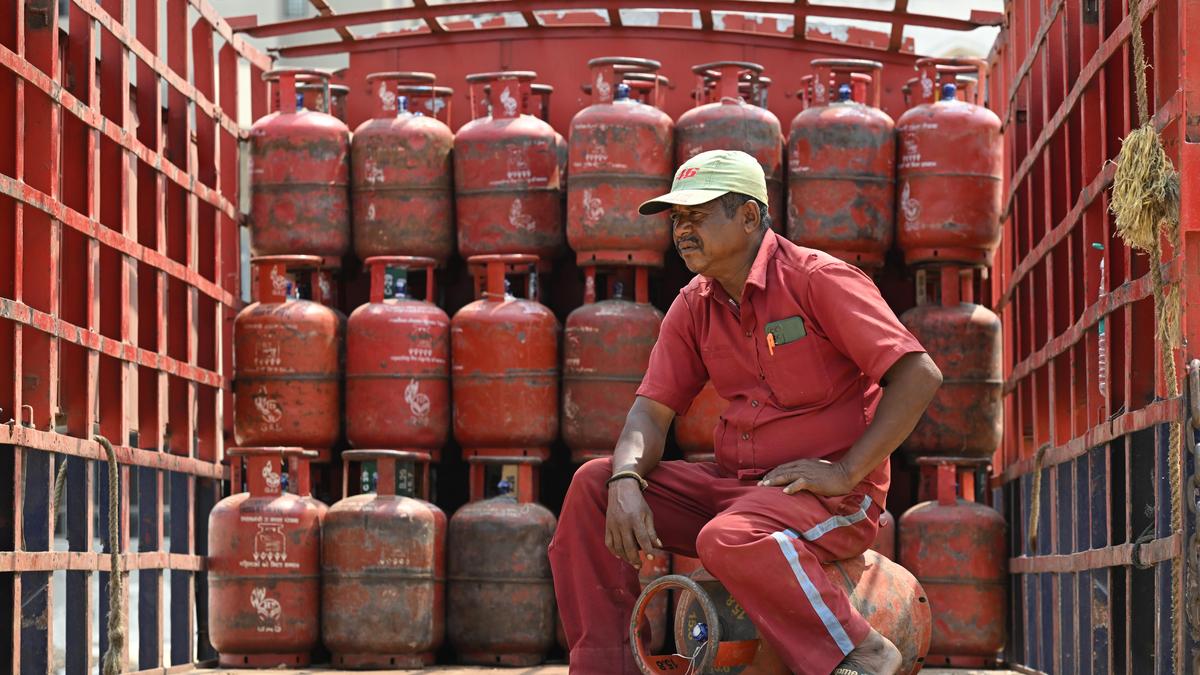
Despite the rise of renewable energy in Karnataka's energy landscape, LPG remains essential for the State's eateries and households owing to challenges in transitioning to sustainable cooking alternatives.
At a time when many eateries across Bengaluru were scaling down their menus and households were rushing to buy induction stoves due to LPG shortage, Reva Jhingan Malik and Ranjan Malik’s home in Bengaluru remained unaffected. The family moved away from LPG six years ago, shifting instead to solar-based cooking at their “mud” house.
Their home has no LPG connections, taps, and fridge or washing machine, and relies only on sustainable alternatives. The shift began during Reva’s research on learning practices in rural communities, where the couple observed how households were deeply rooted in sustainable, low-dependence lifestyles, in contrast to what she describes as the “false abundance” of urban living. Since 2020, their meals have been prepared using a three-compartment solar cooker, while their electricity needs are met through a small 850 VA rooftop solar setup.
But such self-sustained models remain an exception, particularly when it comes to urban commercial kitchens that depend on uninterrupted, high-volume cooking. That gap is reflected in the Karnataka’s broader energy mix.
Karnataka currently has a total installed power generation capacity of about 36,472 megawatts (MW), with renewable energy accounting for a larger share than conventional sources. Of the total, around 20,162 MW comes from renewable sources, while 16,310 MW is generated from thermal, hydro, and gas-based plants.
Among conventional sources, State-owned thermal power plants contribute 5,020 MW, while Karnataka receives 4,081 MW as its share from Central Generating Stations. Hydropower accounts for another 3,798 MW. Additional sources include 1,200 MW from Udupi Power Corporation Limited, 1,391 MW from captive mini-thermal plants, 450 MW from the Damodar Valley Corporation, and 370 MW from the Yelahanka Combined Cycle Power Plant.
Renewables form the largest portion of the State’s installed capacity, with solar alone contributing about 9,805 MW, followed by wind at 7,536 MW. Other sources include 1,742 MW from co-generation, 940 MW from mini hydel projects, and 139 MW from biomass. Together, these account for more than half of Karnataka’s installed electricity capacity.


Explore a comprehensive dictionary of animal names from Tamil classics, highlighting their rich vocabulary and ecological significance.

Despite the rise of renewable energy in Karnataka's energy landscape, LPG remains essential for the State's eateries and households owing to challenges in transitioning to sustainable cooking alternatives.

Discover the intriguing history of Dindigul cigars, cherished by Winston Churchill during WWII, now a fading memory.

Supreme Court quashes copyright case against filmmaker Sujoy Ghosh over 'Kahaani 2,' overturning previous court rulings.

G. Sudhakaran announces his campaign against Minister R. Prasad in Cherthala, citing unwarranted remarks and party value erosion.

Union Minister Jayant Chaudhary received a death threat from an unknown caller, leading to a police investigation and security review.

Villivakkam faces civic challenges despite infrastructure improvements, with residents demanding better healthcare, transport, and green spaces ahead of elections.

Explore the struggles of Konaseema women lured by Gulf job promises, facing exploitation and seeking safe repatriation.

CM Stalin accuses the Opposition in Tamil Nadu of being controlled by Delhi, stressing the need for state autonomy in upcoming elections.

BRS legislators protest Telangana's unfulfilled Congress promises before the 2026-27 budget presentation, demanding accountability for the Six Guarantees.

Join the Irular community in Mamallapuram to celebrate Masi Magam, reconnecting with their culture and traditions on the seashore.

Women in India face stigma, delayed diagnosis, financial barriers, and discrimination throughout their tuberculosis journey.

CPI(M) leader in Kerala faces charges for alleged sexual relations under false marriage promise, leading to woman's suicide attempt.