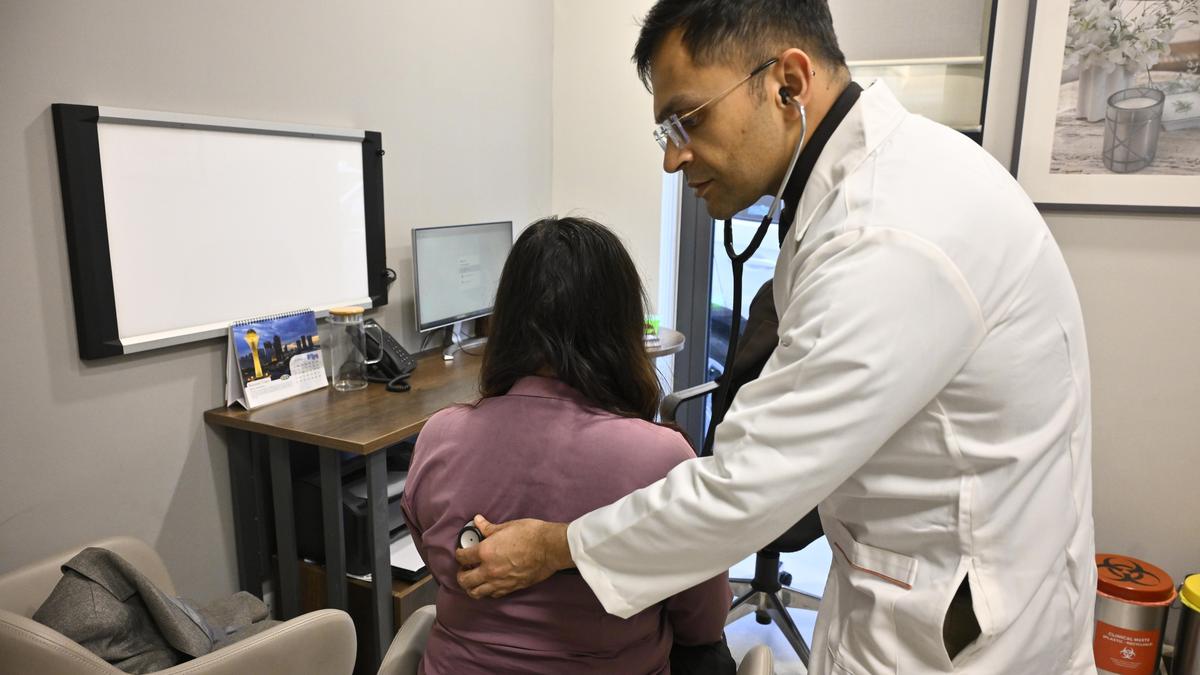
Women and TB in India: a story of deprivation, discrimination and debt Premium
The Hindu
Women in India face stigma, delayed diagnosis, financial barriers, and discrimination throughout their tuberculosis journey.
Rekha (named changed) doesn’t like being photographed, has no close friends, and is not on social media. This wasn’t the case a few years ago though.
In 2020, Rekha was diagnosed with tuberculosis (TB), having contracted it from her father, who died two years later of the disease. Following the diagnosis, treatment, and cure, the now-28-year-old survivor says, “My diagnosis changed my life forever. The stigma attached to TB runs deep. I don’t know if any person other than my own family will accept me.” She adds that her close friends abandoned her, and her relatives, fearing shared financial responsibilities vanished. She has made the decision never to get married. Rekha adds that not being married at the time of her diagnosis and treatment was a real blessing. “It would have complicated and hampered my diagnosis, treatment, and recovery,” she explains.
Rekha’s TB story isn’t unique in India. Here, women consistently face life-altering discrimination and stigma following a diagnosis.
Currently India bears the world’s highest tuberculosis burden, accounting for over 25% of global cases, with an estimated 2.7 million new infections and over 3 lakh deaths in 2024, as per the World Health Organization’s (WHO) Global TB Report 2025. The incidence dropped by 21% from 2015 to 2024, nearly double the global decline rate. The report states that 54% of people who developed TB in 2024 were men, 35% women, and 11% were children and young adolescents.
Blessina Kumar is a health activist and public health professional with over three decades of experience working with diverse communities across India. “While men carry the larger burden of TB, data alone doesn’t tell the entire TB story in India,” she says.
Education and financial capacity do not always protect a person from stigma: a TB diagnosis can adversely hit even highly educated, financially independent Indian women, she says. “We worked with a young woman physician from Maharashtra who was married and had enrolled for her specialised medical degree, when she was diagnosed with TB. Overnight she was abandoned by her husband, while the disease took a toll on her physical and mental health. She couldn’t continue her studies. It took her a few years to get her life back on track,” shares Ms. Kumar. She says very few women, including this doctor who is now a practising paediatrician, are willing to talk about their diagnosis in public.


CM Stalin accuses the Opposition in Tamil Nadu of being controlled by Delhi, stressing the need for state autonomy in upcoming elections.

BRS legislators protest Telangana's unfulfilled Congress promises before the 2026-27 budget presentation, demanding accountability for the Six Guarantees.

Join the Irular community in Mamallapuram to celebrate Masi Magam, reconnecting with their culture and traditions on the seashore.

Women in India face stigma, delayed diagnosis, financial barriers, and discrimination throughout their tuberculosis journey.

CPI(M) leader in Kerala faces charges for alleged sexual relations under false marriage promise, leading to woman's suicide attempt.

Chennai-based Harry MacLure has started a petition to help take his latest film, Calcutta, I’m Sorry, showcasing the talent of the Anglo-Indian community to a global audience

Legendary director Mani Ratnam is teaming up with Vijay Sethupathi and Sai Pallavi for his next film. The movie is produced by the filmmaker’s own Madras Talkies and Lyca Productions

Humayun Kabir claims a Muslim Chief Minister or Deputy CM is possible in West Bengal's upcoming elections, shaping political dynamics.

Tech giants Apple and Samsung oppose the Indian government's proposal to preload the Aadhaar app on smartphones due to security concerns.

Edappadi Palaniswami announces finalization of seat-sharing for Tamil Nadu Assembly elections 2026 and AIADMK manifesto release.

Uttarakhand CM Pushkar Singh Dhami expands his cabinet, inducting five MLAs to reach the maximum strength of 12 ministers.

Congress and Raijor Dal finalize their alliance for the Assam Assembly polls, sharing 11 seats and aiming to defeat the BJP.

BJP announces 112 candidates for West Bengal Assembly polls, including former MPs, lawyers, but excludes Abhaya’s mother’s candidature.