The unique flavour of Dindigul cigar, a balm to Winston Churchill in times of war Premium
The Hindu
Discover the intriguing history of Dindigul cigars, cherished by Winston Churchill during WWII, now a fading memory.
At the height of the Second World War, Winston Churchill, sunk in his armchair and enclosed in his bunker at Whitehall, London, with a frown, would have nursed his Johnnie Walker Red, while reaching out for his Romeo y Julieta, a Cuban cigar that would give him a balanced aromatic experience. But, on that day, due to the war, the consignment from Cuba may have been delayed, and his hand would have reached out to Flor de Dindigul, from India. In a distracted manner, he would have cut the crap and toasted the edges with his trade-mark scowl slowly disappearing. As he drew the smoke in and swirled it, he could taste in the top notes the heat and roaring life of an Indian summer. Strong and bold, it would have led his thoughts to stray to his time spent in India between 1896 and 1899. And, in those few moments of quietness, Churchill would have sunk deeper in his chair, forgotten war strategies, and for a few blissful moments he would have relaxed as the heady robust note was replaced by a subtle sweet tinge bringing in the unique flavour of the Dindigul cigar.
Maybe, it was then that he decided to have a regular supply of Dindigul cigars. A permanent order was placed with the Government of Madras to ensure a regular supply of the robust Dindigul cigars even during and after the war. It was said a ‘Churchill Cigar Assistant’ post was created to keep track of the order and the PWD Division in Tiruchi was responsible for procuring and sending these cigars to London. A quarterly report was also to be sent to the government on the quantity dispatched for settlement of bills by the Governor of Madras on behalf of Winston Churchill. This quarterly report was called ‘Churchill Cigar Report’. If there was no dispatch of cigars during a quarter, a report stating nothing was dispatched also had to be sent.
Tobacco was introduced in India by the Portuguese during the reign of Akbar. Cultivation spread and before long it reached south India. Regions in and around Dindigul, especially Vedasandur rich in red loamy soil, were seen as ideal for tobacco cultivation. Till the early 1980s, acres and acres of farmland in this belt was under the dark-green egg-shaped leaves of the tobacco plant. The leaves grew up to 51 inches in length and had a width of about 27 inches. These leaves captured the dark mysterious savour of a ground that would bake and crack in the intense summer heat.
As the leaves turned yellowish green, they were ready for harvest. The leaves were plucked and strung on twine and left to dry. The zephyr that would float in at dusk would carry the whiff of tobacco. For a long time, the locals would chew cured tobacco that was fermented with jaggery and honey. This often gave out an earthy and sweet aroma, and many saw this as a viable marketing business. Sensing an opportunity, in the early 1890s, Eugene Oakshott of Spencer & Co. (based in Madras) decided to expand its cigar manufacturing operation to Dindigul to meet the rising demand. About 60 acres of land was bought a little away from the bustling town, which was then restricted to the Old Palani Road.
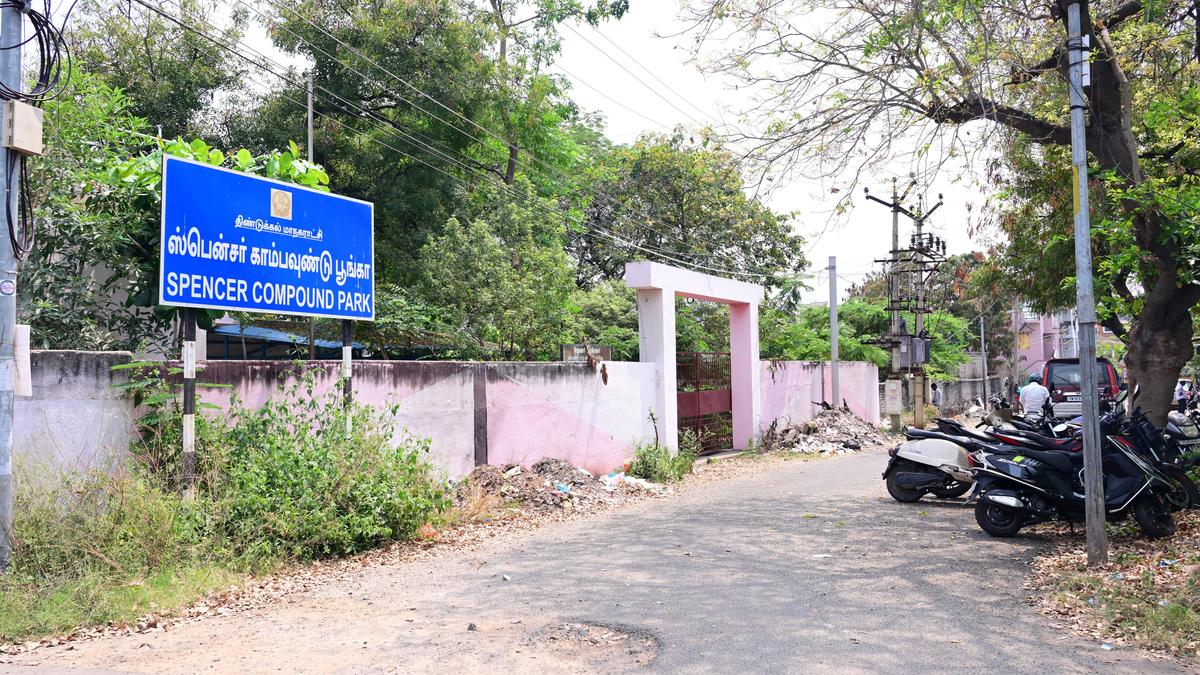
Soon, bundles of dried tobacco leaves were being brought in bullock carts to the factory in Spencer Compound, and the air wafted with the fragrance of curing tobacco that was being pounded and rolled into cigars. From the rustic and crude moist snuff chewed by the locals, the Dindigul tobacco found a refinement and finesse in the Spencer Compound. Spencer & Co. churned out brands of cigars, such as Salisburys, Gold Mohurs, Siestas, Little Randolphs, and Torpedos.
Each puff of these cigars would have brought to the palette of a cigar aficionado the full-bodied earthy smell of a dry earth. It was the scent of well-furrowed tobacco farms at Vedasandur. Once the smoke dissipated, in its place was a seductive perfume that hinted of the first rain falling on a burning earth.


Diya Chitale and Manav Thakkar reach semifinals, while Yashaswini Ghorpade upsets top seed Sreeja Akula at National TT Championships.

DYFI criticizes A.P.'s job calendar for failing unemployed youth, demanding a revision to include 1 lakh posts and higher age limits.

‘Lethargic’ officials who left Chambal sanctuary to the mercy of sand miners will be held liable: SC
Supreme Court holds negligent officials accountable for enabling illegal sand mining in Chambal Sanctuary, emphasizing habitat protection laws.

Work on the Srisailam Left Bank Canal tunnel resumes after 13 months, with completion targeted by 2027-end, says Minister Reddy.

Ancient ‘Vanni’ tree at Sri Meenakshi Sundareswarar Temple tilts; steps on to restore it

Bengaluru Metro penalises 14 passengers for disrupting services with loud singing, following a viral clip of their antics.

ASR district plans a 122 km world-class trekking network, enhancing tourism and local employment across Araku, Paderu, and Lambasingi.

Development without impact: Coastal residents of Kanniyakumari and Nagercoil constituencies voice discontent

Environmentalists in Kakinada celebrate World Sparrow Day, urging conservation efforts for sparrows and migratory birds.

T.K. Govindan secures full support from K. Sudhakaran for Kerala Assembly polls 2026 as a UDF-backed Independent candidate.

Karnataka implements weekly reviews and control rooms to combat rural drinking water shortages during the summer months.

BJP leads candidate selection for upcoming bypolls, while Congress faces internal challenges and community pressure in Bagalkot and Davangere.

A man died in a Kolkata hospital lift, prompting accusations of negligence against the West Bengal government and hospital authorities.