Masi Magam: an auspicious day for Irular community to reconnect with their roots on Mamallapuram seashores Premium
The Hindu
Join the Irular community in Mamallapuram to celebrate Masi Magam, reconnecting with their culture and traditions on the seashore.
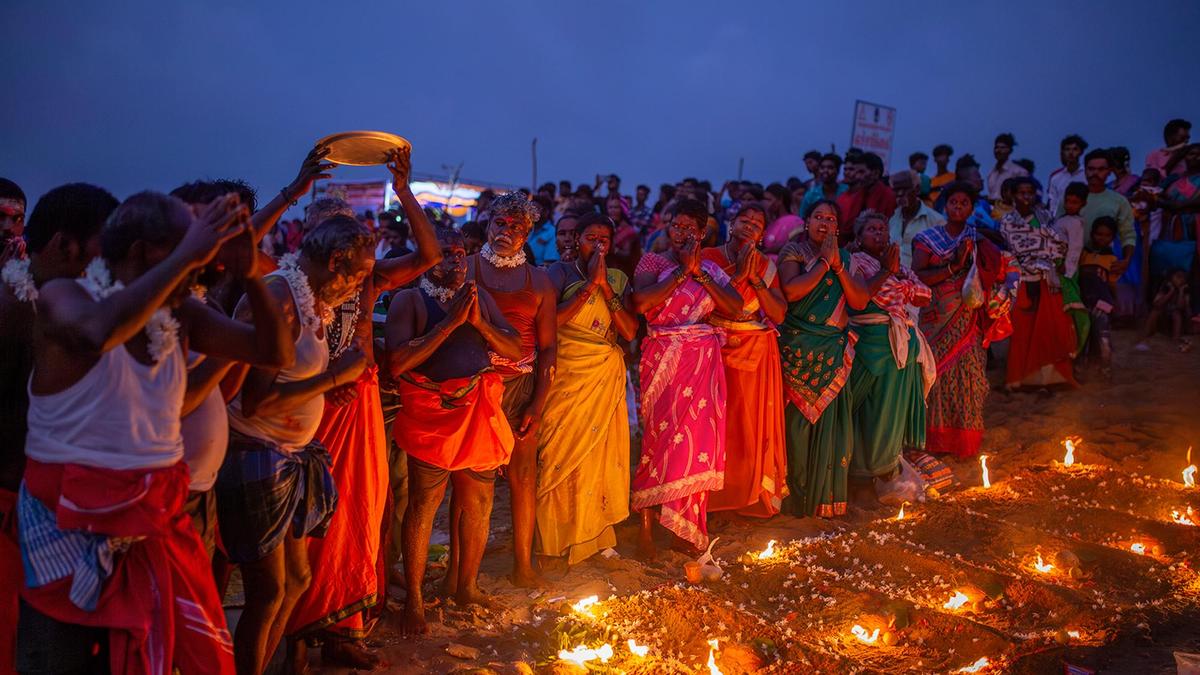
Masi Magam, an auspicious day in the Tamil calendar, is celebrated across the State with religious vigour. The festival also holds significance for the Irular community, for whom the occasion is deeply tied to their culture and collective identity. Members of the community often live on the margins and in some places as bonded labourers. In the days leading up to Masi Magam, members of the community from across Tamil Nadu gather in their thousands on the seashores of Mamallapuram, a historic coastal town known for its ancient rock-cut temples, stone sculptures, and monuments built during the Pallava dynasty.
The occasion offers them an opportunity to perform rites of passage, including marriages, naming ceremonies for children, ear piercing, tonsuring, and rituals in fulfilment of prayers offered to their patron deity Kanniammal. In fact, they come to the seashore in search of Kanniammal, who they believe had left them, to persuade the deity to return home with them. “There is a strong belief in the community that prayers offered to the deity will be answered and all rituals performed on Masi Magam are spiritually potent and effective,” said E. Tamil Selvan, guest lecturer in the Department of Anthropology at the University of Madras, who has been studying the community.
The community, designated as a Scheduled Tribe and spread across Tamil Nadu, is known for its rich traditional ecological knowledge, including expertise in handling snakes, preparing herbal remedies for snakebites, and collecting honey. Romulus Whitaker, a well-known herpetologist, worked closely with the community while studying snakes and venoms. Members of the community also engage in agricultural labour and work as wage labourers in brick kilns.
The Irulars, who participate in Masi Magam, are predominantly from the northern districts of Kancheepuram, Chennai, Chengalpattu, Tiruvannamalai, and Villupuram. For nearly a week, Irular families camp along the beach in tents, combining rituals with traditional songs, dances, and communal celebrations.
The community gathers at the seashore to bring back the deity Kanniammal, who they believe left the community in anger during the Tamil month of Margazhi. “We create seven steps representing the seven Kannis (virgins), and at dawn, almost every family arranges flowers, betel leaves, lemons, puffed rice, neem leaves, broken coconuts, and bananas to be kept at seven Kannis made of sand,” says S. Rani, 54, a leader of the community from Siruseri. | Photo Credit: Naveenraj Gowthaman
K.V. Kanniappan, 43, a member of the community from Villupuram, has worked with the International Justice Mission (IJM) as the district coordinator for the rehabilitation of the rescued bonded Irula labourers. “Attending the Masi Magam festival brings a deep sense of happiness and fulfilment. Being surrounded by so many people feels like being with family, and the occasion is truly one of joy and celebration,” he said.


CM Stalin accuses the Opposition in Tamil Nadu of being controlled by Delhi, stressing the need for state autonomy in upcoming elections.

BRS legislators protest Telangana's unfulfilled Congress promises before the 2026-27 budget presentation, demanding accountability for the Six Guarantees.

Join the Irular community in Mamallapuram to celebrate Masi Magam, reconnecting with their culture and traditions on the seashore.

Women in India face stigma, delayed diagnosis, financial barriers, and discrimination throughout their tuberculosis journey.

CPI(M) leader in Kerala faces charges for alleged sexual relations under false marriage promise, leading to woman's suicide attempt.

Chennai-based Harry MacLure has started a petition to help take his latest film, Calcutta, I’m Sorry, showcasing the talent of the Anglo-Indian community to a global audience

Legendary director Mani Ratnam is teaming up with Vijay Sethupathi and Sai Pallavi for his next film. The movie is produced by the filmmaker’s own Madras Talkies and Lyca Productions

Humayun Kabir claims a Muslim Chief Minister or Deputy CM is possible in West Bengal's upcoming elections, shaping political dynamics.

Tech giants Apple and Samsung oppose the Indian government's proposal to preload the Aadhaar app on smartphones due to security concerns.

Edappadi Palaniswami announces finalization of seat-sharing for Tamil Nadu Assembly elections 2026 and AIADMK manifesto release.

Uttarakhand CM Pushkar Singh Dhami expands his cabinet, inducting five MLAs to reach the maximum strength of 12 ministers.

Congress and Raijor Dal finalize their alliance for the Assam Assembly polls, sharing 11 seats and aiming to defeat the BJP.

BJP announces 112 candidates for West Bengal Assembly polls, including former MPs, lawyers, but excludes Abhaya’s mother’s candidature.