Vizhinjam marks the dawn of a new maritime era for India
The Hindu
Vizhinjam International Seaport, a game changer in global maritime trade, commissioned by PM Modi, boosting India's transshipment capabilities.
Helping the country explore new horizons in the global maritime trade, the newly built all-weather Vizhinjam International Seaport was dedicated to the nation by Prime Minister Narendra Modi here on Friday (May 3, 2025).
Positioned hardly 10 nautical miles from the international shipping routes connecting Europe, the Gulf region and the Far East, the east-west shipping axis, the port is expected to significantly reduce India’s dependence on other international ports for transshipment of cargo.
Festive spirit gripped the port town when Mr. Modi reached the port by around 10.30 a.m. and was received by Chief Minister Pinarayi Vijayan and his Cabinet colleagues.
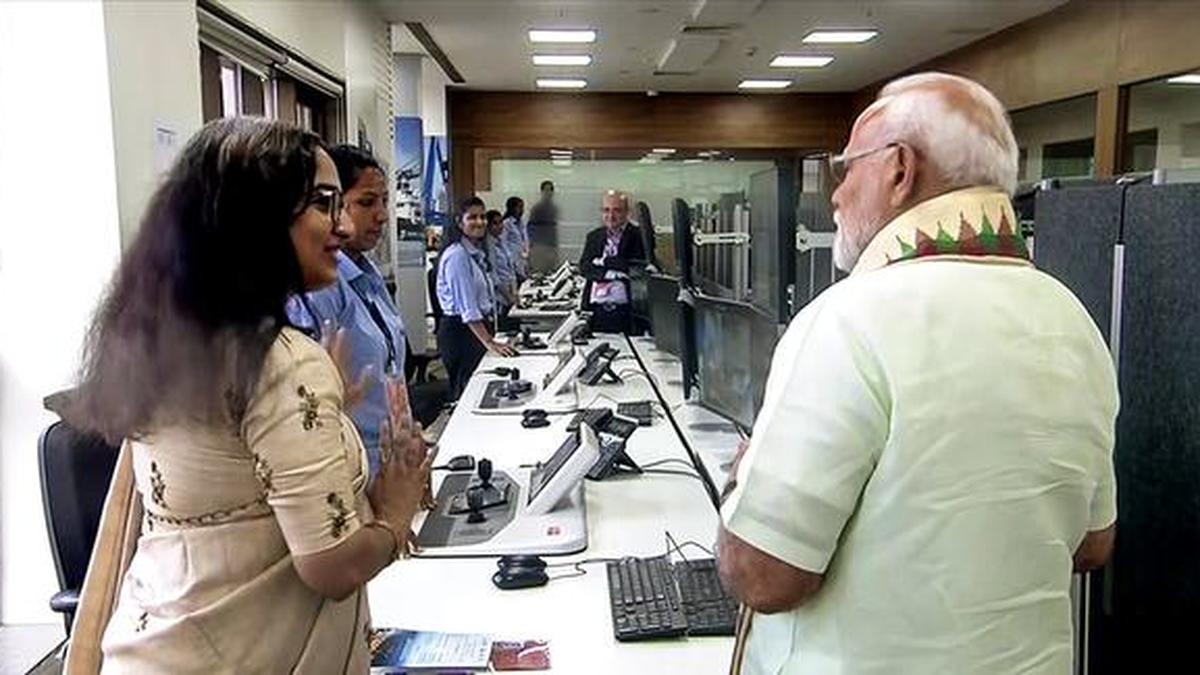
The Prime Minister then boarded the ship MSC Celestinomaresca that berthed at the port. Later, he visited the key installations, including the port operations building, before the formal commissioning of the port.
The first semi-automated one in the country, the port aims to bring home the Indian cargo transshipment presently being undertaken at the foreign ports of Singapore, Colombo, Salalah, and Dubai due to the absence of deep-water seaports in India near the international shipping route. With the port being commissioned, the Vizhinjam becomes a world-class transshipment hub for the Indian subcontinent to service the entire India.
With the site where the port is situated having a natural water depth of up to 20 meters within a kilometre from the coast, suitable to accommodate very large mother vessels, the port is expected to be a game changer for Kerala as well as in South Asia’s maritime trade.
The automation at Vizhinjam Seaport positions it as one of the most technologically sophisticated transshipment ports globally, reducing vessel turnaround times and enhancing India’s capacity to handle large container ships. The operations of all 24 yard cranes mounted at the port are fully automated, while the eight ship-to-shore cranes are operated remotely, making the port the first semi-automated port in the country.


Erode district conducts first EVM randomisation for April 23 Assembly elections, ensuring transparency and fairness in allocation.

TNCC conducts public consultation in Erode to gather community input for its upcoming election manifesto.

CID to investigate sexual assault allegations against suspended Moodbidri Police Inspector P.G. Sandesh, reveals Home Minister Parameshwara.

A 50-year-old woman was found dead in southwest Bengaluru’s Kengeri in the early hours of Monday, the police said.

Papanasam dam's water level reaches 66.15 feet, with inflow at 76 cusecs and discharge at 300 cusecs.

Development without impact: Coastal residents of Kanniyakumari and Nagercoil constituencies voice discontent

Rampant encroachments in Tiruchi threaten pedestrian safety and traffic flow, undermining smart pavement initiatives and exacerbating congestion.

Discover Kerala's electoral history in 'Vottarivu,' a 201-page booklet released ahead of the 2026 Assembly elections.

Experts at a floriculture conference in Shivamogga stress the need to reduce greenhouse gas emissions and enhance soil carbon levels.

First randomisation of EVMs and VVPATs for Tiruchi and Perambalur districts completed with political party representatives present.

Puducherry elections see ongoing DMK-Congress rift over seat-sharing, leading to candidate conflicts on nomination day.

Einstein College and Sri Sarada College in Tirunelveli celebrated significant events, honoring academic excellence and cultural heritage.

Priyanka Gandhi criticises PM Modi's West Asia remarks, urging for a comprehensive Parliament discussion on the matter.