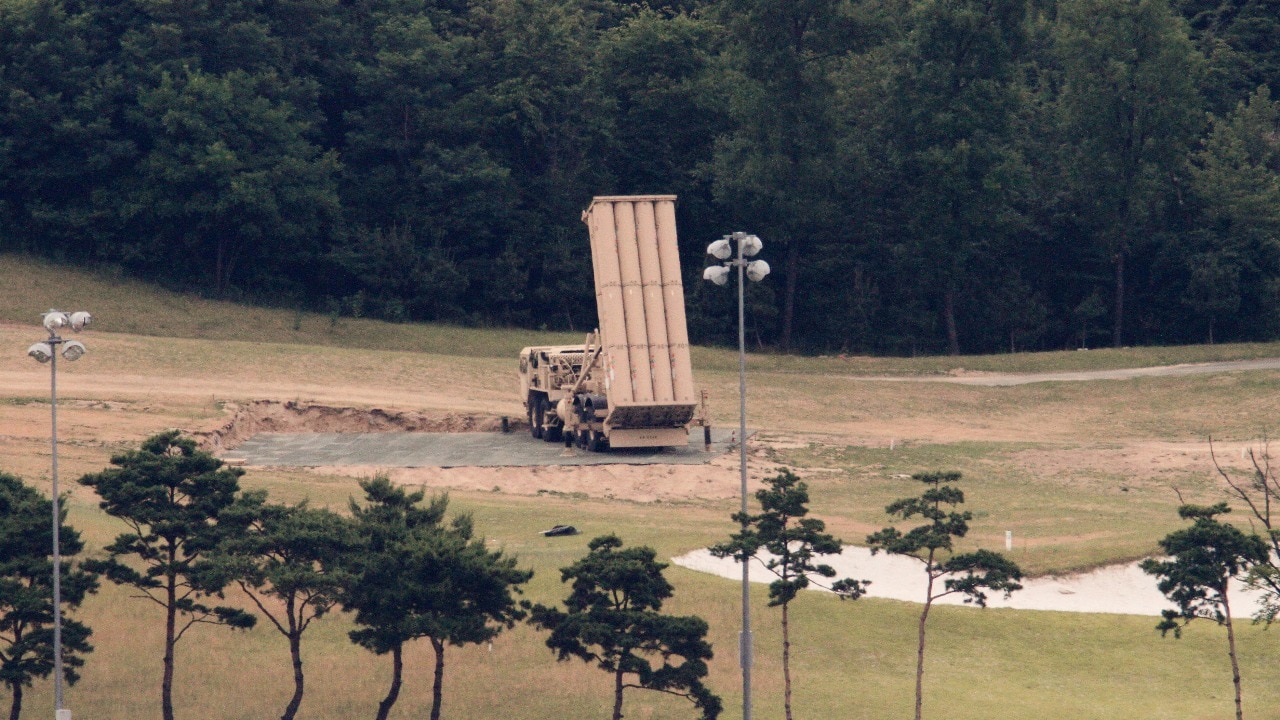
US strikes Iran, South Korea learns a tough lesson on THAAD gamble
India Today
South Korea had put a lot at stake for cooperating with the US on the THAAD project – from the wrath of China, Seoul's largest trading partner, to protests from its own citizens. Now, ten years later, one may wonder if the gamble was too big a political investment.
A decade back, cooperation with the US found South Korea dealing with a furious neighbour – China. Seoul had agreed with Washington to deploy America's terminal high altitude area defence (THAAD) anti-missile system on their soil, saying it was solely for defensive purposes to thwart North Korean threats. Beijing, however, didn't agree quite as much. They saw the move as one that could potentially compromise China's security. Seoul faced several consequences – Chinese tourism to South Korea nearly stopped, Hyundai and Kia had to close factories in China, and a Hallyu ban was imposed that saw K-pop stars quit the industry, South Korean products disappear from stores and cultural events being cancelled. Cut to 2026, the US has removed these very THAAD batteries from South Korea to be used in the Iran war.
Seoul is rattled and has opposed the redeployment, even as South Korean President Lee Jae Myung asserted that THAAD's removal would not cause a massive setback to its capability to deter North Korean threats. He told his cabinet Tuesday that while Seoul can express opposition, America cannot be stopped from shipping weapons overseas for their own military needs. "The reality is that we cannot fully push through our position," Lee said, according to CNBC.
South Korea may have learnt a lesson or two from the turn of events about political alliances. They had put a lot at stake. Relations with China, Seoul's largest trading partner, reached an all-time low. Besides, locals in the tiny town of Seongju protested, fearing they would have to bear the brunt of North Korea's ballistic missile launches. These people held marches, sometimes sit-downs, with anti-THAAD placards. But the government avoided everything, keeping their North Korean agenda in focus.
Besides THAAD, some US Patriot missile defence systems have been redeployed to the Middle East to be used in the Iran war. South Korean Foreign Minister Cho Hyun said Friday that the militaries of both sides were discussing overseas shipping.
THAAD missile defence systems are designed to intercept short, medium and limited intermediate-range ballistic missiles during their terminal phase, permitting the elimination of threats before they reach their targets. America operates as many as eight THAAD batteries across the globe, including six deployments in South Korea and two in Guam. Each battery costs about USD 1 billion and comprises six truck-mounted launchers, a tactical command unit, a radar system, and dozens of interceptor missiles.
The sudden redeployment of the missile defence systems from South Korea to the Middle East shows US President Donald Trump's commitment to the region more than its East Asian ally.


A father travelling with his toddler addressed fellow passengers ahead of a flight, asking for patience and understanding if his child became unsettled.

The lottery system for a segment of Green Cards, known as the Diversity Immigrant Visa programme, has been restarted. However, the stricter rules being enforced by the US won't impact Indian Green Card aspirants. Here's why.

Instead of putting an end to rumours, the video has triggered another wave of speculation about Netanyahu's fate. Several users on 'X' (formerly Twitter) have claimed that the video posted on 'X' was an AI-generated deepfake.

US jets strike military facilities near Iran's Chabahar free trade zone

The video, recorded inside the train coach, shows the compartment littered with snack packets, water bottles, soiled spoons and bedsheets scattered on the floor.

The US is planning to deploy a third aircraft carrier in the Middle East amid the war with Iran. Aircraft carriers, one of the most expensive defence systems, are floating military bases that project power. Here's how aircraft carriers are used and where India stands.

Donald Trump warned that Nato could face a 'very bad' future if member states fail to help reopen the Strait of Hormuz, and to support Washington's efforts amid the ongoing US-Israeli war with Iran.

When we look at Iran through the prism of religion and see a Shia Islamic country, we negate its thousands of years of rich pre-Islamic Persian culture. A dive into the world of Zoroastrianism and Vedas shows us how Indians and Iranians have been sharing languages, Gods, sciences and a sacred fire for thousands of years.

Israeli Prime Minister Benjamin Netanyahu responded directly to his death rumours by releasing a new video intended to show he was alive and continuing his duties.

A couple and two children were killed when Israeli fire hit their car in the West Bank. Two injured boys survived, their story reveals the terrifying final moments inside the vehicle.

A Bengaluru resident's social media video documenting his struggle with severe traffic congestion on his short daily commute has drawn attention to the persistent problem faced by city commuters.

A CISF officer at Delhi's Terminal 3 tracked down a passenger who left his passport at security after arriving from the US, earning public thanks and highlighting the agency's commitment to service.

In a post on X, Ali Larijani, secretary of the Supreme National Security Council of Iran, said, "I've heard that the remaining members of Epstein's network have devised a conspiracy to create an incident similar to 9/11 and blame Iran for it."