Tracing Hyderabad’s centuries-old Persian connections
The Hindu
Explore Hyderabad's rich Persian heritage through its cultural ties, mourning rituals, and lasting connections to Iran.
On March 1, as the news of the assassination of Ayatollah Ali Hosseini Khamenei spread in the Darulshifa area of Hyderabad, an impromptu gathering of people assembled within hours, wailing and expressing grief for the departed leader. “He was our rahbar, our spiritual leader, and that’s why so many people are sad,” said one of the mourners.
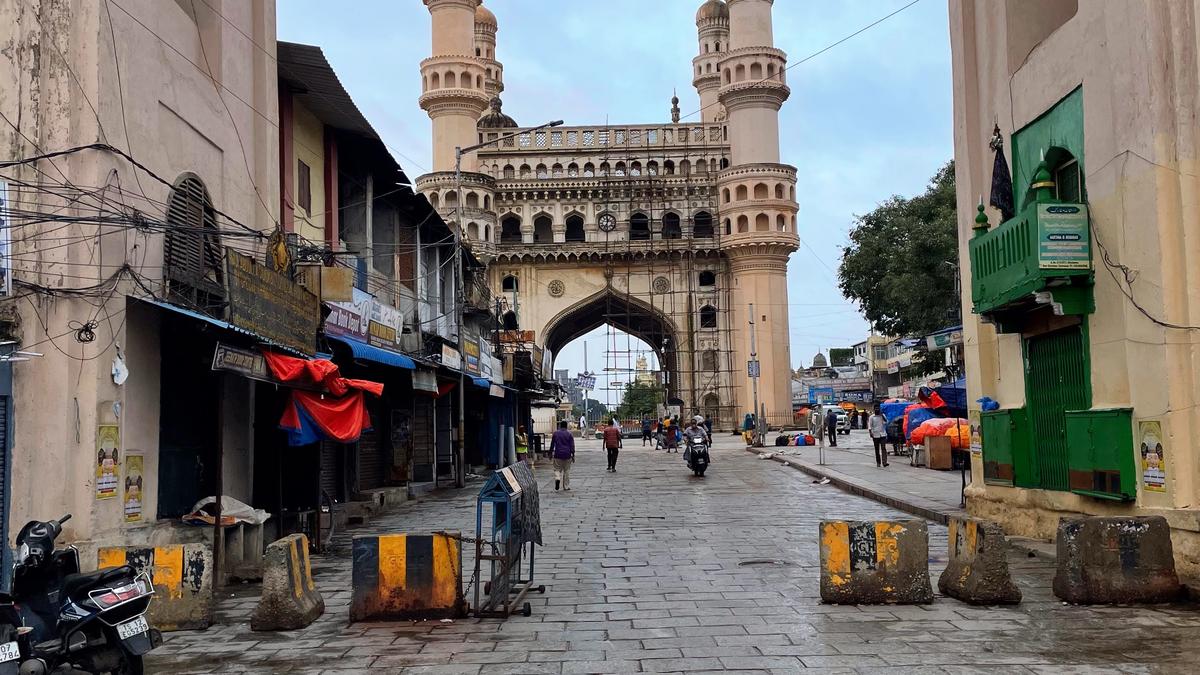
Beyond the individual grief, the location of the protest meeting, beginning at the dargah of Ibne Khatoon to its final convergence point near Darulshifa harked back to the time when Iran and India had cultural and social ties that appeared inseparable.
“The Indian and Iranian civilisations resemble each other. Hinduism and Iranians have the same Aryan roots. The political turmoil before the 16th century, before the Safavid-era led to the migration of a lot of Iranians who fled to Europe and to India,” says Mubashir Ali Khan.
Ibne Khatoon, Mir Momin, Reza Ali Khan, as well as the Qutb Shahi rulers traced their lineage to Iran. The men and women not only reached India and the Deccan plateau but changed the geo-political equation as the language, culture, social mores and food habits were transformed over a few hundred years. This intermingling of people created a bond that persists to this day.
While the Irani cafes are considered landmarks, they were also hubs for conversations and politics. Before the Islamic revolution, the two-in-ones played speeches of Ayatollah Khomeini calling for a change in regime there. Now, the Ibadat khana near Darulshifa has large posters of the Iranian religious leaders.
“One of the largest posters in Hyderabad used to be at the Tehran Cafe, near the Secretariat. It created an aura about the man and nobody thought it was out of place,” says Venkatesh Goteti, a techie who spent many afternoons at the cafe in the 80s.


PM Modi distributes land deeds to 28,000 Assam tea workers, addressing decades of deprivation under Congress rule.

The South Western Railway on Friday, issued a notification extending KSR Bengaluru-Kannur-KSR Bengaluru overnight Express via Mangaluru Central to Kozhikode.

Supreme Court denies request to mandate costly nucleic acid tests for blood banks, citing financial limitations and medical expertise concerns.

Residents of 16 villages in Gajuwaka to begin an indefinite protest on March 20 against GVMC's garbage dump.

Health Minister reports no LPG shortages for hospitals; alternative cooking methods discussed, while recruitment and health initiatives progress.

The Karnataka State Cricket Association (KSCA) is likely to receive the green signal from the multi-departmental committee to host the Indian Premier League (IPL) 2026.

Dakshina Kannada Deputy Commissioner H.V. Darshan asked eligible autorickshaw drivers to submit to Regional Transport Authority by March 31, their applications seeking permit to operate electric autorickshaws in Mangaluru City Corporation limits.

Explore Hyderabad's rich Persian heritage through its cultural ties, mourning rituals, and lasting connections to Iran.

Karnataka Bill proposed for regulating advertisement fees and penalties in municipalities, aligning with the Greater Bengaluru Governance Act.

Two arrested in Hyderabad for producing adulterated ginger-garlic paste in unsanitary conditions, facing legal action.

Hyderabad emerging as global innovation, investment hub: IT Minister

Kerala Assembly polls 2026 | Roshy Augustine will contest from Idukki constituency, says Jose K. Mani

Andhra Pradesh plans to be a defence manufacturing hub, creating 1,000 jobs with Sagar Defence Engineering's new facility.