Supreme Court declines plea to make nucleic acid tests compulsory at blood banks
The Hindu
Supreme Court denies request to mandate costly nucleic acid tests for blood banks, citing financial limitations and medical expertise concerns.
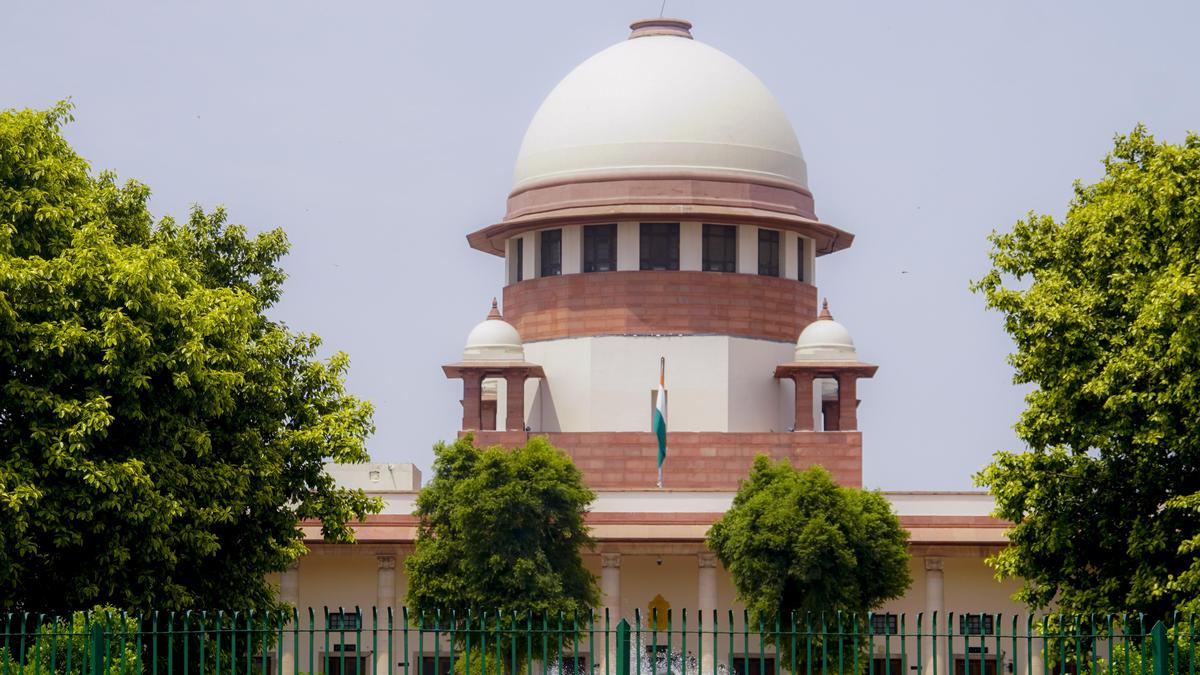
The Supreme Court on Friday (March 13, 2026) refused to direct the government to compulsorily conduct “expensive” Nucleic Acid Tests (NAT) to identify diseases ahead of blood transfusions, saying that it does not have specialised knowledge about either medical science or the costs involved.
A Bench headed by Chief Justice of India Surya Kant pointed out that States have their financial limitations, and the judges cannot “pretend to understand medical science” to pass judicial orders making NAT mandatory.
The Bench gave the petitioner — the Sarvesham Mangalam Foundation, represented by advocate A. Velan —liberty to make comprehensive representations to the Health Secretaries of States, “who may, with the aid and advice of domain experts, take appropriate decisions” on the issue.
The hearing saw the court repeatedly question the intentions of the NGO in filing the petition. At one point, the Bench asked Mr. Velan, “Do you think PILs are not funded from abroad, do you think so?”
Mr. Velan responded that the petitioner had no ulterior motives, and had only sought to highlight the case of thalassemia patients who require frequent blood transfusion and were vulnerable to the transfusion of infected blood. The petition described such medical mishaps as “preventable tragedies”.
NAT is a highly sensitive molecular technique that detects the genetic material of viruses like HIV, Hepatitis B, and Hepatitis C in the blood. In a previous hearing, the court had asked the petitioner to provide more details about the cost-effectiveness of NAT compared to the more commonly used Enzyme-Linked Immunosorbent Assay (ELISA) test. The Chief Justice had questioned if all the States could afford NAT in government blood banks and hospitals.


PM Modi distributes land deeds to 28,000 Assam tea workers, addressing decades of deprivation under Congress rule.

The South Western Railway on Friday, issued a notification extending KSR Bengaluru-Kannur-KSR Bengaluru overnight Express via Mangaluru Central to Kozhikode.

Supreme Court denies request to mandate costly nucleic acid tests for blood banks, citing financial limitations and medical expertise concerns.

Residents of 16 villages in Gajuwaka to begin an indefinite protest on March 20 against GVMC's garbage dump.

Health Minister reports no LPG shortages for hospitals; alternative cooking methods discussed, while recruitment and health initiatives progress.

The Karnataka State Cricket Association (KSCA) is likely to receive the green signal from the multi-departmental committee to host the Indian Premier League (IPL) 2026.

Dakshina Kannada Deputy Commissioner H.V. Darshan asked eligible autorickshaw drivers to submit to Regional Transport Authority by March 31, their applications seeking permit to operate electric autorickshaws in Mangaluru City Corporation limits.

Explore Hyderabad's rich Persian heritage through its cultural ties, mourning rituals, and lasting connections to Iran.

Karnataka Bill proposed for regulating advertisement fees and penalties in municipalities, aligning with the Greater Bengaluru Governance Act.

Two arrested in Hyderabad for producing adulterated ginger-garlic paste in unsanitary conditions, facing legal action.

Hyderabad emerging as global innovation, investment hub: IT Minister

Kerala Assembly polls 2026 | Roshy Augustine will contest from Idukki constituency, says Jose K. Mani

Andhra Pradesh plans to be a defence manufacturing hub, creating 1,000 jobs with Sagar Defence Engineering's new facility.