This photo exhibition in Bengaluru drives home a conservation message Premium
The Hindu
Celebrate National Wildlife Week between October 2to 8 by visiting M.N Jayakumar’s Encounters in the Wild 2.0 at the Karnataka Chitrakala Parishath (CKP).
The large photograph hanging on the wall of Hall 1 at the Karnataka Chitrakala Parishath (CKP) is a particularly endearing one. It depicts three tigers huddled close together, staring into the camera lens with unblinking amber eyes.
M. N. Jayakumar, the man behind the photo, recalls being in a particular part of the national park very early one day—around 6.15 in the morning—when he saw a tiger, Gowri, rush past them and disappear into the woods. They spent the next few hours circling around that block of the national park, he says, but could simply not spot her till much later in the morning, feeding on a sambar deer.
She wasn’t alone, but was accompanied by her four sub-adult cubs. “She had made the kill and gone rushing back to bring her cubs,” says Mr. Jayakumar, who spent the next couple of hours, watching the little family feed. “I think she wanted some rest so she brought the cubs to the waterhole to play in the water,” says Mr. Jayakumar, who clicked the snap when the family was frolicking in the waterhole. “I liked this image because it looks like a family portrait,” he says.
This photograph is one of the 231 that form part of Encounters in the Wild 2.0, a solo exhibition both celebrating global wildlife as well as commemorating 50 years of Project Tiger, the wildlife conservation movement launched in 1973 to protect and preserve the Bengal tiger. Talking about his obsession with wildlife and conservation, Mr. Jayakumar recalls the incident that started off his passion for the wild.
In 1971, his father took him to watch a khedda, or wild elephant capture in Mysuru, among the last conducted in India before the practice was banned under Schedule I of the Wildlife Protection Act, of 1972. He was only 19 back then, and the incident impacted him greatly, remembers Mr. Jayakumar. Looking back, he thinks, “I was destined to join the forest service.”
He went on to pursue agriculture at the College of Agriculture, Bengaluru, graduating with the second rank there, before turning his attention to forest service. “I wanted a career that took me outdoors,” he says. So, he joined the Indian Forest College (now the Indira Gandhi National Forest Academy) in Dehra Dun, before becoming part of the Forest Department.
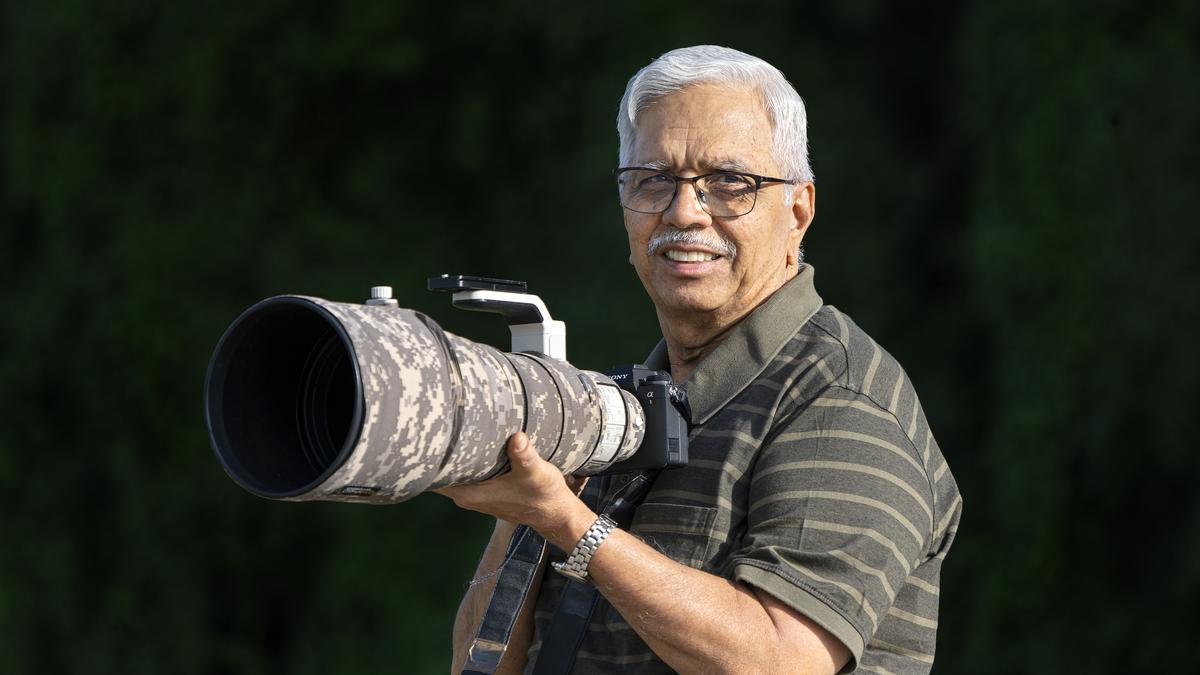
Photography happened rather serendipitously back in 1993 or so. He was working as a deputy range forest officer in Mysore, and would often host wildlife photographers from all over the country who would stop by for a meal while visiting Bandipur or Nagarahole.” On one occasion, a colleague jokingly remarked that while the whole world came to the Mysore District for photography, you—being the head of the district—are wasting your time,” he says, with a laugh. “That really spurred me to learn.”


Karnataka SC/ST Commission discusses internal reservation issues amidst confusion over reduced quotas for Scheduled Castes and Tribes.

President Droupadi Murmu serves Akshaya Patra’s 5 billionth meal, highlighting child nutrition and education at Rashtrapati Bhavan.

PM Modi and UAE President agree on ensuring safe navigation through the Strait of Hormuz amid regional tensions.

JNU student leaders face severe repercussions for activism, risking their academic futures amid allegations and online abuse.

India Post launches 24-hour and 48-hour Speed Post services in Bengaluru, ensuring urgent delivery across major metro cities.

A 24-hour control room in Krishnagiri monitors the Model Code of Conduct and manages election-related complaints ahead of polls.

Madurai Collector inaugurates voter awareness campaign

MLC Kishore Kumar Puttur criticizes the State for poor implementation of the Centre's health scheme for senior citizens.

Karnataka's Health Minister announces redeployment of specialists to taluk hospitals to reduce neonatal mortality rates effectively.

Celebrate IPL's start and Polly Umrigar's legacy, reflecting on cricket's evolution and the enduring impact of its pioneers.

BJP accuses Congress and Rahul Gandhi of endorsing an ‘anti-India’ USCIRF report undermining India's global image.

Education Ministry proposes UGC-like funding under Shiksha Adhishthan, raising concerns about centralization and public university financing.

Shivraj Singh Chouhan defends the new rural jobs Act, dismissing opposition protests as ineffective and highlighting increased funding and worker protections.