The looming threat of viral fever in twin cities Premium
The Hindu
Flu is not life-threatening, caused by a Swine flu variant H3N2, say doctors; hospitals swamped with patients; Health Minister urges public not to panic
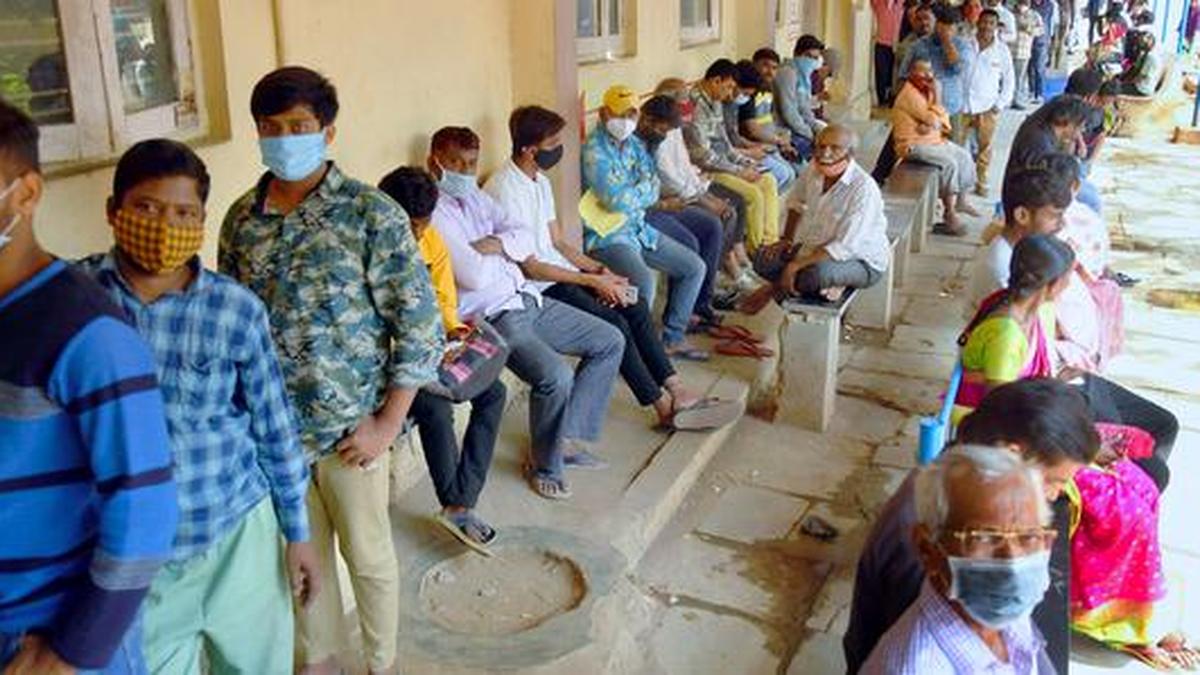
The spike in the incidence of prolonged viral fevers across the twin cities over the last few weeks has become a cause of worry for all. The number of patients with viral fever symptoms like cold, cough, throat pain, body pain and high fever has increased at both the government and private hospitals here.
The Government Fever Hospital in Hyderabad is witnessing a daily out-patient (OP) count of 600 to 800, of which 30 to 40 percent complain of viral fever. Speaking to The Hindu, Dr. Shankar, the hospital Superintendent, says, “In the last week, there has been a fever spike due to the H3N2 virus, a variant of Swine Flu.”
Another reason for the increase in cases in Telangana is the temperature fluctuation over the last few weeks. The fact that most people have stopped wearing masks has caused the flu to spread faster. Since many have already taken flu shots, there is little chance for the flu to present severely. However, those who have not taken it should do now to avoid suffering from the severe form of the infection.
“For any fever, people from the no-risk groups need not come to the doctor for the first three days. They can take ‘Paracetamol’ and monitor the fever. The situation is not alarming as of now. Senior officials from the Health Department are in regular touch and we are fully prepared to tackle if things worsen,” Dr. Shankar added.
Private hospitals are seeing an increase in patients complaining of fever. Dr. Anish Anand, General Physician at Apollo Hospitals, Jubilee Hills, says he had noticed cases of viral fever associated with loose motions lasting 4 to 5 days. The fevers are continuing up to 10 days, he says.
Yashoda Hospitals is witnessing a spike in flu cases. They generally affect the elderly or people suffering from co-morbidities. Initially, it begins with a low to high-grade fever, running nose and sore throat. After 2-3 days, some patients also develop breathlessness and cough, predominantly dry. A few also develop pneumonia, says Dr. Viswesvaran Balasubramanian, Senior International Pulmonologist, Yashoda Hospitals, Somajiguda
Generally, the outcome is good. But in high-risk patients, some patients require ventilators. The medicine prescribed is Oseltamivir,75mg, in the morning and evening for five days. Also, adequate hydration has to be ensured, adds Dr. Balasubramanian..


Karnataka SC/ST Commission discusses internal reservation issues amidst confusion over reduced quotas for Scheduled Castes and Tribes.

President Droupadi Murmu serves Akshaya Patra’s 5 billionth meal, highlighting child nutrition and education at Rashtrapati Bhavan.

PM Modi and UAE President agree on ensuring safe navigation through the Strait of Hormuz amid regional tensions.

JNU student leaders face severe repercussions for activism, risking their academic futures amid allegations and online abuse.

India Post launches 24-hour and 48-hour Speed Post services in Bengaluru, ensuring urgent delivery across major metro cities.

A 24-hour control room in Krishnagiri monitors the Model Code of Conduct and manages election-related complaints ahead of polls.

Madurai Collector inaugurates voter awareness campaign

MLC Kishore Kumar Puttur criticizes the State for poor implementation of the Centre's health scheme for senior citizens.

Karnataka's Health Minister announces redeployment of specialists to taluk hospitals to reduce neonatal mortality rates effectively.

Celebrate IPL's start and Polly Umrigar's legacy, reflecting on cricket's evolution and the enduring impact of its pioneers.

BJP accuses Congress and Rahul Gandhi of endorsing an ‘anti-India’ USCIRF report undermining India's global image.

Education Ministry proposes UGC-like funding under Shiksha Adhishthan, raising concerns about centralization and public university financing.

Shivraj Singh Chouhan defends the new rural jobs Act, dismissing opposition protests as ineffective and highlighting increased funding and worker protections.