The Israel-Hamas conflict and Nusseibeh’s analysis Premium
The Hindu
In the Israel-Hamas conflict, the question what right does the state have to wilfully sacrifice so many lives for a cause it knows is unattainable and seeking a compromise come to the fore
Sooner or later, experts and military observers will busy themselves with analysing and holding forth on who won this (ongoing) ‘war’ between the state of Israel and Hamas. The verdicts will not be unanimous and will be largely guided by the personal and national biases of the experts. But there will be no — and nor should there be any — difference of opinion about who lost.
Hamas’s lightning, brutal and simultaneous attack on several locations in Israel on Saturday, October 7, 2023, stunned Israel and the international community. The question of how Israel was caught unawares about this operation underlines the fact that it was a total failure of intelligence on the part of Israel as well as the United States. Understandably, the authorities here are reluctant to talk about this matter while the war is going on. Many ‘fall guys’ will be found, no doubt, when the inquiries are completed and published.
Prima facie, Hamas seems to have done better. The very fact that Israel had to declare ‘war’ is a morale booster for Hamas. As for Hamas, it has openly declared war on Israel ever since its foundation. When this writer lived in Gaza from 1997-99, most people were convinced that Israel had something to do with Hamas’s creation. That the mighty state of Israel, the strongest power in the region, had to officially, through a decision of its war cabinet, declare war is highly flattering to Hamas. In the past, the rocket shower ended the same day, with Israel achieving its declared objective by the end of the day. In the present conflict, Hamas managed to continue its rocket attacks for several days, inflicting extremely heavy, unprecedented casualties on Israel, resulting in many deaths, many more injured and a massive dislocation of the population in the vicinity of Gaza. The world has witnessed unspeakable cruelty by Hamas on innocent men, women and children in Israel, worthy of undiluted condemnation. But Hamas would be ‘proud’ of its accomplishment. The fact that several Palestinian civilians have lost their lives does not seem to worry Hamas too much; they will be declared martyrs.
Hamas has inflicted almost a body blow to the Palestinian Authority in Ramalla, ruled by the Palestine Liberation Organization, more specifically by the Fatah party. The position of the Palestinian Authority President Mahmoud Abbas, has become untenable and he might have to resign. Hamas’s following in the West Bank will increase manifold. Further, support for Hamas on the ‘Arab Street’ will also increase. Is it also not possible that there will be sneaking, unstated admiration, however grudging, among some western countries for the way Hamas has carried out such a well-coordinated operation?
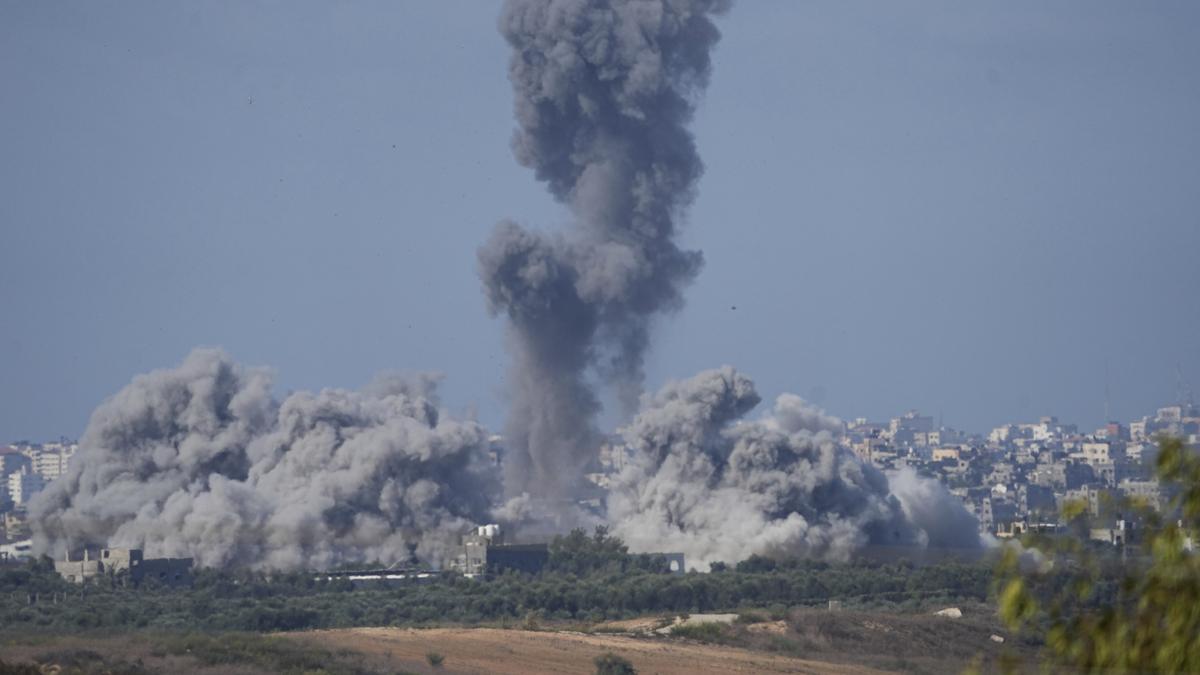
In military terms, Israel will, of course, prevail. Reports suggest that Israel has modified its goal from ‘containing’ Hamas to eliminating it. How it will go about achieving this objective remains to be seen. Will Israel mount a ground operation into Gaza? It would have to be a massive operation, consisting of thousands of troops and dozens of tanks. Casualties would be heavy on both sides. One can assume that Israel would not wish to physically reoccupy the Gaza strip, since it would be a kind of death trap.
Who lost in this war? The people on both sides. Innocent civilian citizens would pay heavily for the bloodthirstiness of leaders on both sides. This is not to say that one is suggesting equal blame on both. But it is undeniable that the price for the war will be paid by ordinary people.
The government of India has thrown its full support behind Israel. No doubt it has done so, convinced of the brutality of the attack by Hamas, but also in the belief that this posture will not have the slightest negative fallout among the Arab countries. For a long time, the ruling establishments in West Asia and elsewhere have wanted to normalise relations with Israel, which can provide them with much-needed technology and investment opportunities. One should not forget that Kuwait had expelled nearly 1,00,000 Palestinians in the early 1990s because Arafat had sided with Saddam Hussain during the first Gulf War. Arab governments do not want to do anything with the Palestinian cause. But their citizens will oblige them to rethink their wish to normalise with Israel, including Saudi Arabia’s ongoing dialogue with Israel about normalising relations with Israel. Also, such categorical support for Israel will go down well in Washington; India for once is not ‘sitting on the fence’ as it was in the Ukraine war.


Karnataka SC/ST Commission discusses internal reservation issues amidst confusion over reduced quotas for Scheduled Castes and Tribes.

President Droupadi Murmu serves Akshaya Patra’s 5 billionth meal, highlighting child nutrition and education at Rashtrapati Bhavan.

PM Modi and UAE President agree on ensuring safe navigation through the Strait of Hormuz amid regional tensions.

JNU student leaders face severe repercussions for activism, risking their academic futures amid allegations and online abuse.

India Post launches 24-hour and 48-hour Speed Post services in Bengaluru, ensuring urgent delivery across major metro cities.

A 24-hour control room in Krishnagiri monitors the Model Code of Conduct and manages election-related complaints ahead of polls.

Madurai Collector inaugurates voter awareness campaign

MLC Kishore Kumar Puttur criticizes the State for poor implementation of the Centre's health scheme for senior citizens.

Karnataka's Health Minister announces redeployment of specialists to taluk hospitals to reduce neonatal mortality rates effectively.

Celebrate IPL's start and Polly Umrigar's legacy, reflecting on cricket's evolution and the enduring impact of its pioneers.

BJP accuses Congress and Rahul Gandhi of endorsing an ‘anti-India’ USCIRF report undermining India's global image.

Education Ministry proposes UGC-like funding under Shiksha Adhishthan, raising concerns about centralization and public university financing.

Shivraj Singh Chouhan defends the new rural jobs Act, dismissing opposition protests as ineffective and highlighting increased funding and worker protections.