The 1952 Assembly election in Tamil Nadu, an illustration of the limits of poll manifestos Premium
The Hindu
Explore the 1952 Tamil Nadu Assembly election, highlighting the limitations of political manifestos in addressing regional issues.
With the Assembly election approaching fast, the State’s key political parties have started making electoral assurances, which, they say, will form part of their manifestos to be released later. These days, all constituents of one political formation or the other, regardless of their degree of influence, come out with their own manifestos. But, in the 1950s when the Lok Sabha elections were held along with Assembly elections simultaneously, all the important parties came out invariably with their respective documents, which were prepared for the entire country. There were no State-specific manifestos.
In the first elections held in 1951-52 after the country became a Republic with the system of a universal adult suffrage in place, the major contestants were the Congress and the Communist Party of India (CPI). In fact, the ban on the CPI in many parts of South India had just been lifted. Still, many of the party’s leaders were under detention. It was against this backdrop that the Communists took part in the elections. The Congress and CPI had produced their documents, keeping national issues in mind. However, the foremost issue that was of importance to people in the southern region was the creation of States on linguistic lines. At the time of the elections, the Madras State had encompassed most parts of south India.
Despite the Congress having its State-level units established on linguistic lines such as the Andhra Committee and the Kerala Committee for over 20 years, the State of Andhra had not yet come into being. The leadership of the Congress, which was sympathetic to the idea of States on linguistic lines, did not, however, take a categorical stand in favour of it. This could be seen in the party’s manifesto, which stated: “A decision on this question ultimately depends upon the wishes of the people concerned. While linguistic reasons have undoubtedly a certain cultural and other importance, there are other factors also such as economic, administrative and financial, which have to be taken into consideration. Where such a demand represents the agreed views of the people concerned, the necessary steps prescribed by the Constitution, including the appointment of a boundary commission, should be taken.”
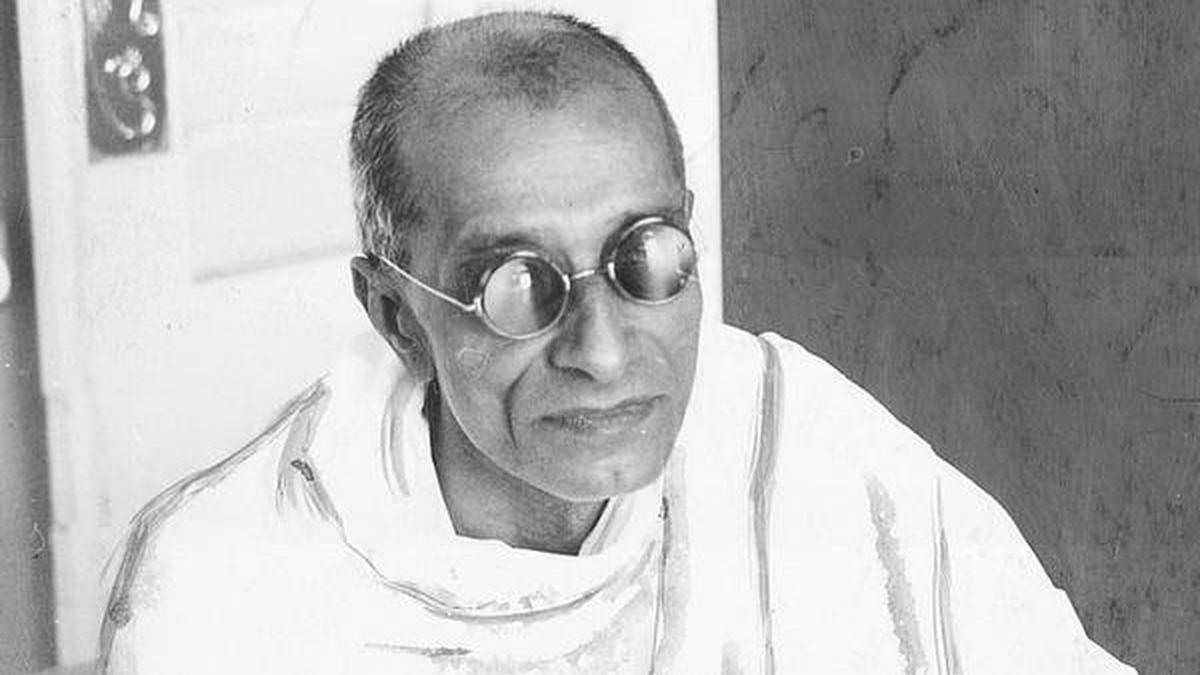
Leaders including C. Rajagopalachari or Rajaji were against the idea, as they held the view this would lead to fissiparous tendencies in the country, which found it then extremely difficult to come to terms with the reality after Partition. Rajaji had argued that the “mix of languages and cultures” had been Tamil Nadu’s (then called Madras) strength and if divided on the basis of language, the province, “once so big and important and progressive, will hereafter grow narrow-minded and intensely anti-culture”, according to The Rajaji Story (1937-72) by Rajmohan Gandhi.
It was in Chennai that the CPI had announced its decision to contest the election and A.K. Gopalan, one of the towering leaders of the Left movement, made the announcement, according to a report of The Hindu published on June 12, 1951. Explaining the rationale behind the party’s opposition to the Congress, he observed even veteran Congressmen were disillusioned and disappointed with the functioning of their party and were leaving the organisation. He called for a united fight. Two months later, the party released a 7,000-word manifesto with a 15-point programme and Jyoti Basu, who became Chief Minister of West Bengal in 1977 and held the post for 23 years, unveiled the document in Kolkata. It called for the establishment of a People’s Democratic government, which would include democratic parties, groups, peasants, middle class and the national bourgeoise, standing for “genuine industrialisation” of the country.
Demanding a “complete break” with the British empire, the party had advocated confiscation and nationalisation of all British capital, abolition of landlordism without compensation and the transfer of all land to the tillers of the soil and granting a living wage to workers and employees, this newspaper reported on August 16, 1951.


Kashmir seeks to revive tourism with blooming almond and tulip gardens, inaugurated by Chief Minister Omar Abdullah this spring.

Nurses' strike in Kerala disrupts private hospitals, leaving patients without care as key departments struggle to function.

Chennai's two-tier Port-Maduravoyal elevated corridor is set for completion by November 2027, enhancing local and heavy vehicle connectivity.

Maharashtra introduces 'Come Early, Go Early' scheme for women government employees in MMR to support work-life balance.

Mamata Banerjee ends her protest but vows to continue fighting for voter rights amid allegations against the Election Commission.

T.M. Krishna explores evolving meanings of national symbols at his book launch, challenging perceptions and historical narratives in Chennai.

Deloitte launches ConnectSafe, India's first cybersecurity facility in Bengaluru, focusing on safeguarding critical infrastructure and human lives.

Harish Rao flays Congress for undermining democratic systems in Telangana

The developments in the Anthropic case have serious implications for AI development and national security calculus worldwide

Yelagiri Hills faces its first forest fire of the season, prompting patrol teams to prevent future incidents amid rising temperatures.

Women entrepreneurs in Puducherry received training on digital marketing and business promotion tools to enhance their market competitiveness.

Explore K.K. Venugopal's memoir, "An Accidental Lawyer," a journey of self-discovery and reflections on his legal career.

GVMC projects Visakhapatnam's water demand will rise to 726 MLD by 2040 due to significant upcoming developments.