Technical failure in ballast water management could have led to sinking of ship, say officials
The Hindu
Preliminary findings reveal technical failure in ballast water management causing the sinking of container vessel MSC ELSA 3.
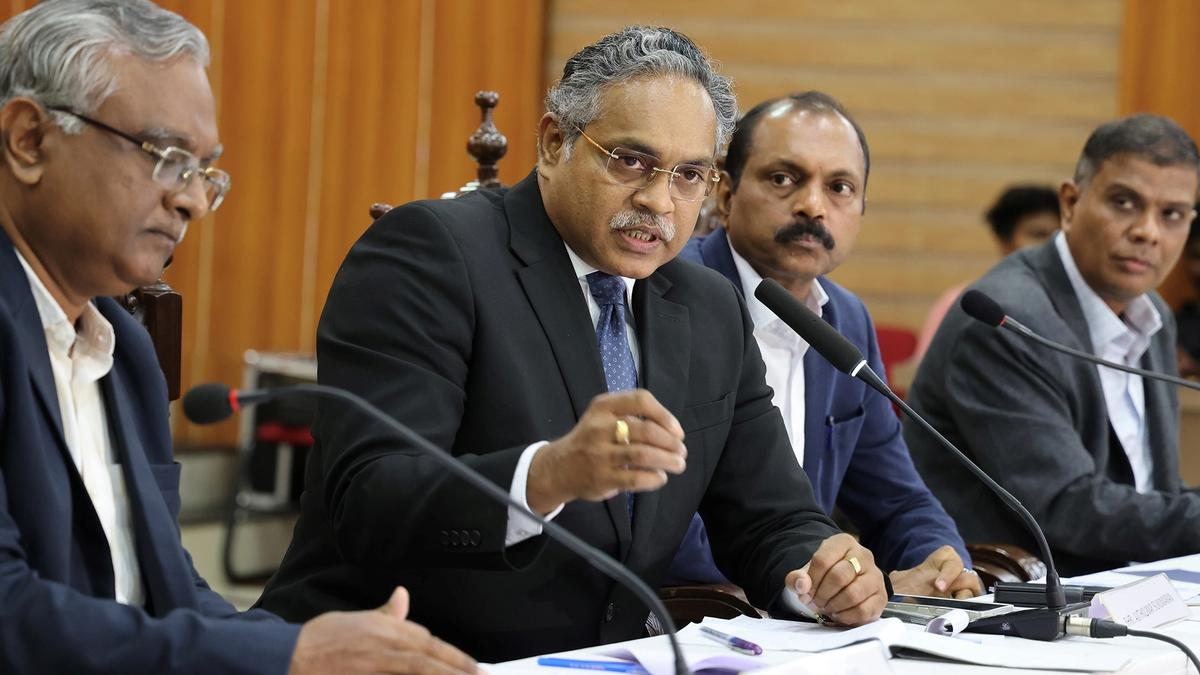
Preliminary findings of the probe into the sinking of container vessel MSC ELSA 3 off the Kerala coast with 640 containers on board point to technical failure in ballast water management, which in turn caused the ship to tilt over 20 degrees and sink, officials of the Shipping Ministry and the Mercantile Marine department (MMD) said here on Wednesday.
The officials included Director General of Shipping Shyam Jagannathan; Nautical Advisor to the Government of India Capt. Abul Kalam Azad, Chief Surveyor of the Directorate General of Shipping Ajith Sukumaran, and Principal Officer of the MMD’s Kochi office J. Senthil Kumar.
Mr. Jagannathan said none of the 50 containers that were washed ashore along the 120-km coastline of Alappuzha, Kollam and Thiruvananthapuram during the past few days had any hazardous cargo like calcium carbide. Most containers were empty, while the others had cotton bales and plastic pellets. The containers will be recovered in two days and disposed of.
The prime focus now is on recovering oil and other pollutants from the vessel, followed by containers which are said to have cargo like ethylene polymers. The ship’s owner firm MSC has roped in global firms with expertise in retrieving such cargo, while the Indian Coast Guard’s specialised oil spill response team has been deployed to prevent damage to marine resources. There are internationally binding norms to settle insurance claims and compensate fishers from the Kerala coast for their loss of livelihood, he said and added that prima facie there was no reason to suspect sabotage.
Terming the sinking incident as the largest along the Indian coast, Mr. Sukumaran said that preliminary inference pointed to mechanical failure in ballast water management, a safety precaution that is taken in all ships to overcome the effect of ‘rolling and pitching’ while on the sea, and the subsequent loss of power. This could have been caused by the malfunctioning of the ballast management valves.
On several shipping firms deploying old vessels to Indian ports (the sunk ship was 28 years old), he said many stakeholders had expressed concern about the matter. Steps were under way to revise safety and other norms in this regard.
The officials said that although the International Maritime Organisation (IMO) had not issued any age-related norms for ships, there were concerns about the operational efficiency of older vessels.


NCB's search in Mysuru found no drugs, clarifies Home Minister G. Parameshwara amid concerns over local drug networks.

Families spanning three generations were a common sight

Paddy on 300 acres wilting as no water released in Third, Fourth Reaches of Manimuthar Dam, farmers complain

The Asian Waterbird Census 2026 reveals a 60% increase in Kollam's waterbird count, but also troubling ecological trends.

Senior BJP member and former Minister S. Suresh Kumar on Friday demanded that the report of the Special Investigation Team (SIT) that probed the alleged mass burial case at Dharmasthala be tabled in the Legislative Assembly.

A 23-year-old criminal, Mohammad Moin Qureshi, arrested after a shootout in Delhi, confessed to murdering a man in a cafe.

TVK challenges Tamil Nadu's SOP for political rallies in Madras High Court, alleging unconstitutional restrictions on political activities.

Congress MP Manickam Tagore demands action against DMK's Thalapathi, asserting Congress's strength ahead of upcoming elections in Madurai.

AIADMK launches a data-driven campaign to regain missing votes, combining booth-level analysis with a cost-of-living outreach initiative.

Karnataka Governor Thawar Chand Gehlot emphasizes role of education in fostering morality and social responsibility at convocation of Davangere University.

Karnataka government allocates ₹40 lakh for 20 Kambalas in Dakshina Kannada and Udupi districts to support traditional events.

Praful Patel confirms no opposition to Sunetra Pawar's leadership in NCP, pending family consent for key appointments.

On World Cancer Day, a cancer survivor examines how treating the mind alongside the tumour is finally becoming a critical pillar of oncology in India