‘Stricter product standards, curriculum reform and mandatory CME key to patient safety in India’
The Hindu
India must implement stricter product standards, curriculum reform, and mandatory CME to enhance patient safety, says Apollo's Sangita Reddy.
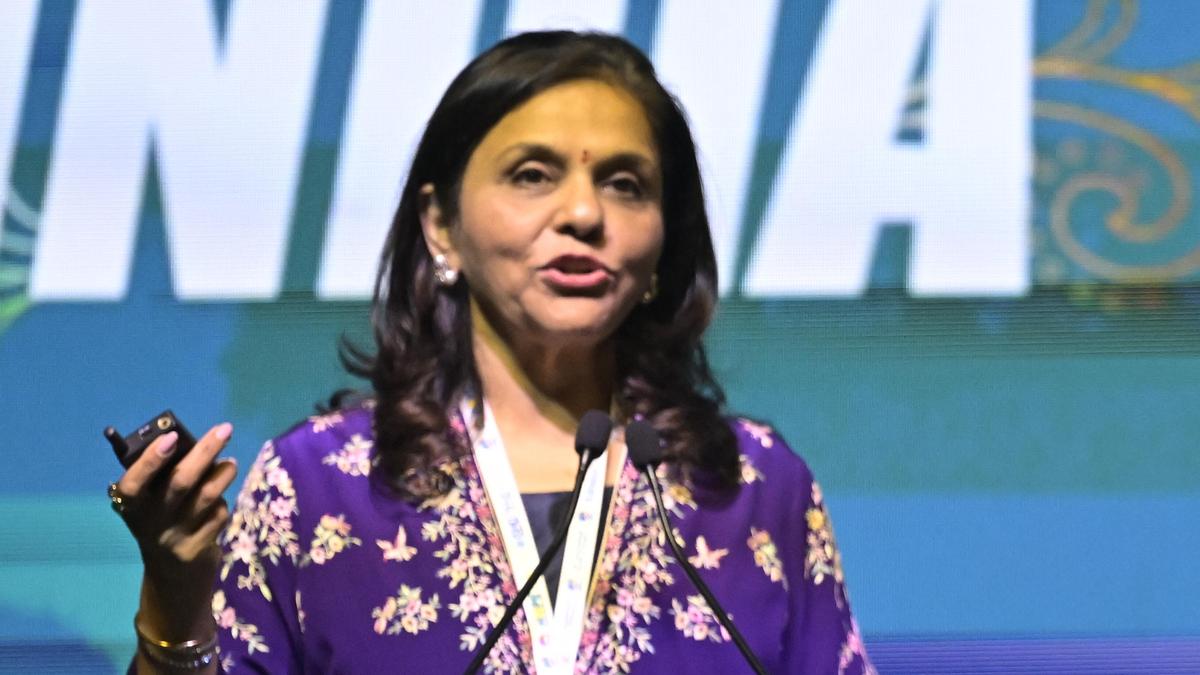
Stricter quality control of medical products, reform of medical and nursing education, mandatory Continuing Medical Education (CME) for practising doctors and a pragmatic approach towards informal practitioners are among the most urgent steps India must take to strengthen patient safety, according to Sangita Reddy, Joint Managing Director of Apollo Hospitals.
Speaking to The Hindu on the sidelines of the 13th International Health Dialogue 2026 in Hyderabad on Saturday (January 31), Ms. Reddy outlined what she described as structural gaps that need attention if India is to elevate safety standards uniformly across the country.
At the top of her list was the need for tighter regulation of medical products entering and circulating in the Indian market. She warned that poor-quality consumables, including gloves, are sometimes available due to dumping practices by certain countries. “The doctor puts it on and there is a hole in the glove,” she said.
The second major reform area, she said, lies in medical and nursing education. “Infrastructure alone does not determine quality. What matters more is the syllabus, teaching methodology and learning outcomes,” she added.
Ms. Reddy also flagged the absence of mandatory CME for doctors who qualified decades ago and continue to practise. She said that ‘introducing compulsory CME would significantly elevate standards of care and ensure that practitioners remain updated with current protocols and advances’.
On Telangana’s efforts to position itself as a medical innovation and medical tourism hub, Ms. Reddy said infrastructure investment by large hospital groups is already in place. However, she stressed the need for coordinated government facilitation, including support mechanisms for international patients and their families at airports and during recuperation. “Small but thoughtful differentiators could give Hyderabad an edge over established medical tourism centres such as Mumbai, Delhi and Chennai, which currently attract higher patient volumes,” she added.


The government plans to amend the FCRA, introducing new regulations for NGO asset management and accountability for key functionaries.

The draft policy for “Responsible Digital Use Among Students”, released on Monday by the Department of Health and Family Welfare, has recommended that parents set structured routines with clear screen-time rules and prioritise privacy, safety, and open conversation with children on digital well-being.

Police Observer Sushant Kumar Saxena conducts surprise inspection at Shencottai police station, reviewing warrants and security arrangements ahead of elections.

Andhra Pradesh government to launch key projects in April, focusing on industrial growth and infrastructure development, says Nara Lokesh.

Lok Sabha refers the Corporate Laws (Amendment) Bill to a JPC amid opposition concerns over CSR provisions dilution.

SHG members in Kanniyakumari use snakes and ladders to raise election awareness and boost voter turnout.

Government accelerates consultations for early implementation of the Women’s Reservation Act to ensure women’s representation in 2029 elections.

CM A. Revanth Reddy distributes ₹1 crore insurance cheques to families of deceased Electricity department employees, enhancing financial security for workers.

The Bengaluru Traffic Police (BTP) registered 634 cases of drunk driving during a week-long special enforcement drive conducted across the city between March 16 and March 22.

GHMC intensifies action against property tax defaulters, seizing properties and offering a One Time Settlement scheme for payments.

CCB arrests three drug peddlers in Mangaluru, seizing ₹2.5 lakh worth of MDMA and other valuables.

TVK's 28 candidates in Puducherry include former BJP MLAs, a sitting Independent, and a retired police IG.

BRS submits notice on private member bill to Speaker