Shrinking shock absorbers of Bannerghatta National Park in Bengaluru Premium
The Hindu
Explore the implications of reduced Eco-Sensitive Zones around Bannerghatta National Park, near Bengaluru, and its impact on wildlife conservation.
For a State that takes pride in having the country’s highest elephant population at 6,013, even as it has suffered a high rate of human casualties due to attacks by elephants (20 deaths in 2025-26 alone), Karnataka ought to be in the forefront of maintaining Eco-Sensitive Zones (ESZ).
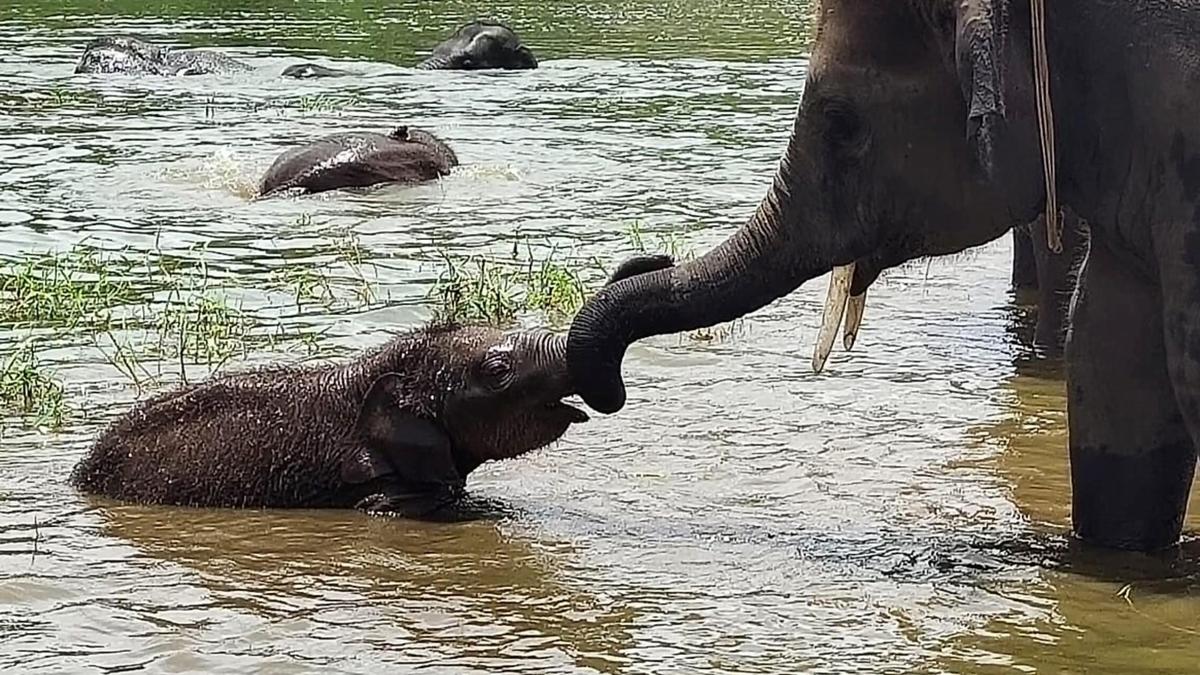
Bannerghatta National Park, near Bengaluru, acts as a terminal point on the northern side of the Mysore Elephant Reserve, the movement path for Asian Elephants to migrate from the adjacent Cauvery wildlife Sanctuary of Karnataka, and Krishnagiri and Hosur Forest Division of Tamil Nadu. | Photo Credit: K. MURALI KUMAR
However, instead of maintaining the ESZ, whose main objective is to function as a buffer for protected areas, successive governments have worked at reducing the ESZ around the Bannerghatta National Park (BNP), which is home to three elephant corridors — Karadikal-Mahadeshwara, Thally-Bilikal and Bilikal-Jawalagiri — and over 150 elephants.
In 2015, the Karnataka government submitted a proposal for declaring the ESZ around BNP in Bengaluru.
The ESZ initially proposed around BNP in the draft notification dated June 15, 2016, covered an area of 268.96 sq. km. Subsequently, this was reduced to 181.57 sq. km., and thereafter to 168.84 sq. km. in the final notification dated March 11, 2020.
In the 2016 draft notification, the BNP’s ESZ was 100 m to 4.5 km from the boundary of the national park, which was subsequently reduced to 100 m to 1 km in the 2020 ESZ notification.


KPCC chief Sunny Joseph emphasizes UDF's focus on Sabarimala and corruption while expressing confidence in winning Kerala's upcoming Assembly elections.

A military plane crash in Colombia leaves 125 aboard, with at least 48 survivors rescued amid ongoing recovery efforts.

‘Symposium’, a new platform to promote lifelong learning and counter misinformation among youth, was launched in Hyderabad.

By using TB as an entry point, integrated healthcare delivery can optimise and improve public health efficiency

Residents of Chettichavadi express concerns over deteriorating groundwater quality due to long-standing garbage dumping issues in Salem West.

Community Health Officers in Vijayawada protest for reduced workload and continued incentives amid growing dissatisfaction over salary changes.

Telangana faces 13,929 healthcare vacancies, primarily in doctors and nurses, as recruitment efforts aim to address the shortage.

For most patients with TB who are severely underweight, nutritional support is an essential and not optional part of treatment

Family of custodial death victims demands harsh punishment for nine convicted policemen to prevent future abuses of power.

Rajinikanth refutes TVK leader's claims about DMK threats preventing his political entry, expressing gratitude to supportive political figures.

CM announces Cabinet Sub-Committee on Musi rejuvenation; rehabilitation for all displaced

Ramanathapuram identifies 145 polling stations as sensitive, ensuring security with paramilitary forces ahead of assembly elections, says DEO.

BJP Puducherry president V. P Ramalingam files nomination for Raj Bhavan, joined by Union Minister Mandaviya and Khushbu Sundar.