Secret caves to Russian crude: India's shield against Iran war oil shock
India Today
India imports around 90% of its energy needs, leaving it vulnerable to sudden supply chain shocks, as the Iran war has shown. However, over the years, India has quietly strengthened its energy security via a network of underground storage caves and by diversifying its oil basket. Thus, despite the Middle East turmoil, oil is well for India.
The Iran war has exposed India's energy reality - Delhi imports around 90% of its crude oil, and 60% of its LPG and 50% of its LNG requirements. Such high dependence makes India vulnerable to sudden supply chain shocks, as the closure of the Strait of Hormuz has shown. However, over the years, India has quietly strengthened its energy security via a network of underground storage caves and by diversifying its oil basket. The strategic moves have prevented India from pressing the panic button, while countries like Pakistan have gone into lockdown mode.
However, it is not that the ripple effect of the Middle East conflict has not been felt by India. Prices of LPG, widely used as a cooking fuel, have been increased, and several states have reported shortages of commercial cylinders, mainly affecting restaurants and hotels. While price volatility may be unavoidable, India remains better placed than before on its energy security. Stay with us, and we will explain how.
Let's understand the present situation first. According to Petroleum Minister Hardeep Singh Puri, India has 25 days of crude oil. Petrol and diesel stocks can last another 25 days apart from the strategic oil reserves. Cooking gas or LPG can last around 25-30 days, while LNG, primarily used for industrial applications, avilability is around 10 days.
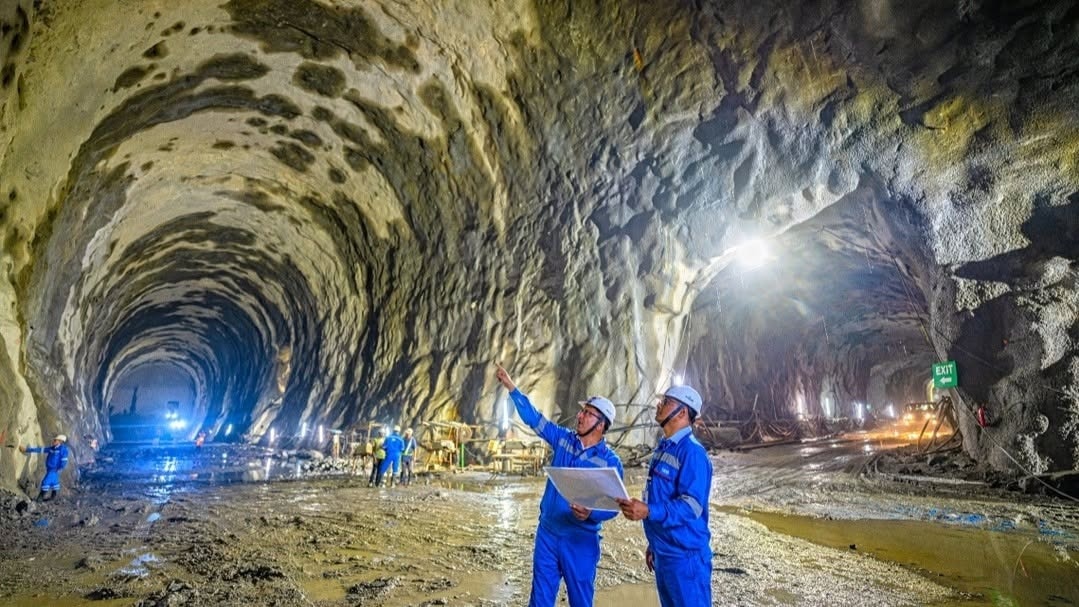
However, India is far from losing its sleep. The key to it is its secret underground crude oil storage caves at three key locations -- Visakhapatnam (Andhra Pradesh), Mangaluru (Karnataka), and Padur (Tamil Nadu).
The oldest among them is in Vizag, developed about 10 years ago by Indian Strategic Petroleum Reserves Ltd. These caves can together hold 5.33 million metric tonnes of crude oil (40 million barrels), sufficient for around 10 days of national requirement.
What makes such underground facilities ideal is that they remain secure from external attacks or drone strikes and natural disasters. Moreover, these require lower operational costs and being deep underground, the caves minimise risks of fire or oil spillage.


India Today's OSINT team identified at least 22 Indian-flagged vessels operating in the Gulf region, including seven LPG carriers, seven oil tankers, four container ships, two bulk carriers, one tug and one dredger.

India on Monday said it has not held bilateral talks with the United States on deploying naval vessels to secure merchant shipping in the Strait of Hormuz. The clarification came after US President Donald Trump urged countries to send warships to keep the strategic waterway open amid tensions with Iran.

After attacking his wife, Nafees attempted suicide by inflicting injuries on himself with the same scissors. Neighbours intervened after hearing the commotion and stopped him from taking his own life.

The victim, identified as Naitik Kumar, allegedly rammed his speeding Bullet motorcycle into a scooter near Janeshwar Mishra Park in Lucknow, triggering a crash that left him dead and two others injured.

RJD MLA who skipped Bihar Rajya Sabha poll voting cites mother's illness

West Bengal Chief Minister Mamata Banerjee led a protest march in Kolkata against the alleged LPG shortage, accusing the PM Narendra Modi-led Centre of failing to ensure adequate supply.

Himayani Puri, daughter of Union Minister Hardeep Singh Puri, has moved the Delhi High Court over "false and malicious" reports linking her to convicted sex offender Jeffrey Epstein.

The family, a resident of Thyagaraju Street in Punganur town, had recently repaired the engine of their two-wheeler vehicle. A local mechanic advised the family to keep the engine running overnight to "set" the newly installed parts. However, this turned out to be fatal for the family.

The Supreme Court closed criminal proceedings against Ashoka University professor Ali Khan Mahmudabad after the Haryana government said it would not grant sanction to prosecute him over social media posts related to Operation Sindoor.

Three Congress MLAs in Bihar are reportedly out of contact as voting for five Rajya Sabha seats is underway, with the INDIA bloc and the BJP-led NDA locked in a tight contest for the fifth seat that could hinge on cross-voting.

Bunty Solanki stabbed his wife to death following a quarrel at their residence in Vadodara's Bakrawadi area. Rita died on the spot.

The girl's family members were angered over the friendship, and as a result, they called Jadhav last Saturday evening and allegedly beat him.

External Affairs Minister S Jaishankar has said that direct talks with Iran to restore shipping through the war-hit Strait of Hormuz have yielded results, stressing that direct engagement with Tehran is the most effective way to address the disruption.