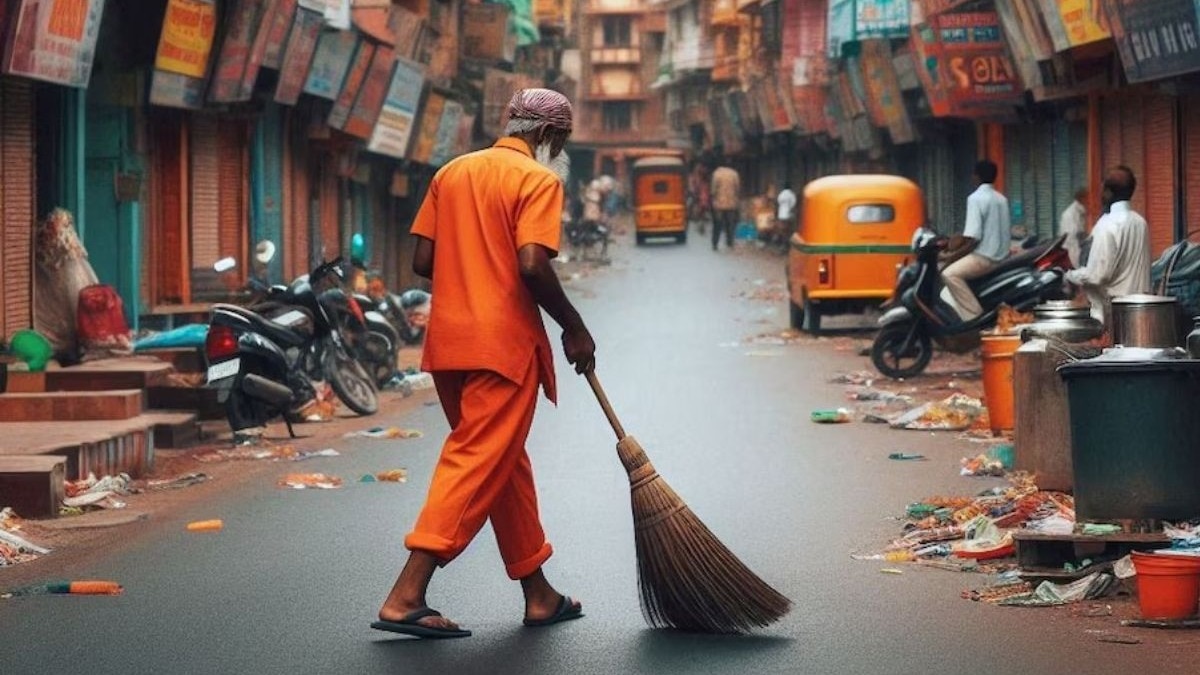
Sanitation crisis in Lucknow as hundreds of workers leave for Assam, Bengal to vote
India Today
Due to the shortage of staff in the municipal corporation, the civic body is managing arrangements through double shifts and increased workload. In some areas, extra labourers are being hired at daily wages ranging from Rs 1,000 to Rs 1,500 to lift garbage.
The impact of elections in Assam and West Bengal is now evident in Lucknow’s sanitation system. Hundreds of sanitation workers living in slums have returned to their native villages with their families to cast their votes.
Due to the shortage of staff in the municipal corporation, the civic body is managing arrangements through double shifts and increased workload. In some areas, extra labourers are being hired at daily wages ranging from Rs 1,000 to Rs 1,500 to lift garbage.
Most sanitation workers who have left are employed by the municipal corporation and have locked their homes before departing. This has caused a sudden shortage of workers in Lucknow, affecting waste management services.
In the Indira Nagar slum area, many huts remain locked as entire families leave to vote during elections. Residents report that garbage collection has suddenly stopped without prior information, leading to waste accumulation.
Local residents, including Simran from Aliganj, have noted that both municipal and private garbage collectors have ceased operations temporarily. Suraj Kumar shared that his collector informed him about travelling to Assam to vote and would return later, leaving residents to manage waste on their own.
Hotel owner Suraj also confirmed that garbage has piled up at his establishment with no clarity on when collection services will resume. Additional Municipal Commissioner Arvind Rao stated that a large number of sanitation workers have gone out for election-related duties in Assam, directly impacting cleanliness in the city.


Head Constable Revathi's courageous testimony, defying threats and institutional pressure, proved pivotal in securing death sentences for nine Tamil Nadu police personnel five years after a father and son died in custodial torture.

Can abusive language alone be a crime? The Supreme Court's latest ruling draws a sharp line between vulgarity and obscenity, potentially reshaping how everyday altercations are treated under criminal law.

The alleged gold smuggling syndicate was busted by the Directorate of Revenue Intelligence (DRI). The arrests came as a result of what the central agency described as a 'well-coordinated surveillance operation.'

Due to the shortage of staff in the municipal corporation, the civic body is managing arrangements through double shifts and increased workload. In some areas, extra labourers are being hired at daily wages ranging from Rs 1,000 to Rs 1,500 to lift garbage.

A Delhi court granted bail to conman Sukesh Chandrasekhar in a money laundering case tied to the AIADMK's "two leaves" symbol bribery row. He will remain in jail due to 31 other pending cases against him.

It is also alleged that when the survivor approached the police station, pressure was exerted by influential individuals to settle the matter and avoid registering a case. Later, both parties reportedly reached a compromise at the police station on Monday evening.

Hyderabad Police have registered a case against a hotel operator for allegedly selling stale biryani through a food delivery app. The accused is said to have stored food for days in unhygienic conditions and reheated it before sale.

According to sources, the incident happened when the catering vehicle lurched forward on being started up.

The Congress had alleged at a press conference on Sunday that Assam CM's wife, Riniki Bhuyan Sharma, holds passports of the United Arab Emirates (UAE), Antigua-Barbuda and Egypt.

Posters and hoardings inspired by the Bollywood film Dhurandhar, targeting Samajwadi Party chief Akhilesh Yadav while praising Uttar Pradesh Chief Minister Yogi Adityanath, surfaced across parts of Lucknow and Amethi, triggering a political row ahead of the 2027 Assembly polls.

One year after the Pahalgam terror attack that killed 26 people, India's counter-terror strategy has undergone a decisive shift with tighter security across Jammu and Kashmir, expanded intelligence coordination, and continued zero-tolerance operations amid fresh threat inputs from Pakistan-based groups.

Sections of the local tribal community had been opposing the road construction project, citing concerns over its potential impact on their land, environment, and livelihoods.

The video, which first surfaced on Monday, April 6, has triggered significant backlash as the River Ganga is considered highly sacred in Hinduism. The uproar has been sharp, with calls for legal action against the accused rising rapidly.