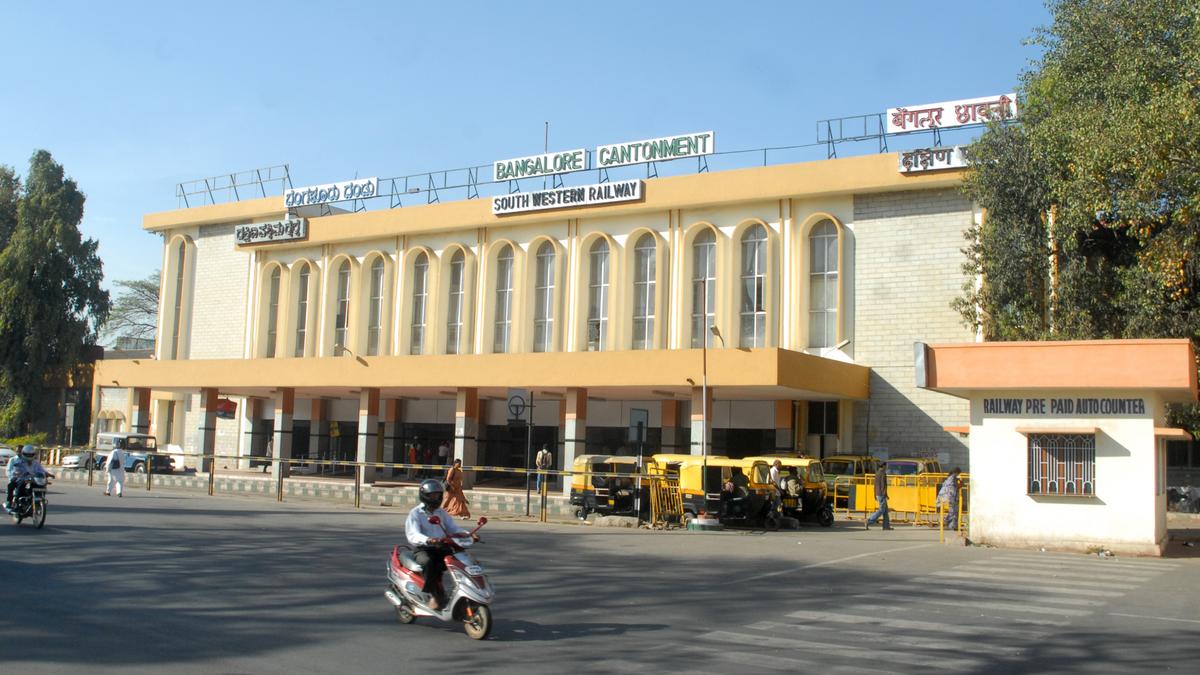
Revisiting the tale of fuzzy borders between Bangalore Cantonment and Pete Premium
The Hindu
The tide of time has not only seen new borders being created but also existing ones blurring. The distinction between the cantonment area and the pete area, for example, was stark at least until a few years ago for many of the city residents, but not so much the case anymore.
The exponential growth of Bengaluru in the last few decades has rewritten its boundaries, expanded its frontiers and even seen calls from the political spectrum to subsume neighbouring areas such as Ramanagara under the nomenclature of Bengaluru.
The tide of time has not only seen new borders being created but also existing ones blurring. The distinction between the cantonment area and the pete area, for example, was stark at least until a few years ago for many of the city residents, but not so much the case anymore.
Author, historian and academic Janaki Nair argues that Bengaluru “had a very specific and unique urban form” which saw a civil and military station separated from the older 16th-century city or pete. At a recent talk at The Bangalore Room, she spoke about the “unstable and rather unique ways in which boundaries were established and constantly breached throughout the 19th and the 20th centuries.”
“You could not think of two more different spaces,” says Nair referring to the Cantonment and Pete areas.
“They were divided on the basis of race, language, economic activities, infrastructural facilities, and even conceptions of space and time while they were offering opportunities for challenging these divisions.”
Until 1807, Bangalore was not occupied by any British force except for a small guard that was stationed in the Bengaluru fort, notes Nair.
In 1804, it was tried out as a station of troops. The military authorities had no power to interfere with the lives of the inhabitants of the region and the British residents were mere denizens of the Mysore state.


Papanasam dam's water level reaches 66.15 feet, with inflow at 76 cusecs and discharge at 300 cusecs.

Development without impact: Coastal residents of Kanniyakumari and Nagercoil constituencies voice discontent

Rampant encroachments in Tiruchi threaten pedestrian safety and traffic flow, undermining smart pavement initiatives and exacerbating congestion.

Discover Kerala's electoral history in 'Vottarivu,' a 201-page booklet released ahead of the 2026 Assembly elections.

Experts at a floriculture conference in Shivamogga stress the need to reduce greenhouse gas emissions and enhance soil carbon levels.

First randomisation of EVMs and VVPATs for Tiruchi and Perambalur districts completed with political party representatives present.

Puducherry elections see ongoing DMK-Congress rift over seat-sharing, leading to candidate conflicts on nomination day.

Einstein College and Sri Sarada College in Tirunelveli celebrated significant events, honoring academic excellence and cultural heritage.

Priyanka Gandhi criticises PM Modi's West Asia remarks, urging for a comprehensive Parliament discussion on the matter.

Learn who can vote by postal ballot in the upcoming Tamil Nadu Assembly election, including seniors and persons with disabilities.

Decomposed body of a missing 25-year-old man discovered in Dindigul stone quarry, prompting calls for investigation and quarry closure.

SVEEP activities launched in The Nilgiris aim to boost voter turnout at 13 polling booths with low participation rates.

Learn who can vote by postal ballot in the upcoming Tamil Nadu Assembly election, including seniors and persons with disabilities.