Review of Mishal Husain’s Broken Threads — My Family from Empire to Independence: Anatomy of a loss
The Hindu
Review of Mishal Husain’s Broken Threads — My Family from Empire to Independence: Anatomy of a loss. Mishal Husain pieces together multiple histories of her family scattered across the troubled past of the Indian subcontinent
At times Mishal Husain’s stories float across the page like a Shatoush shawl etched with light. At other times it becomes a patchwork quilt that traverses time lines, histories of cities with gardens perfumed with the scent of jasmine. It merges with the broken threads of the title that she pieces together of the multiple histories of her family scattered across the troubled past of the Indian subcontinent, searching for a Muslim identity in their newly enfranchised countries.
Husain is an eminently successful broadcaster, journalist, interviewer and documentary maker whose tenure at the BBC, U.K., has allowed her to be at home in different worlds. She traces her many branched family-tree from the north west frontier in Multan to the south east of the sub-continent in Anagapale, near what we now call Visakhapatnam, or Vizag, with a vital link in Lahore and Lucknow, pre-Partition. It’s a tree that eventually disperses its seeds in the U.K. and to other more salubrious areas. As a child, Husain lived with her parents and younger brother in parts of the UAE and Saudi Arabia, while also being sent to boarding school in England and summers to her maternal grandparents in Pakistan.
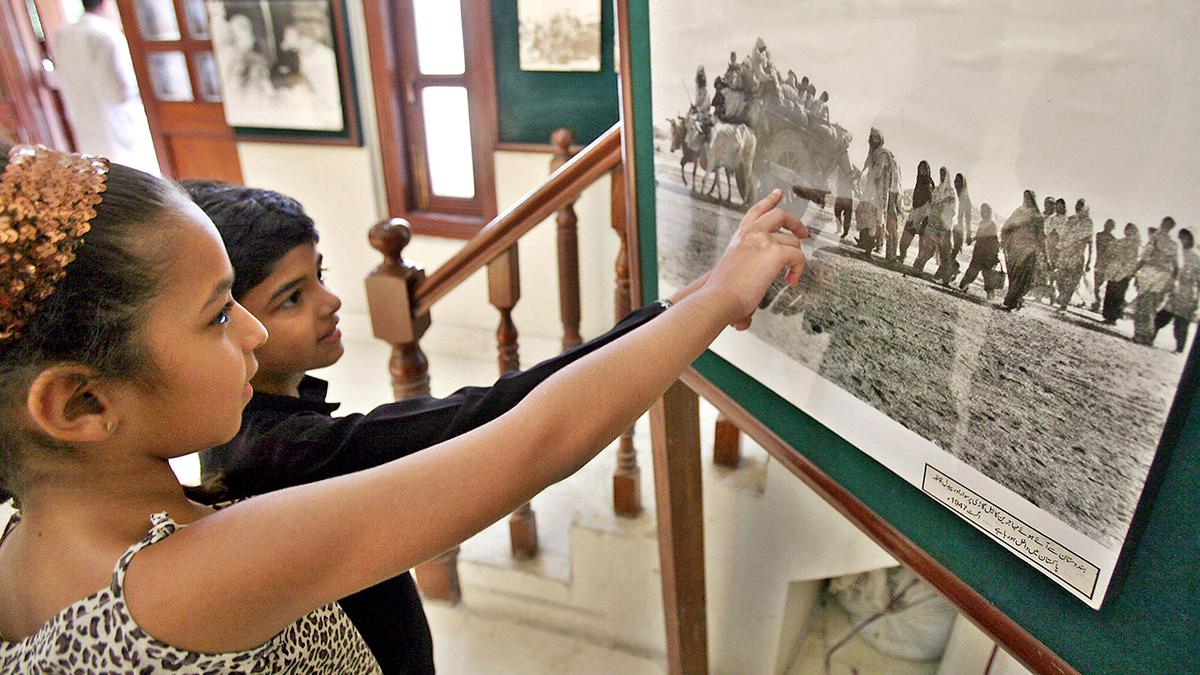
No matter how many times and in how many different forms we have heard of the trajectory of Partition on the long road to Independence, it remains one that ravels our subconscious mind. One reason might be that it’s still unfinished business. We remain divided in our innermost selves. The even tenor of the narrative is what distinguishes it from previous accounts of the horrors of people’s lives being torn apart.
The first section is a series of miniature portraits of her grandparents and their back stories. This is where she talks of Empire and how it brought an Irish Catholic great-grandfather Francis Quinn to a remote village near Guntur in what was then known as the Madras Presidency. He married a Telugu woman named Mariamma, who in their wedding portrait is short, dark and half his size and probably half his age. Yet they had four lovely children, one of whom is the ‘flirty eyed’ Mary, as her future husband Mumtaz, described her. Mumtaz was a shy medical intern from Multan studying in Lahore and she was a young trainee nurse, who had been sent all the way from south India by the Irish nuns in Vizag. Their extraordinary courtship and subsequent lives together overcoming the deep divide of their different Muslim-Catholic faiths to which they both adhered, is just one strand of Husain’s inheritance. Their son Imtiaz who becomes a surgeon at the NHS is Husain’s father. Focusing on the family tree at the beginning pays dividends.
Husain’s training as a broadcaster allows her to bring a certain visual clarity to the book. Each individual is placed on the geographical canvas with a map and wonderful photographs. She has either been incredibly diligent, or lucky to have relatives who are exceptionally handsome and also alert enough to write memoirs. Or in the case of Tahirah, her maternal grandmother, to use an old-fashioned tape-recorder to share her vivid opinion.
Husain’s narrative is part-memoir, part-history which merges with real events. Part Three of the book ‘After Midnight’ fast forwards the frantic pace at which the long delayed demand for freedom was thrust upon the sub-continent. The truncated fault lines of Partition were sutured by the blood and bodies of those fated to be trapped in the crevices of personal histories. These have been repeatedly told, only to be forgotten.
“My generation can take the blame,” Tahirah says in her old age as she records her years in Pakistan with her husband Shahid in Rawalpindi. “Partition was a sad, sad era. I do not hesitate to say it here — even though this is not meant to be a political book — but it need not have happened, had the majority in India accepted ordinary demands from a minority. But it happened and the way it happened was tragic. And to the eternal shame of the people of India and Pakistan, that big tragedy has been followed by others.”


TIMS Sanathnagar inauguration on Ugadi uncertain as construction, staffing gaps persist

Mumbai's water crisis escalates as corporators highlight irregular supply and reliance on costly private tankers amid administration neglect.

Explore the evolution of cooking fuels in Madras, from wood and coal to the rise of LPG, amid recent shortages.

Protests against the Sharavathi Pumped Storage Hydroelectric Project in the Western Ghats just got new life

51 couples take thebig plunge at Udaipur mass wedding event

A bridge collapse in Roop Nagar kills a woman; Delhi government forms a probe panel amid rising safety concerns.

Tribunal halts Colonel Purohit's retirement, pending promotion decision after his acquittal in the 2008 Malegaon blast case.

Pinarayi Vijayan launches his election campaign in Dharmadam, aiming for a third consecutive term amid tightening competition.

Delhi Speaker Vijender Gupta has written to Lieutenant-Governor Taranjit Singh Sandhu seeking directions to instal audible signals at traffic intersections across the city to ensure the safety of mobility-impaired individuals and senior citizens.

GVMC council concludes its five-year term, highlighting significant development projects and global events that enhanced Visakhapatnam's recognition.

Karnataka SC/ST Commission discusses internal reservation issues amidst confusion over reduced quotas for Scheduled Castes and Tribes.

President Droupadi Murmu serves Akshaya Patra’s 5 billionth meal, highlighting child nutrition and education at Rashtrapati Bhavan.

PM Modi and UAE President agree on ensuring safe navigation through the Strait of Hormuz amid regional tensions.