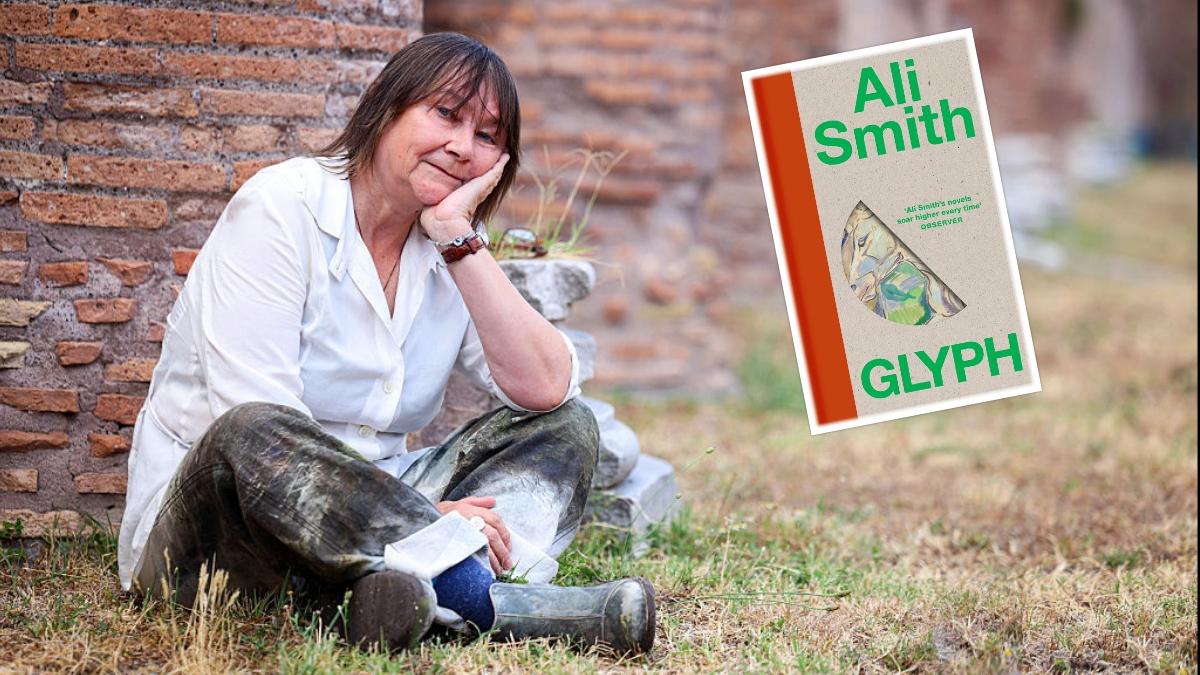
Review | Ali Smith pairs imagination with urgency in her politically charged new novel, Glyph
The Hindu
Discover Ali Smith's "Glyph," a politically charged novel exploring imagination, language, and resilience in a surveillance-driven world.
Among contemporary novelists, Ali Smith stands out for her engagement with the political moment, as well as with her fondness for wordplay and what it reveals about the language we use. Her Seasonal Quartet (2016-20), for example, responded to post-Brexit Britain and is shot through with themes of resilience and renewal. More recently, Gliff (2024) was set in a near future of high-tech surveillance and linked the precarious state of the natural world with that of language itself.
Smith’s new novel, Glyph, can be read as a companion piece to Gliff. The earlier novel takes its name from the Scots word for a passing glimpse or a fright, whereas this volume focuses on a ‘glyph’ as a mark or sign, linked to a hieroglyph. The two books are connected symbolically, with resonances in the form of recurring motifs and stories within stories.
As with much of Smith’s work, plot is hardly the point with Glyph. Instead, patterns of connection, the play of speech, and reflections on how we live take centre stage. At one point, for instance, a character confesses: “Like everybody else now I’m a person who can cope with several screens.” Later, in the kitchen, she “grated the extra cheese into a bowl and watched it come apart from its block with something like a heightened understanding of what it might mean to be both whole and shredded”.
The story, such as it is, is narrated non-chronologically and revolves around episodes in the lives of two sisters, Petra and Patricia, both of whom grapple with the impact of their mother’s untimely death as well as their overactive imaginations. When they were children, they were haunted by the harrowing story of a soldier who was flattened by a tank, leading them to invent his ghost, named Glyph. Years later, Petra finds her bedroom trashed and believes she is being haunted by a spectral horse related to a family legend about a World War I deserter who tried to save a blind charger.
Glyph engages directly with the wreckage of war, be it in Gallipoli or Gaza, with characters being flattened both literally and symbolically. As it progresses, it touches upon a surveillance state that bristles at protest, with one character facing arrest for a minor act of resistance. The narrative also comments on the flattening impact of AI: we’re told that Patricia was employed as a spotter of AI text, rewriting it to make it sound more human. However, she’s replaced by an AI assistant, “because artificial intelligence is now thought to be better than any human not just at spotting artificial intelligence in advertising copy but also at rewriting it to make it sound more human”.
In this way, Smith keeps the proceedings light and nimble. There are frequent puns and playfulness, pointing out that language can represent reality but also distort it. The surreal is mixed with the real, and characters discuss other stories and books, including — nod, wink — the earlier Gliff. Such game-playing continues throughout: at one stage, a feeling of absence is referred to as a “prosthetic limbo”. If you groan at that, this book may not be for you.


Education Ministry designates NCERT as a deemed university, allowing it to offer degrees and courses under UGC guidelines.

Discover Ali Smith's "Glyph," a politically charged novel exploring imagination, language, and resilience in a surveillance-driven world.

Bombay High Court orders Maharashtra to respond to petition against scrapping 5% Muslim education quota, citing discrimination concerns.

Hema Malini criticises West Bengal's cultural restrictions, claiming they harm artists and livelihoods in a letter to the Speaker.

Stay updated with The Hindu’s on-ground Tamil Nadu Assembly election coverage and voter insights across key constituencies.

Seeman criticizes Dravidian parties’ promises, warning of a ₹3 lakh crore debt burden on Tamil Nadu amid ongoing election campaigns.

Minority scholarship schemes were discontinued post-2021-22, leading to significant declines in funding and beneficiary support, says Minister Rijiju.

Kumkis in Chittoor aid in managing human-elephant conflicts, fostering coexistence and protecting crops from wild herds.

Mysuru celebrated Police Flag Day with honored guests recognizing the contributions of retired police officers and personnel.


Ibrahim Mahama on topping the 2025 ArtReview’s Power 100 list, making art with colonial detritus, and travelling to Kochi Muziris Biennale and Venice Biennale

An LPG shortage in Delhi leads to long waits, delivery issues, and skyrocketing black market prices affecting daily life.

Parliament passes a Bill to designate Amaravati as Andhra Pradesh's capital, marking a significant political milestone after 12 years.