Drowning in monsoon, dreaming of growth: recurring monsoon flooding in Warangal
The Hindu
Warangal faces monsoon flooding challenges while ambitious infrastructure projects aim to boost its growth and development.
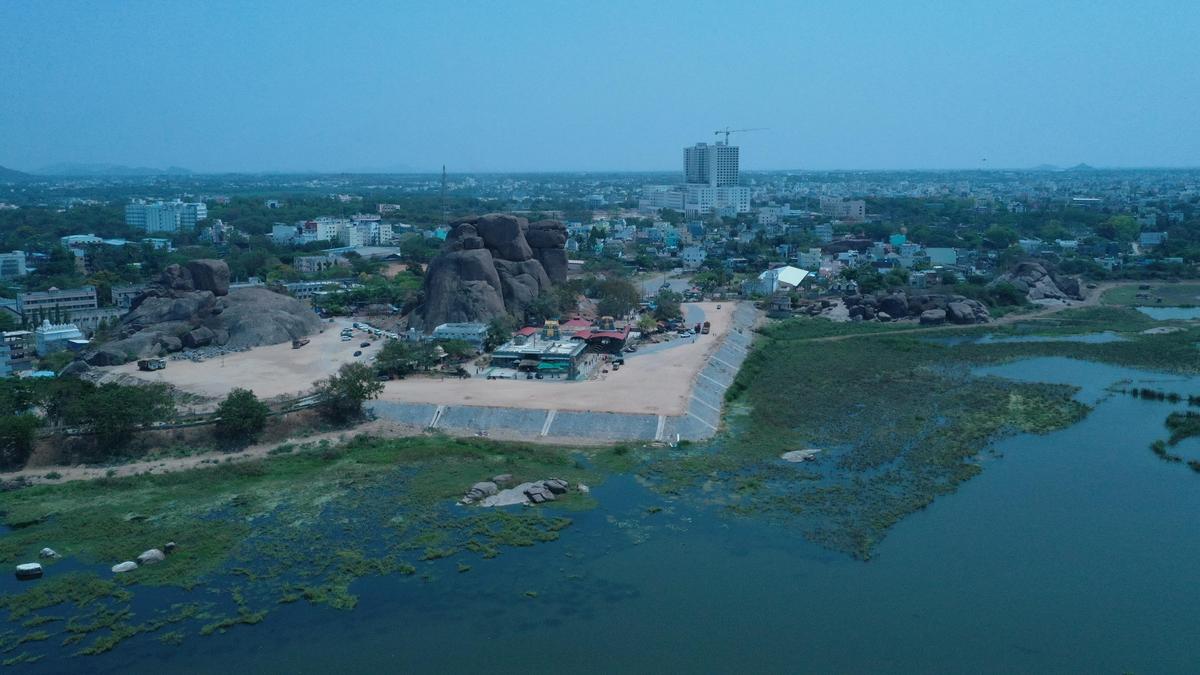
Every monsoon, parts of Warangal slip under water with unsettling ease: low lying colonies inundated, homes breached and families briefly displaced. The pattern is neither new nor unpredictable.
“This happens every year during monsoon,” says Srinivas, a resident of S.R. Nagar. His account echoes across several neighbourhoods within the Greater Warangal Municipal Corporation (GWMC) limits, the second-largest urban conglomeration in Telangana after Hyderabad, capturing a city grappling with persistent civic distress.
Even as the city wades through this recurring cycle, an ambitious transformation is taking shape on paper, seeking to reposition Warangal as a major growth centre in northern Telangana.
Located about 140 km northeast of the State capital, Warangal is a key educational, healthcare, transport (railway) and cultural hub in north Telangana. Founded around 1163 CE by the Kakatiya rulers, the city, then known as Orugallu or Ekashila Nagaram, emerged as a centre of political power, architecture, and Telangana’s rich heritage and culture.
Warangal has witnessed steady population growth over the decades. As per the 2011 Census, the population stood at around 6.15 lakh, while the broader urban agglomeration covering Warangal, Hanumakonda and Kazipet crossed 10 lakh. Often described as a tri-city cluster, the three function as a single economic and civic unit. Spread over 1,805 sq. km, this urban conglomeration now serves a population of around 13 lakh.
The Kakatiyas left behind a legacy of heritage monuments, including fortified structures, temple architecture and iconic stone gateways such as the Thousand Pillar Temple, Warangal Fort and the Kalatoranams (gateways). Even after the dynasty’s decline, the city continued to evolve under successive rulers, retaining its cultural and historical significance. It is, therefore, often called the ‘cultural capital’ of Telangana.


NGT dismisses BRS leader's challenge to Telangana's Musi River Front Project, affirming compliance with environmental regulations.

C. Joseph Vijay blames both the Centre and State for LPG shortages while campaigning for the Tiruchi East Assembly election.

Mumbai suburbs experienced drizzle, possibly linked to a western disturbance, according to an IMD official's report.

Delhi HC orders removal of 'obscene' song by Honey Singh and Badshah, citing misogynistic lyrics and disregard for decency.

The Hindu Morning Digest gives a select list of stories to start the day. Read the top news today on April 3, 2026

Karnataka's decision to grade third-language papers signals a shift towards a two-language policy, easing student pressure amid political debate.

Parliament approves Jan Vishwas Amendment Bill, reforming 784 legal provisions to enhance business and support citizens and MSMEs.

Education Ministry designates NCERT as a deemed university, allowing it to offer degrees and courses under UGC guidelines.

Discover Ali Smith's "Glyph," a politically charged novel exploring imagination, language, and resilience in a surveillance-driven world.

Bombay High Court orders Maharashtra to respond to petition against scrapping 5% Muslim education quota, citing discrimination concerns.

Hema Malini criticises West Bengal's cultural restrictions, claiming they harm artists and livelihoods in a letter to the Speaker.

Stay updated with The Hindu’s on-ground Tamil Nadu Assembly election coverage and voter insights across key constituencies.

Seeman criticizes Dravidian parties’ promises, warning of a ₹3 lakh crore debt burden on Tamil Nadu amid ongoing election campaigns.