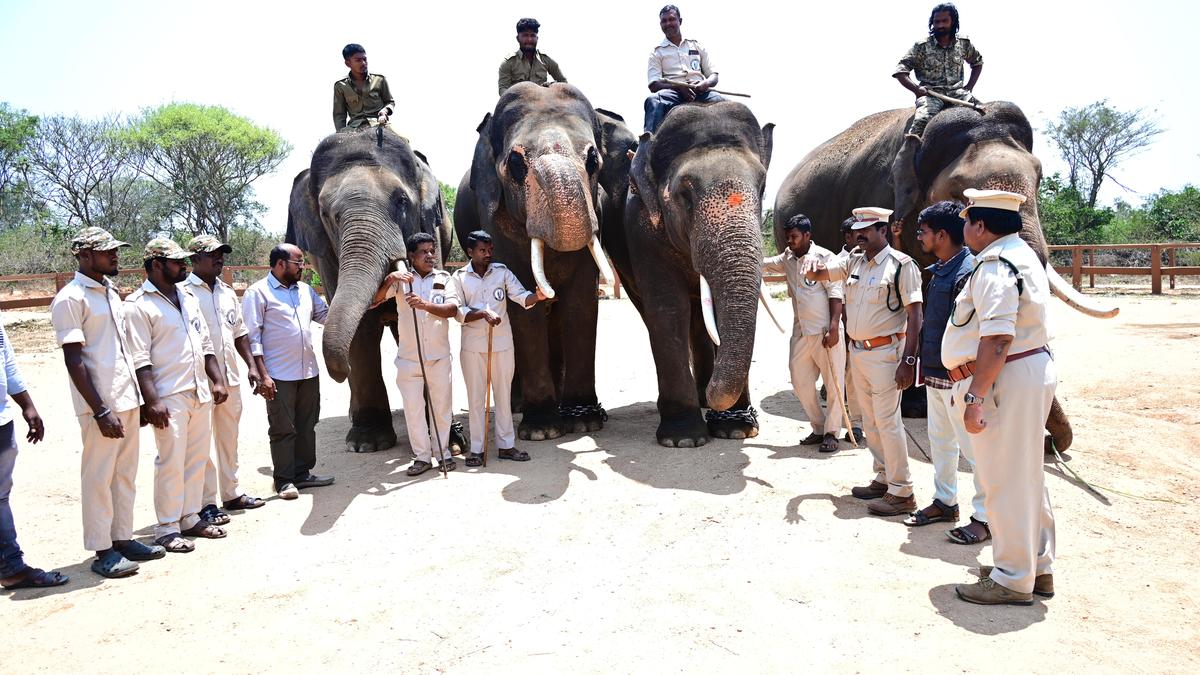
Kumkis help tackle a jumbo task in Chittoor
The Hindu
Kumkis in Chittoor aid in managing human-elephant conflicts, fostering coexistence and protecting crops from wild herds.
“My crop is ready for harvest, yet a single night is enough to lose everything,” says Rajendran (65), his voice heavy with concern as he surveys his groundnut field near Ragimanupenta village in Bangarupalem mandal of Chittoor District. Speaking in Tamil, the farmer turns to elephant tracker Subramani and asks, “Nethu iravu antha ‘kamnaatingala’ sattham kettingala?” — “Did you hear them last night, the sound of those kamnaatingala (widows)?”
“They crossed the ridge again. I found fresh tracks near the canal,” the farmer says. In response, the elephant tracker crouched down to study the soil. “Aamaam, oru chinna koottam—ainthu, illa aaru. Tamil Nadu pakkam irundhu vandhirukkaanga. Indha thadavai konjam neenda neram thanguraanga” — “Yes, a small herd—five, maybe six. They’ve moved in from the Tamil Nadu side. This time, they are staying longer,” says Subramani.
“We have alerted the Kumki team — a group of specially trained elephants and their mahouts deployed by the forest department to manage wild herds,” the tracker says calmly. He adds, “They will guide the elephants back before they reach the fields. But you must remain cautious.”
The farmer’s gaze drifted toward the forest edge. His voice, heavy with worry and almost as if pleading with the universe, carried a simple message: “We don’t want trouble. We just want to protect what we’ve grown.”
The tracker assured the farmer saying: “They are only looking for food and a path. If we understand their movement, we can avoid conflict.”
The saga of Asian elephants venturing into human habitats from the forests bordering the tri-States of Andhra Pradesh, Tamil Nadu, and Karnataka—particularly affecting the A.P. districts of Chittoor, Tirupati, and Annamayya—is no longer merely a story of fear and panic. It has become one of devastating losses: human lives, livestock, crops, and even wild elephants, coupled with endless sleepless nights for families living along the forest fringes.


Education Ministry designates NCERT as a deemed university, allowing it to offer degrees and courses under UGC guidelines.

Discover Ali Smith's "Glyph," a politically charged novel exploring imagination, language, and resilience in a surveillance-driven world.

Bombay High Court orders Maharashtra to respond to petition against scrapping 5% Muslim education quota, citing discrimination concerns.

Hema Malini criticises West Bengal's cultural restrictions, claiming they harm artists and livelihoods in a letter to the Speaker.

Stay updated with The Hindu’s on-ground Tamil Nadu Assembly election coverage and voter insights across key constituencies.

Seeman criticizes Dravidian parties’ promises, warning of a ₹3 lakh crore debt burden on Tamil Nadu amid ongoing election campaigns.

Minority scholarship schemes were discontinued post-2021-22, leading to significant declines in funding and beneficiary support, says Minister Rijiju.

Kumkis in Chittoor aid in managing human-elephant conflicts, fostering coexistence and protecting crops from wild herds.

Mysuru celebrated Police Flag Day with honored guests recognizing the contributions of retired police officers and personnel.


Ibrahim Mahama on topping the 2025 ArtReview’s Power 100 list, making art with colonial detritus, and travelling to Kochi Muziris Biennale and Venice Biennale

An LPG shortage in Delhi leads to long waits, delivery issues, and skyrocketing black market prices affecting daily life.

Parliament passes a Bill to designate Amaravati as Andhra Pradesh's capital, marking a significant political milestone after 12 years.