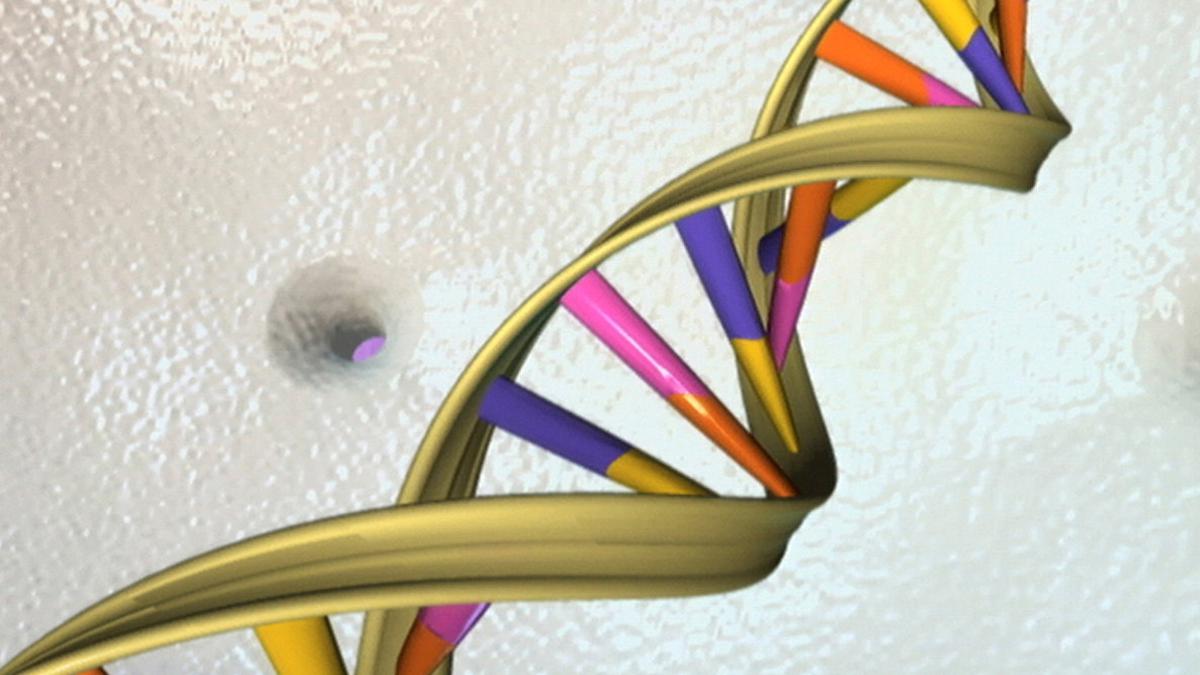
Researchers from India, Israel, US trying to develop drug to treat rare disease 'GNB1 Encephalopathy'
The Hindu
GNB1 Encephalopathy is a kind of brain disease or neurological disorder which affects individuals in the foetus stage.
Researchers at the Indian Institute of Technology (IIT), Madras, Tel Aviv University and Columbia University are studying a rare genetic brain disease called "GNB1 Encephalopathy" and trying to develop a drug to treat it effectively.
With less than 100 documented cases worldwide, GNB1 Encephalopathy is a kind of brain disease or neurological disorder which affects individuals in the foetus stage.
Scientists say delayed physical and mental development, intellectual disabilities, frequent epileptic seizures, are among the early symptoms of the disease and since genome sequencing is an expensive exercise, not many parents opt for it early on.
According to Haritha Reddy, a former PhD scholar at IIT Madras, a single nucleotide mutation in the GNB1 gene that makes one of the G-proteins, the "Gβ1 protein," causes this disease.
"This mutation affects the patient since they are a foetus. Children born with GNB1 mutation experience mental and physical developmental delay, epilepsy (abnormal brain activity), movement problems. To date, less than a hundred cases have been documented worldwide. However, the actual number of affected children is probably much greater as diagnosis is not widely available since it requires a sophisticated and expensive procedure," Reddy told PTI from Israel, where she is conducting the research.
"Every cell in the human body has a wide variety of signalling molecules and pathways that help in communicating with other cells and within itself. The major signalling mechanism used by cells is 'G-Protein Coupled Receptor' (GPCR) signalling," she added.
GPCR is a receptor that receives a signal (e.g. a hormone, light, neurotransmitter) from the outside of the cell and transduces it to the inside of the cell.


The BMW X3 30 xDrive M Sport Pro blends sporty performance with everyday luxury, powered by a 258 hp 2.0-litre TwinPower Turbo engine and BMW’s xDrive all-wheel-drive system. With bold M Sport styling, a high-tech Curved Display running Operating System 9, advanced driver assistance features, and genuine off-road capability, the latest X3 delivers a versatile premium SUV experience that excels on city roads, highways, and beyond.

Explore the concept of 'snowball earth' and recent findings on climate variability during this ancient icy period.

A riot of capes, corsets, and carefully crafted armour took centrestage as Chennai Comic Con wrapped up at the Chennai Trade Centre, with cosplay emerging as the undisputed showstopper. From anime icons and gaming legends to beloved Indian comic characters, over 500 fans transformed the venue into a living, breathing multiverse, showcasing how Chennai’s fandom culture has evolved, placing the city on India’s pop culture map.

Warmer oceans and depleting food have affected the ubiquitous loggerhead turtle’s reproductive and migratory patterns — and even its size.

Toyota Urban Cruiser Ebella review: Explore design, range, features, ride comfort and safety of Toyota’s new electric SUV for India. Expected price ₹14–18 lakh, with up to 500 km claimed range and practical urban usability.

Explore India's potential in bio-based chemicals and enzymes, highlighting industry leaders and challenges in sustainable manufacturing.

Astronomers discover an unusual planetary system with a rocky planet formed outside its gaseous neighbors, challenging existing formation theories.

Four new astronauts arrive at the ISS to replace a crew evacuated due to a serious health issue.

Neurobehavioural therapy can transform brain connectivity in functional neurological disorders, highlighting the link between cognition, emotion, and behavior.

The centuries-long quest for synthetic diamonds, also known as lab-grown diamonds or human-made diamonds, came to an end in 1954-55. On February 15, 1955, the creation of the first synthetic diamonds were announced, and it was quickly picked-up by newspapers around the world. A.S.Ganesh tells you more about these diamonds and the man who first made it happen…

Kadhambari S. Viswanathan highlights online education's evolution and its coexistence with traditional methods at The Hindu Tech Summit 2026.

The Hindu science quiz on Charles Darwin on February 13 2026

Explore the immersive art exhibit "A Story in Red" in Fort Kochi, featuring 13 installations celebrating memory, culture, and emotion.