Ramzan 2026 : Meet a few chefs who prepare ‘nombu kanji’ at mosques in Thiruvananthapuram
The Hindu
Discover how cooks at Thiruvananthapuram mosques prepare nombu kanji for devotees during Ramzan, blending tradition and community spirit
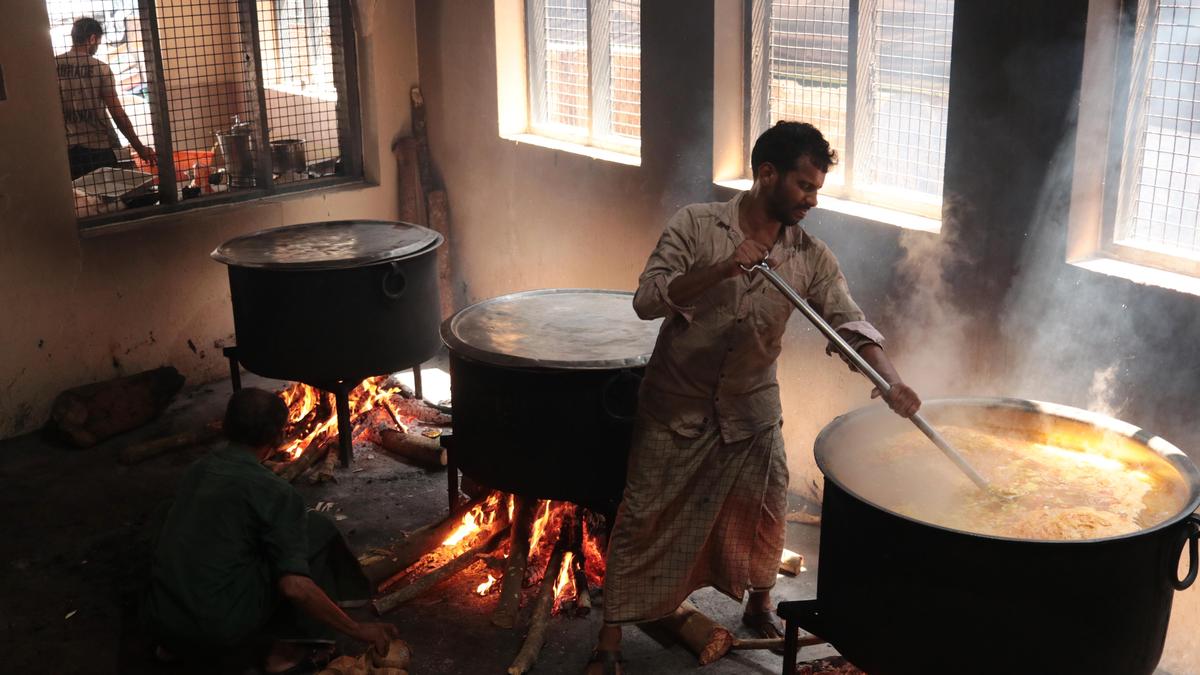
Out of the frying pan and into the fire. The proverb felt real as I stepped into the kitchen at Palayam Juma Masjid from the blistering afternoon heat outside. As firewood burnt brightly beneath three huge aluminium pots, I struggled to stand in the smoke-filled room. But not Mohammed Arif, who is busy stirring each vessel with a huge ladle. The spicy porridge for the devotees, to break their fast, is getting ready. “Today, we have used 52 kilograms rice. It goes up to 60 kilograms on certain days,” says Arif, 30.
On another day, I meet 47-year-old Jafar Sadik at the expansive kitchen of Manacaud Valiyapally Muslim Jama’ath, cooking the dish in five huge vessels on firewood. He is a picture of calm despite being drenched in sweat and his eyes watering. “Nearly 100 kilograms rice is needed everyday and it can even go up to 150 kilograms,” says Jafar.
Jafar Sadik at work at the kitchen at Manacaud Valiyapally Muslim Jama’ath | Photo Credit: SREEJITH R KUMAR
Arif and Jafar are among the scores of proficient hands hired by mosques to cook the spicy porridge during Ramzan. Nombu kanji is also called oushada kanji or medicinal gruel as different herbs and spices are used in its making. It is prepared in huge quantities for the devotees to break the fast and is also distributed from takeaway counters at the mosques. People from other faiths also collect it from these counters, says Saifudeen Haji, president, Vallakkadavu Muslim Jama’ath.
These cooks take a 30-day break from their regular jobs, mostly as caterers, during the season and work with a team of assistants. Some see it as carrying forward a legacy. “I learnt it from my maternal grandfather, Mohammed Haneefa, who cooked the kanji at this mosque for over three decades. I used to accompany him as a young boy. When he passed away, my cousin took charge. Since he got busy with his business, I took over the responsibility a couple of years ago,” says Arif, who has a three-member team, including his brother, Al Ameen.
Jafar comes from a family that has been preparing the kanji for several decades. “I have been in this for over two decades and have worked at various mosques in the city, the last one being Juma Masjid, Chala. Six members of my family are currently working in various mosques,” says Jafar.


BRS leader Harish Rao questions Congress's commitment to the Constitution amid allegations of defections in Telangana

Justice Lisa Gill officially takes charge as Andhra Pradesh High Court Judge, poised to become the first woman Chief Justice.

Discover how cooks at Thiruvananthapuram mosques prepare nombu kanji for devotees during Ramzan, blending tradition and community spirit

T.N. CM Stalin commissions first unit of Udangudi Thermal Power Plant, inaugurates various projects

Telangana's Chief Secretary directs officials to ensure smooth LPG cylinder supply and prevent black marketing for consumers.

Shorts News:Watch: Emotional V.K. Sasikala announces name of her new political party

Explore Usha Balakrishnan's 'Silver & Gold' to uncover India's rich folk and tribal jewellery traditions in stunning detail.

Protests erupt in Shia-majority Kashmir against US-Israel actions in Iran, amid imposed curbs and calls for Palestinian solidarity.

Tamil Nadu Assembly election: KMDK to contest two seats on ‘Rising Sun’ symbol

Karnataka prioritises LPG supply for hospitals and schools amid crisis; hotels must wait a week for deliveries.

BJD and Congress urge MLAs to stay in Bhubaneswar until March 16 amid concerns over Rajya Sabha election cross-voting.

LPG shortage leads to the closure of over 100 hotels in Kochi, with remaining eateries limiting menu options amid the crisis.

Sasikala announces her new party, All India Puratchi Thaliavar Makkal Munnetra Kazhagam