Punjab and all things red-hot Premium
The Hindu
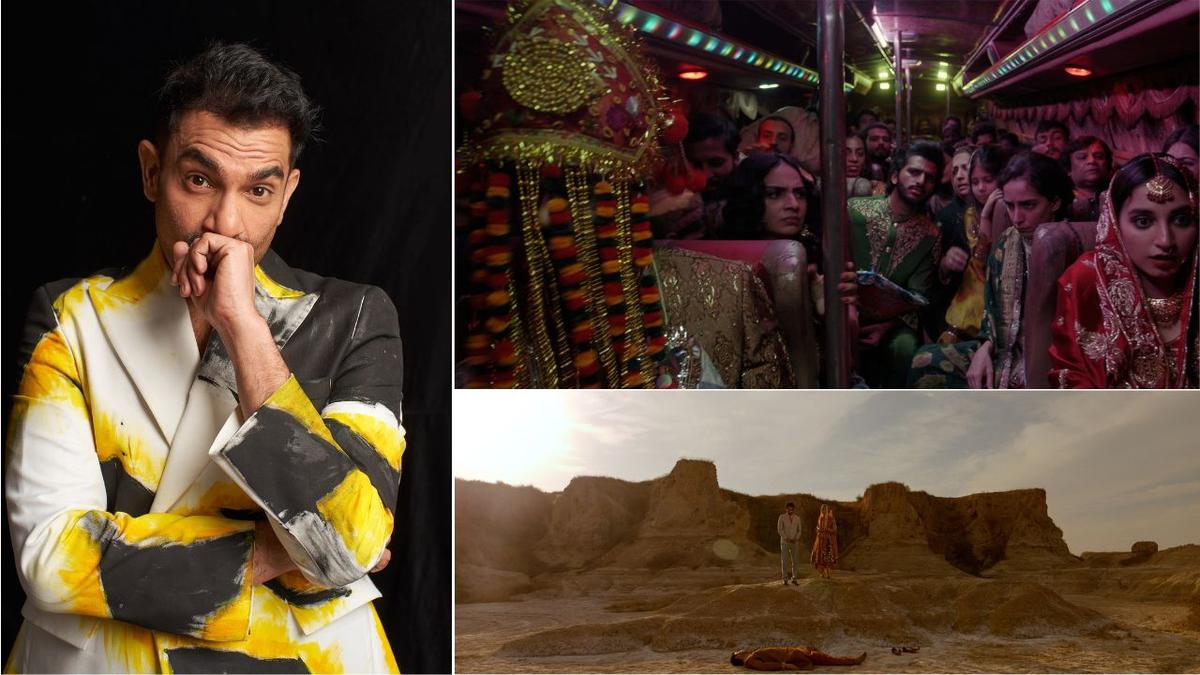
Sarmad Khoosat talks about his dark comedy Lali, the first all-Pakistani film at Berlinale — and the most talked about South Asian movie at the festival
Pakistani filmmaker Sarmad Sultan Khoosat knows a thing or two about courting controversies. His directorial Zindagi Tamasha (Circus of Life, 2020, which won Busan festival’s Kim Jiseok Award) and co-production Joyland (2022, Cannes Un Certain Regard Jury winner) were banned at home for choosing topics deemed “controversial” by religious conservatives and political parties. The former explored a scandal in the life of a devout man, and the latter a love story of a transwoman and cis-het man. The din at home forced them to drop out of the Oscars after being named Pakistan’s official entries.
Khoosat’s latest film, Lali, is a deliciously dark comic tale about marriage — with a feminist twist. Its unconventional storytelling and genre leap made it one of the most-talked about among the South Asian films at Berlinale this year.
Poster of the film ‘Lali’.
Perhaps, it was predestined that the year the first all-Pakistani film came to Berlinale, the most political of A-lister global film festivals, the festival itself would be gripped by the storms of a politicised controversy, which stemmed from jury president Wim Wenders’ “cinema as a counterweight to politics” comment when asked about the Gaza conflict. And so, Khoosat, like many others, took a stand.
At Lali’s world premiere, he said: “This moment carries gratitude and responsibility. Lali means red. Red is the colour of celebration in our part of the world — bridal clothes, music, of love and longing — but red is also the colour of warning, anger, of blood. It is a colour that refuses to be ignored. Cinema does not exist outside the world; it absorbs its beauty and its brutality. It carries joy and it carries loss. With my film, I carry my conscience with me, to those suffering back home, around the world and especially Gaza... Art and humanity are inseparable. To stand for one is to stand for the other. And in these times of unprecedented crimes against humanity, we must stand on the right side of history.”
Lali opens with the wedding of the scar-faced introvert Sajawal (Channan Hanif) and Zeba (Mamya Shajaffar) in a small town in Punjab, Pakistan. As celebrations begin with pistols shot in the air, a bullet accidentally hits Sajawal’s mother Sohni Ammi (Farazeh Syed), but she survives. The ‘cursed’ bride’s previous three suitors died before the wedding, and Sajawal asserts he’ll survive her curse. When I mention how the film shows an intriguing link between grief and sex, Shajaffar says, “Do you know there’s a study that says, people are most likely to consummate when they’re the saddest?”


Khalid Rahman is reuniting with Malayalam superstar Mammootty after Unda (2019). The Thallumaala director has teamed up with the veteran for Mattancherry Mafia.

Bollywood actor Akshay Kumar paid tribute to the martial arts grandmaster and Hollywood’s action star, Chuck Norris, who passed away on Thursday, March 19, 2026.

Renowned Odissi dancer Madhumita Raut, aged 59, dies of cardiac arrest, leaving behind a legacy of artistic achievements.

Chuck Norris, iconic martial arts master and actor, dies at 86, leaving behind a legendary legacy and internet memes.

South African naturalist Steve Boyes speaks on ghost elephants, ancestral tracking, and Werner Herzog’s documentary exploring Angola’s elusive highland giants

Actor-director Amol Palekar will receive META's Lifetime Achievement award for 2026 on March 25 in New Delhi.

India's artists unite against rising censorship, advocating for creative freedom and support for marginalized voices in the arts.

Written and directed by Kunal, the film also stars Sparsh Shrivastava and Vanshika Dhir

This year, Bharatnatyam artistes will present the Tyagaraja Aradhane as a dance performance

This year, Bharatnatyam artistes will present the Tyagaraja Aradhane as a dance performance

The actor, along with director Sushant Shah, speak about their upcoming series ‘Chiraiya’, Divya’s process of working on the dialect, Sushant’s approach to telling a story about women, and more

An independent video, ‘Feel the Spark’ by Raleigh Rajan with vocals by Ciera Dumas that celebrates Tamil literary giants, garnered 1.4 million views in less than 36 hours.

In ‘Jack Ryan: Ghost War’, John Krasinski is back as the savvy CIA analyst, diving headfirst into a high-stakes mission that unravels a deadly conspiracy and pits him against a rogue black-ops unit