India’s artist fraternity is uniting to devise meaningful responses to growing censorship
The Hindu
India's artists unite against rising censorship, advocating for creative freedom and support for marginalized voices in the arts.
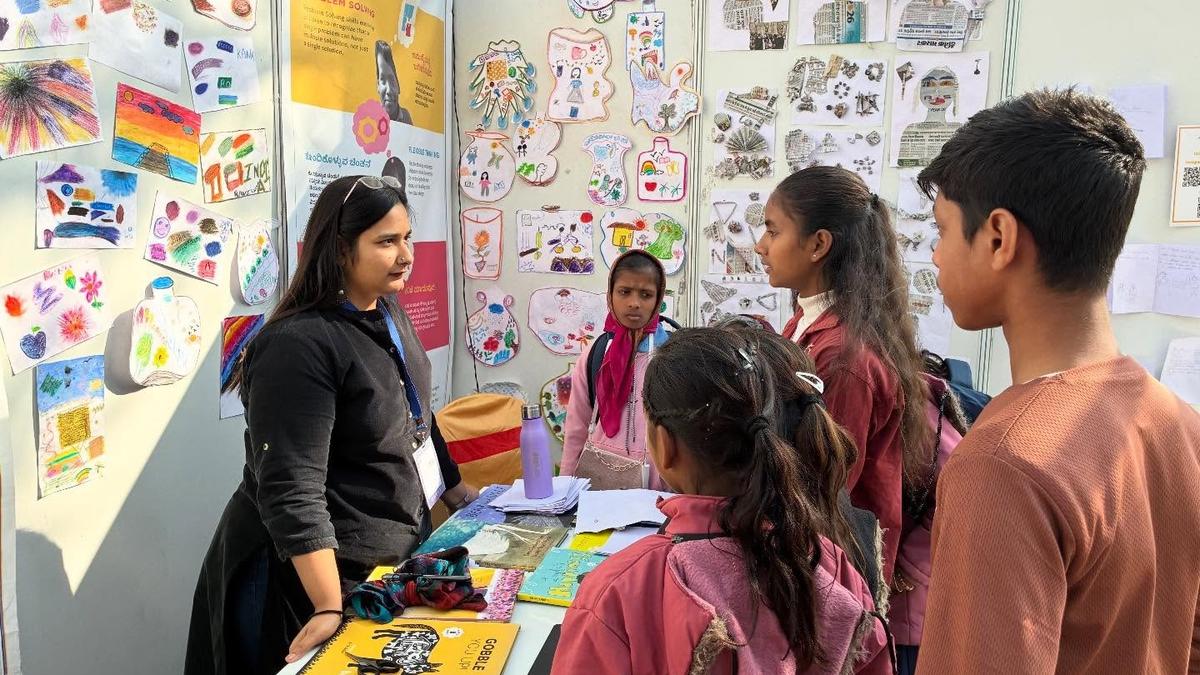
In February this year, Prayog, a children’s library based in Gopalganj, Bihar, organised a children’s literature festival, Udaan, at the Bihar Museum in Patna. Over two days, hundreds of school and college students, educators and parents attended the festival, which was largely considered a success, except for one unsavoury incident.
On the very first day of the festival, a visitor going through the books at a stall put up by Mumbai-based independent publishing platform Blue Jackal, which specialises in comics and visual narratives, started arguing about the content of several of their children’s books. His attention first landed on the comic book Chudail by Lokesh Khodke from Blue Jackal, which depicts a Brahmin woman being possessed by a demon that shows her how unfair her life is.
“He asked me what the book was about and I explained it in brief. Then suddenly, he said, ‘Oh, so this chudail can only enter a Brahmin woman’s body and not any other?’ I told him that this was a creative writing technique and the writer was using the chudail (witch) as a metaphor, that it’s a conversation between these two characters,” says Shefalee Jain, one of the other members of Blue Jackal who was managing their stall that day.
A panel from comic book ‘Chudail’ by Lokesh Khodke.
“But he was not there to listen. He started saying our books were anti-Brahmin, anti-national. He started picking up one book after another, rifling through them, and taking panels and dialogues out of context,” says Jain. Soon, the man started threatening to summon other people to shut down the stall and file an FIR. When the Blue Jackal team returned to the festival the next day, their stall had been dismantled.
The incident spurred the publishing house to look at the landscape of artistic freedom in the country, and the way narratives and voices from the margins are being suppressed because they are deemed “anti-Brahminical” or “anti-national”. There have been several such incidents in the recent past.


Parvathi Nayar’s new exhibition, The Primordial, in Mumbai, traces oceans, pepper and climate change
Opened on March 12, the exhibition marks the artist’s first solo show in Mumbai in nearly two decades. Known for her intricate graphite drawings and multidisciplinary practice spanning installation, photography, video, and climate change, her artistic journey has long engaged with the themes of ecology, climate change and the natural world. In this ongoing exhibition, these strands converge through a series of works centred on water, salt, and pepper — materials that carry natural and historic weight across centuries.

Explore the highlights and key winners of the 98th Academy Awards, featuring memorable moments and historic achievements from Oscars 2026.

Spring season celebrated at Ramakrishna Mission Institute, Kolkata, with ‘Evening of Basant’

The Spirit of the Land, a solo show by artist Shivakumar Sunagar, is a vista of Nature-inspired emotions

Tal Fry is all set for an exciting new performance season

Netflix is making a bold move by snagging InterPositive, the AI filmmaking company founded by Ben Affleck, in a deal that could hit $600 million

Watch the eerie trailer for 'Hokum,' where Adam Scott faces a witch haunting in a mysterious Irish inn.

Oscars 2026 security heightened amid FBI warnings of a potential Iranian drone threat ahead of the Hollywood ceremony.

Directed by Rahul Pandey, the series also stars Naila Grewal, Nidhi Bisht, Anant Joshi, Anjum Batra and Kusha Kapila

A tribute to the versatile actor and comedian V.K. Ramasamy in his birth centenary year.

‘One Piece’ Season 2 review: As the Straw Hats enter the Grand Line, Netflix’s live-action adaptation finds its sea legs with bigger islands, stranger villains and the same stretch-happy sense of boundless adventure

Geeta Gandbhir, the Indian-origin American filmmaker is waves at this year’s Oscars with not one, but two nominations. Her documentaries, ‘The Perfect Neighbor’ and ‘The Devil is Busy’ are in the race for the Academy Award

Directed by filmmaker and environmentalist Pradip Krishen, the film follows a group of "dope-smoking, bellbottom-wearing and vaguely idealistic" final-year students racing to complete their theses.