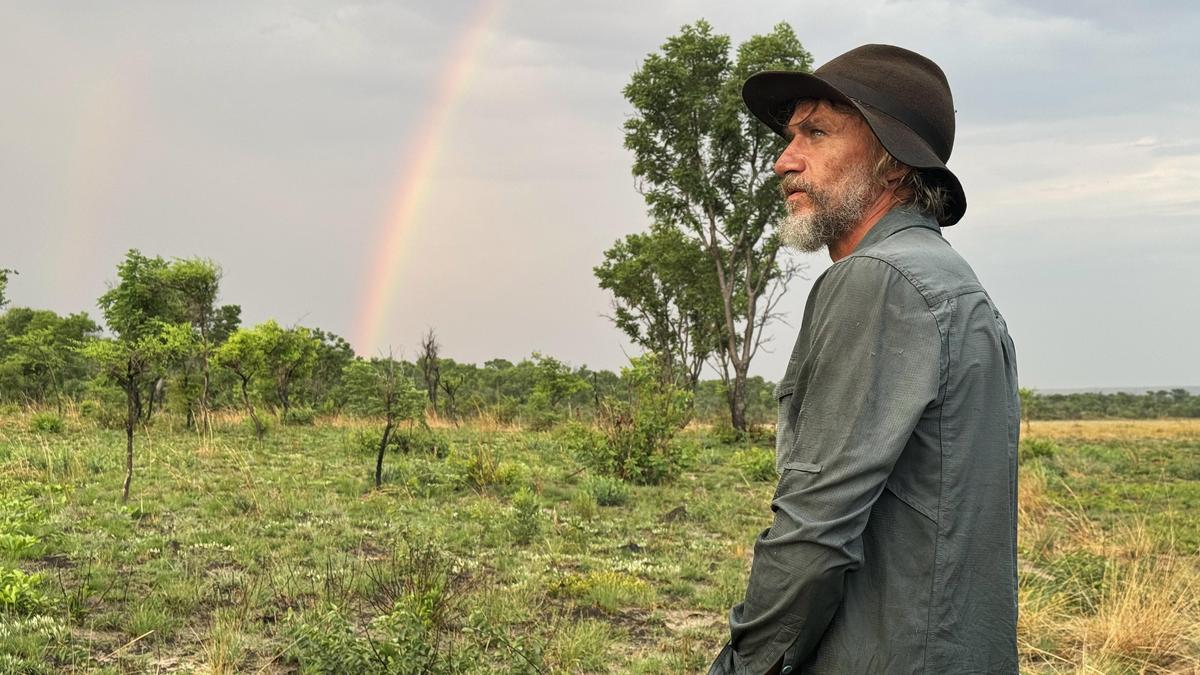
Steve Boyes on ‘Ghost Elephants’: Experiencing the birthplace of science
The Hindu
South African naturalist Steve Boyes speaks on ghost elephants, ancestral tracking, and Werner Herzog’s documentary exploring Angola’s elusive highland giants
Werner Herzog’s new documentary, Ghost Elephants, which had its world premiere at the 82nd Venice International Film Festival, follows South African naturalist Steve Boyes on his quest for an undiscovered species of elephant in the Angolan highlands.
The documentary, which premiered on National Geographic on March 20, is beautifully shot, (the poaching sequences are distressing) and buttressed by Herzog’s distinctive narrative style, tells the tale of these giant, yet elusive creatures.
Boyes has a two-fold plan of action; to capture the mysterious pachyderms on film and to find a DNA link between the ghost elephants and the Fénykövi elephant, a massive specimen in the Smithsonian National Museum of Natural History in Washington DC.
Speaking from New York during the theatrical premiere, Boyes traces the beginnings of his Ahab-like quest. “In 2015, we spent six months in armored vehicles trying to get through minefields to gain access to the source of the Okavango Delta.” They arrived in winter. “Coming out of the Highlands and going through the forests, everything was shut down.”
In an attempt to defeat the silence and stillness, Boyes would go for a run every afternoon when the party stopped on the river. “I would go to the highest ridge and whistle. Once I found footprints of people who had been honey hunting, and I pursued them. I was obsessed, I wanted to meet someone,” Boyes says with a laugh.
On one of those runs, Boyes found elephant dung. “I found what I call an elephant garden, where an old bull elephant lives. He had broken all the trees around to make a clearing, and then broke the tops of trees so they would grow from the bottom, for young elephants to feed on. What he was doing was hoping that when the breeding herds came through, they would stop in his garden, so he could interact with them. He was just a lonely old bull elephant.”


The teaser of Tamil star Suriya’s much-awaited film with director Venky Atluri, titled Vishwanath and Sons, was unveiled by the makers on Monday

A 'Golden' moment for a K-pop track at the Oscars.

Parvathi Nayar’s new exhibition, The Primordial, in Mumbai, traces oceans, pepper and climate change
Opened on March 12, the exhibition marks the artist’s first solo show in Mumbai in nearly two decades. Known for her intricate graphite drawings and multidisciplinary practice spanning installation, photography, video, and climate change, her artistic journey has long engaged with the themes of ecology, climate change and the natural world. In this ongoing exhibition, these strands converge through a series of works centred on water, salt, and pepper — materials that carry natural and historic weight across centuries.

Explore the highlights and key winners of the 98th Academy Awards, featuring memorable moments and historic achievements from Oscars 2026.

Spring season celebrated at Ramakrishna Mission Institute, Kolkata, with ‘Evening of Basant’

The Spirit of the Land, a solo show by artist Shivakumar Sunagar, is a vista of Nature-inspired emotions

Tal Fry is all set for an exciting new performance season

Netflix is making a bold move by snagging InterPositive, the AI filmmaking company founded by Ben Affleck, in a deal that could hit $600 million

Watch the eerie trailer for 'Hokum,' where Adam Scott faces a witch haunting in a mysterious Irish inn.

Oscars 2026 security heightened amid FBI warnings of a potential Iranian drone threat ahead of the Hollywood ceremony.

Directed by Rahul Pandey, the series also stars Naila Grewal, Nidhi Bisht, Anant Joshi, Anjum Batra and Kusha Kapila

A tribute to the versatile actor and comedian V.K. Ramasamy in his birth centenary year.

‘One Piece’ Season 2 review: As the Straw Hats enter the Grand Line, Netflix’s live-action adaptation finds its sea legs with bigger islands, stranger villains and the same stretch-happy sense of boundless adventure