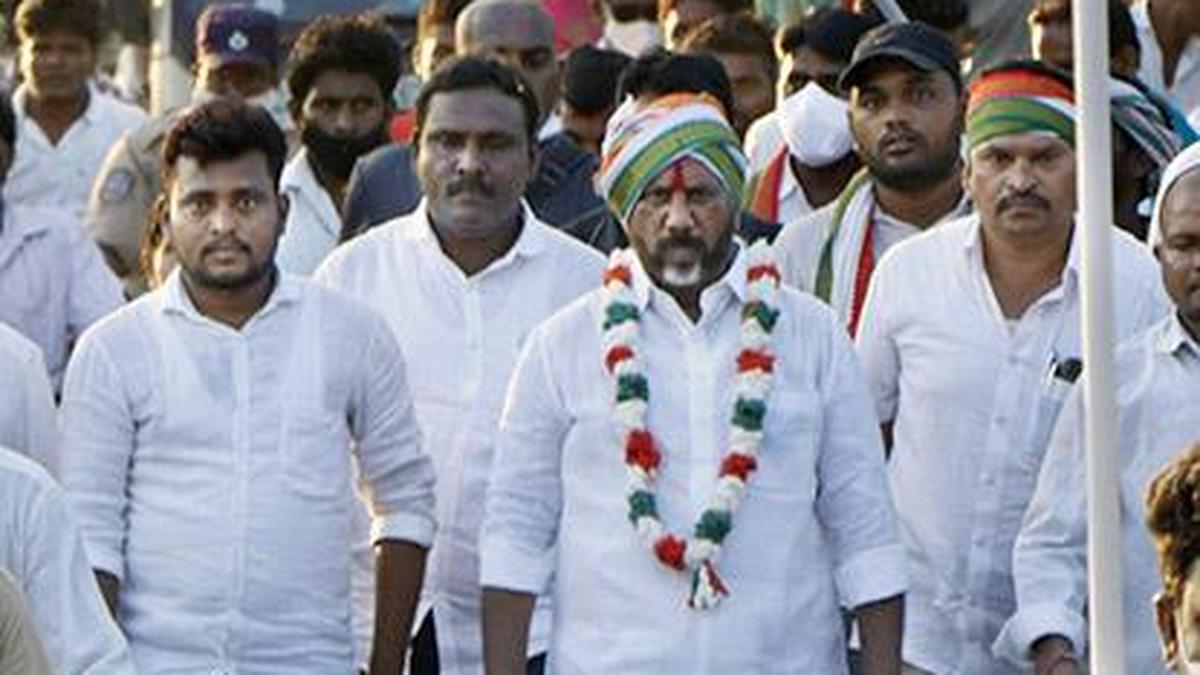
People’s March contributes to Congress’s people-centric governance, accessibility to govt fully ensured: Bhatti on three years of padayatra
The Hindu
Deputy CM Bhatti reflects on Congress's welfare initiatives and the impact of the 'People’s March' on Telangana governance.
It’s close to 30 months since the Congress Government assumed office. How has the ‘People’s March’ goal of reviving the Congress’s image translated into the current Praja Palana model? Is the government successfully maintaining the ‘accessible leadership’ style promised during the yatra?
The People’s March (Padayatra) played a major role in bringing the Congress party to power, and today it continues to contribute to people‑centric governance. Accessibility to the government is now fully ensured; citizens can approach us anytime and from anywhere. We are inviting people to Praja Bhavan, receiving applications under the Praja Palana initiative, and resolving issues continuously. Ministers and MLAs maintain constant contact with the public at the district level. As Deputy Chief Minister, I can say we are fully committed to public service — implementing not only the promises we made but also additional welfare measures. While as the Congress Legislature Party leader I undertook the padayatra meeting the people, then TPCC chief A. Revanth Reddy addressed huge public meetings and the end result is Congress coming to power. To commemorate three years of the padayatra, the Chief Minister and I will address a rally in Pippiri on Monday (April 6, 2026) and fulfill the promises made to the local people.
During the yatra, your focus was on addressing land and housing issues. How effectively has the current administration’s Indiramma Indlu scheme and land regularisation policies addressed grievances gathered during your mass contact programme?
We assured people during the padayatra that an Indiramma government would provide housing support of ₹5 lakh per beneficiary. As promised, after coming to power, we are constructing houses with ₹5 lakh assistance. In the first phase alone, around 4.5 lakh houses were sanctioned, and construction is progressing rapidly. The Indiramma housing scheme will continue as an ongoing process for all eligible beneficiaries. During the previous government, the Dharani system caused hardships to poor and middle‑class citizens. We had promised to abolish it and we did so immediately after coming to power. In its place, we introduced the Bhu Bharati Act, a transparent and accessible system to resolve land‑related issues.
Another important issue you highlighted was the agrarian crisis. To what extent has the government fulfilled the ₹2 lakh crop loan waiver and established a stable system for paddy procurement?
Bhatti: Understanding the challenges faced by farmers, we implemented major reforms. Within the first year of assuming office, farm loans up to ₹2 lakh were waived in a single phase. Over ₹21,000 crore was directly deposited into farmers’ accounts. Earlier, farmers had to protest by dumping their produce due to lack of procurement. Now, we procure every grain produced and ensure payments are credited within a week. During the last Kharif season, the government procured 70.82 lakh metric tonnes of paddy, setting a national record. Additionally, farmers cultivating fine paddy are given a ₹500 per quintal bonus, generating up to ₹25,000 additional income per farmer. This reflects our commitment to agriculture.


Supriya Shrinate likens Kerala's CM Pinarayi Vijayan to Modi, criticizing both for suppressing dissent and manipulating protests.

HRDA urges Telangana government to implement waiting lists in medical recruitments to address unfilled vacancies despite eligible candidates.

Delhi court reserves decision on ED's charges against Robert Vadra in a money laundering case, set for April 15.

Sanmar chairman Vijay Sankar emphasizes resilience in overcoming failure as key to professional success at IIM-T's convocation.

KPME appointed as nodal agency to integrate health services with Karnataka Udyoga Mithra portal for streamlined regulatory approvals.

Prime Minister Modi meets Tamil Nadu BJP leaders to discuss election strategies and address the state’s financial crisis.

Deputy CM Bhatti reflects on Congress's welfare initiatives and the impact of the 'People’s March' on Telangana governance.

Vice President C.P. Radhakrishnan emphasizes Gandhi's non-violence and Bihar's rich legacy at Mahatma Gandhi Central University's convocation.

Explore the intriguing authorship and origins of Raja Ravi Varma's Yashoda and Krishna painting amid a ₹167-crore debate.

Bihar hooch tragedy death toll rises to six; investigations ongoing amid political backlash and arrests linked to spurious liquor.

With CSR support, Ravi Kasi Venkatraman has transformed Maraimalai Adigal Government Higher Secondary School in Pallavaram into a much-respected citadel of learning

NDA stands against interests of Tamil people: Kanimozhi

Voters in Papanasam express frustration over poor amenities, inadequate healthcare, and unaddressed infrastructure needs in their constituency.