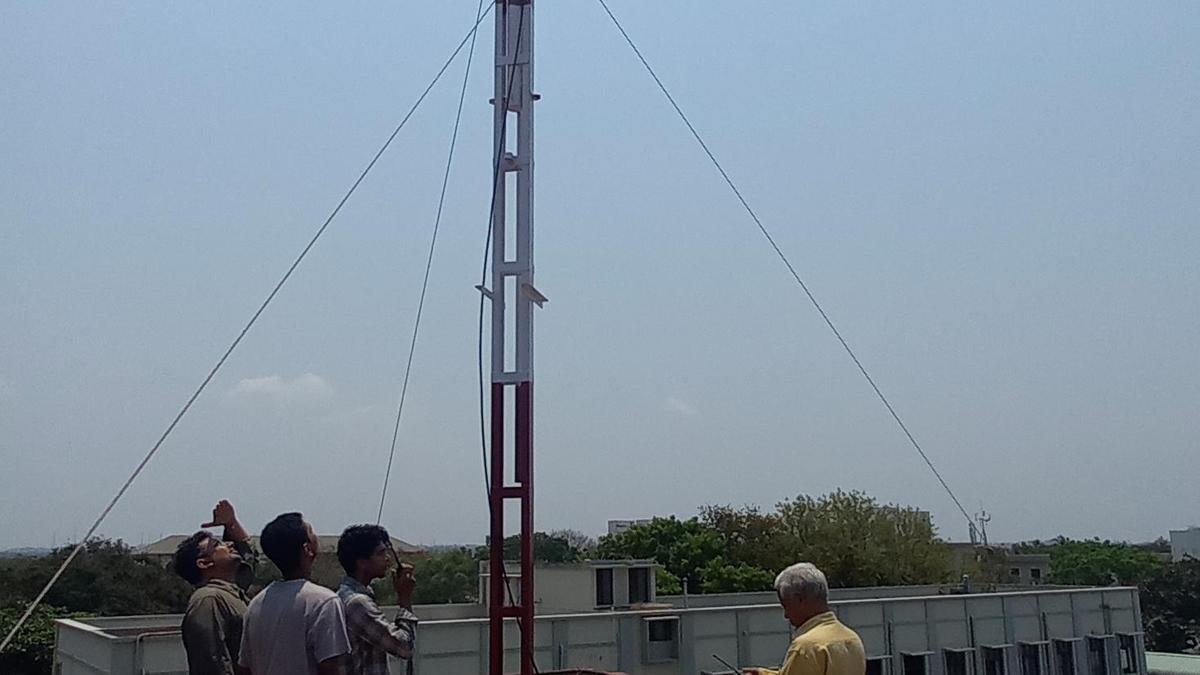
NITK offers alternative to mobile network during emergency, links schools and colleges in coastal Karnataka through HAM radio network
The Hindu
NITK's HAM radio project enhances emergency communication and education across schools and colleges in coastal Karnataka, promoting community resilience.
The National Institute of Technology-Karnataka (NITK) Surathkal has built an emergency communication network using HAM radio across parts of coastal Karnataka to train students on how amateur radio can support basic communication needs during emergencies.
The network has been developed under a CSR-funded project titled ‘Enabling Multi-disciplinary and Broader Radio Applications for Community Empowerment (EMBRACE)’. The project, implemented at the NITK, combines disaster communication, technical education and community outreach using amateur, or HAM radio, wireless communication system that does not rely on mobile phone networks or internet connectivity.
The technology, as per the project coordinators, becomes relevant during floods, cyclones or power outages, when conventional communication systems are often disrupted.
As part of the project, a fully functional amateur radio facility was established on the NITK campus in Surathkal in Dakshina Kannada district of Karnataka. The facility served as the central hub for training programmes, demonstrations, simulated emergency exercises, and coordination of outreach activities.
To extend the initiative beyond NITK, five HAM radio nodal centres were set up in selected schools and colleges in Dakshina Kannada, Udupi, Kodagu and Uttara Kannada districts. These centres, as per the institute, were made operational through structured training of students and teachers, supervised by licensed HAM radio operators.
Over time, the institutions began functioning as local learning and practice points for amateur radio and emergency communication.


KPCC chief Sunny Joseph emphasizes UDF's focus on Sabarimala and corruption while expressing confidence in winning Kerala's upcoming Assembly elections.

A military plane crash in Colombia leaves 125 aboard, with at least 48 survivors rescued amid ongoing recovery efforts.

‘Symposium’, a new platform to promote lifelong learning and counter misinformation among youth, was launched in Hyderabad.

By using TB as an entry point, integrated healthcare delivery can optimise and improve public health efficiency

Residents of Chettichavadi express concerns over deteriorating groundwater quality due to long-standing garbage dumping issues in Salem West.

Community Health Officers in Vijayawada protest for reduced workload and continued incentives amid growing dissatisfaction over salary changes.

Telangana faces 13,929 healthcare vacancies, primarily in doctors and nurses, as recruitment efforts aim to address the shortage.

For most patients with TB who are severely underweight, nutritional support is an essential and not optional part of treatment

Family of custodial death victims demands harsh punishment for nine convicted policemen to prevent future abuses of power.

Rajinikanth refutes TVK leader's claims about DMK threats preventing his political entry, expressing gratitude to supportive political figures.

CM announces Cabinet Sub-Committee on Musi rejuvenation; rehabilitation for all displaced

Ramanathapuram identifies 145 polling stations as sensitive, ensuring security with paramilitary forces ahead of assembly elections, says DEO.

BJP Puducherry president V. P Ramalingam files nomination for Raj Bhavan, joined by Union Minister Mandaviya and Khushbu Sundar.