New school programme empowers students to tackle technology-facilitated harm
India Today
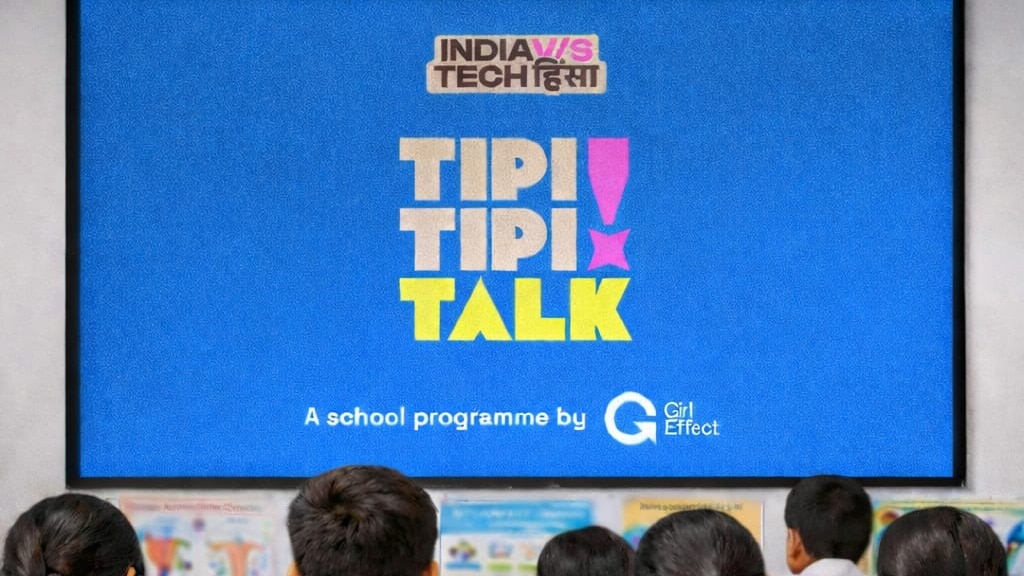
Girl Effect India has launched Tipi Tipi Talk, a school-based programme promoting safer internet use among adolescents. The initiative addresses rising online risks and technology-facilitated harm, aiming to empower young people with digital safety skills.
On the occasion of Safer Internet Day, Girl Effect India announced the launch of a new school-based initiative aimed at promoting safer and more responsible internet use among adolescents. Designed for students in Classes 8 to 12, the programme focuses on building awareness around online safety, respectful digital behaviour, and the risks associated with technology-facilitated harm. Through interactive classroom sessions and peer-led discussions, the initiative seeks to create safe spaces within schools for young people to talk openly about their online experiences, while equipping them with practical skills to navigate digital platforms responsibly.
Girl Effect India announced the launch of Tipi Tipi Talk, an interactive school-based programme that helps young people talk about issues that concern them, build confidence, and spark open conversations on various topics including navigating the online world safely and respectfully. The first “Talk” is called the “TechHinsa Talk” that is part of Girl Effect India’s broader India vs Tech Hinsa campaign, which takes head-on the growing challenge of technology-facilitated gender-based violence (TFGBV).
Delivered through structured workshops at school, the programme also creates safe spaces for peer learning. It establishes Digital Safety Clubs and trains students as Digital Safety Ambassadors to lead conversations and promote safer online practices within their schools. In its current rollout, the initiative will be implemented in Delhi across 45 schools, reaching 45,000 students, establishing 45 Digital Safety Clubs, and training 225 Digital Safety Ambassadors.
Speaking about the initiative, Kavita Ayyagari, Country Director, Girl Effect India said “Today’s generation is growing up online and the internet can become a dark place, if young people are not taught how to safeguard themselves. With growing instances of online harm against girls, we need to teach them how to be safe. For boys, we need them to be empathetic friends and be responsible.
For girls especially , internet safety matters more because it is tied to freedom — freedom to learn, to speak, to create, and to belong. As digital use continues to grow, understanding and acting on online risks isn’t optional — it’s essential. Tipi Tipi Talk is an initiative to help boys and girls to talk about TechHinsa and learn to navigate digital spaces safely and responsibly,”
Digital platforms are now an integral part of young people’s lives — but so are the risks. Globally, one-third of all internet users are children, and in India alone, an estimated 15% of active internet users are between the ages of 5 and 11. As children and adolescents come online earlier and in greater numbers, exposure to technology-facilitated harm has risen sharply. Data from the National Crime Records Bureau show that reported cybercrimes against women increased from 8,379 cases in 2019 to 14,409 in 2022, marking a 71% rise over four years. The increase has been even more pronounced for children: cybercrime cases reported against minors rose from 305 in 2019 to 1,823 in 2022, representing a 497% increase in the same period.These harms are not just statistics; they shape young lives. “The more I scroll, the more I see judgment, rumours, and pressure — and it gets hard to separate real connection from hurt,” says Tanya (name changed), a 17-year-old student and social media user. “Girls are expected to be careful, but we’re not taught how to protect ourselves online.”


Short kurtas paired with loose pants and dupattas were a big trend in the 2000s Bollywood, and now, they seem to be catching on in the West too.

Pinterest CEO Bill Ready wants governments to ban social media for teenagers under 16, saying current platforms are harming young people's mental health and development.

Delhi is strengthening its push for UPSC success by recognising top achievers and improving support for aspirants. In a first-of-its-kind initiative, the government engaged directly with successful candidates to understand their preparation journey.

Paul McCartney's last solo album, McCartney III (2020), recorded during the pandemic, topped UK charts, marking his first solo number one since 1989, showcasing his creative freedom and personal musical expression.

ICAI CA Final January 2026 results have been declared today, March 1. Candidates who appeared for Group 1 and Group 2 exams can now check their scorecards, merit list and All India Rank holders on the official website, icai.nic.in. Direct result link is now active.

Pinterest CEO Bill Ready wants governments to ban social media for teenagers under 16, saying current platforms are harming young people's mental health and development.

Reddit is exploring biometric verification methods such as Face ID and Touch ID to ensure users are real humans, not bots, while pledging to maintain the platform's tradition of anonymity. CEO Steve Huffman said the company is planning to address the rising influence of AI-generated content and protect authentic user engagement.

Delhi is strengthening its push for UPSC success by recognising top achievers and improving support for aspirants. In a first-of-its-kind initiative, the government engaged directly with successful candidates to understand their preparation journey.

WhatsApp is reportedly working on a new privacy feature that will allow messages to automatically disappear shortly after being read. The upcoming feature, called "After reading," is expected to give users more control over their conversations, especially when sharing sensitive information.

RBSE Class 10 Result 2026 is expected to be declared soon, with students eagerly awaiting the official announcement date and time. The Rajasthan Board 10th result will be available online, making it important for students to stay updated on where and how to check their scores quickly.

In a push towards more inclusive school environments, the Central Board of Secondary Education has rolled out fresh directives on menstrual hygiene across its affiliated institutions. The move comes after a landmark ruling by the Supreme Court of India that places menstrual health within the framework of fundamental rights.

Tata Motors has introduced a more affordable dual-motor QWD variant of the Tata Harrier.ev, bringing all-wheel drive capability and strong performance to a wider audience at a lower entry price.