CBSE's new menstrual hygiene rules every student and parent must know
India Today
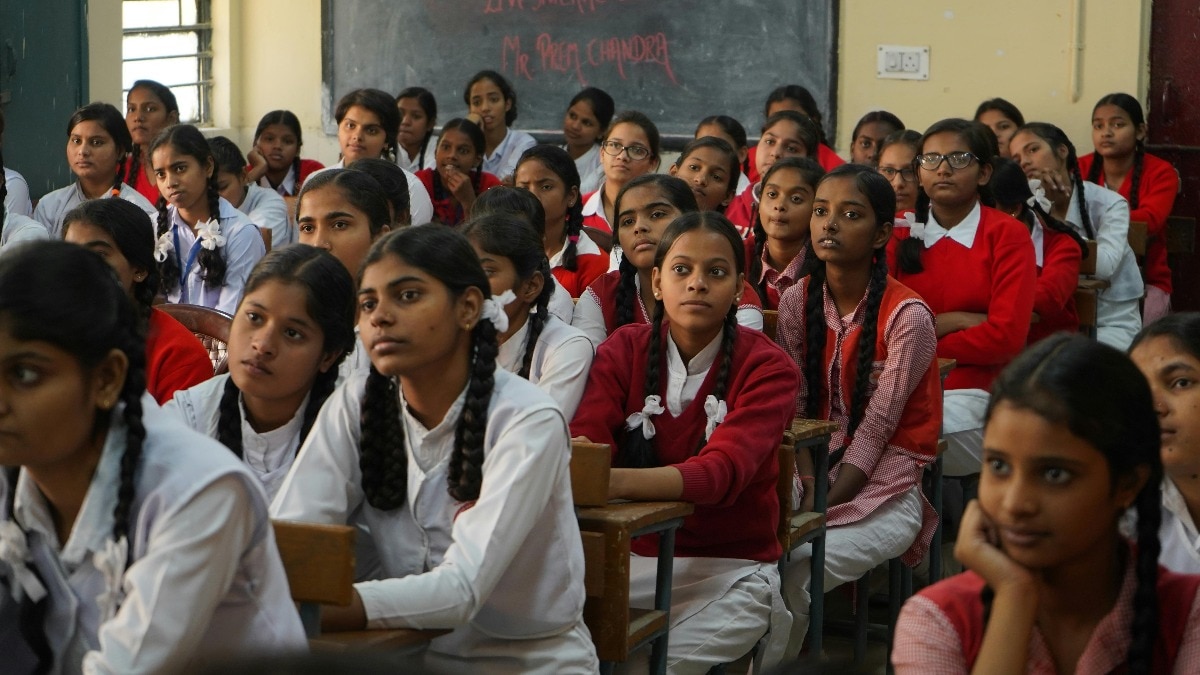
In a push towards more inclusive school environments, the Central Board of Secondary Education has rolled out fresh directives on menstrual hygiene across its affiliated institutions. The move comes after a landmark ruling by the Supreme Court of India that places menstrual health within the framework of fundamental rights.
In a significant move aimed at strengthening student welfare, the Central Board of Secondary Education (CBSE) has instructed all affiliated schools to implement comprehensive menstrual hygiene management (MHM) practices.
The directive follows a recent judgment by the Supreme Court of India, which recognised menstrual health as an essential component of the right to dignity under Article 21.
In its January 20, 2026 ruling, the apex court underscored that access to safe menstrual hygiene is not merely a health concern but a constitutional guarantee. It highlighted how inadequate facilities and persistent stigma often disrupt girls’ education, leading to absenteeism and, in some cases, early dropouts.
The court called on authorities to ensure that schools become safe and supportive spaces for adolescent girls.
Acting on the directions shared by the Ministry of Education, CBSE has outlined a set of mandatory measures for schools. Institutions are required to upgrade sanitation infrastructure, including clean, private toilets and washing areas exclusively for girls.
Schools must also ensure easy access to sanitary napkins, preferably biodegradable, and establish dedicated MHM corners within campuses. Proper disposal systems for menstrual waste have been made compulsory to maintain hygiene and environmental safety.


The Centre has told the Supreme Court it has set up a three-member panel to rewrite the NCERT Class 8 judiciary chapter after a controversy over references to corruption. The court has now closed proceedings, while NCERT had earlier withdrawn the chapter and halted textbook sales.

Amazon is reportedly planning to make a re-entry into the smartphone market, going up against the likes of Apple and Samsung. The company's first attempt at smartphones with the Fire Phone led to a loss of $170 million in 2014.

US authorities have arrested Super Micro Computer Co-founder Wally Liaw for allegedly smuggling $2.5 billion worth of Nvidia-powered AI servers to China. The case comes at a time when the US is tightening export rules to stop advanced AI hardware from reaching China amid the growing AI rivalry between the two countries.

WhatsApp is reportedly set to launch usernames on its platform, like Instagram and Telegram. This will let users communicate without sharing phone numbers, providing them with an extra layer of privacy.

Nvidia CEO Jensen Huang has urged tech leaders to stop scaring people over AI's capabilities amid Anthropic's fallout with the Pentagon. Huang also addressed fears regarding job losses, saying that AI may allow companies to hire more.

CBSE schools are set to begin the new academic session from April 1, but the new NCERT Class 9 books are not ready yet. NCERT said the Class 9 books are still under development. CBSE schools now face uncertainty, while teachers are being asked to bridge the gap for students.

In less than two days, Meta has changed its mind on the Metaverse. The company has confirmed that it will not be shutting down its metaverse platform, Horizon Worlds for VR headsets. The announcement comes after Meta received feedback from users.

OpenAI is set to build a super app that combines ChatGPT, its coding agent Codex, and its web browser Atlas into a single platform. This announcement comes after the Sam Altman-led firm went into "code red" as rival Anthropic's Claude Code gained a lead in the developer space.

A humanoid robot was "arrested" by police in Macau after it unintentionally shocked an elderly woman during her evening walk. The elderly woman reportedly lashed out at the robot and was so startled that she had to go to a hospital due to shock.

The US and China are in the middle of an AI race. Elon Musk believes that China will win this race, although he says that when it comes to space his own company SpaceX will be the ultimate AI winner.

A video has gone viral on social media that shows a humanoid robot in a restaurant that decides to give up work to dance. The robot creates such chaos that even the restaurant's staff is unable to stop it.

Screen addiction is no longer just a Gen Z problem. According to recent studies and reports, elderly are now spending just as much, if not more, time on smartphones, TVs and social media. Researchers say this rising screen time among boomers and retirees may also have serious effects on their health.
