New infectious diseases among bees threaten world’s economies Premium
The Hindu
Research has uncovered the transmission of pathogens between managed honey bees and wild pollinators, a process called pathogen spillover and spillback
A significant chunk of the world’s agricultural productivity and nutritional security relies on small insect pollinators. More than 75% of food crops, fruits, and flowering plants need bees, wasps, beetles, flies, moths, and butterflies to yield successful harvests.
This is why threats to insect pollinators, including pesticides, pollution, and climate change, endanger the economies of entire countries. A new actor on this list is infectious diseases made worse by habitat loss.
While the declining populations of pollinators, particularly bees, has been well-documented in Europe and North America, data from biodiversity-rich regions like the Indian subcontinent are scarce. In fact, most of what scientists know about bees comes from research on managed western honey bees (Apis mellifera).
“In many cases, wild bees are more efficient pollinators than the western honey bees. It is essential to study wild bee communities and look at their state of health,” Corina Maurer, a postdoctoral researcher at ETH Zürich, wrote in an email to this reporter.
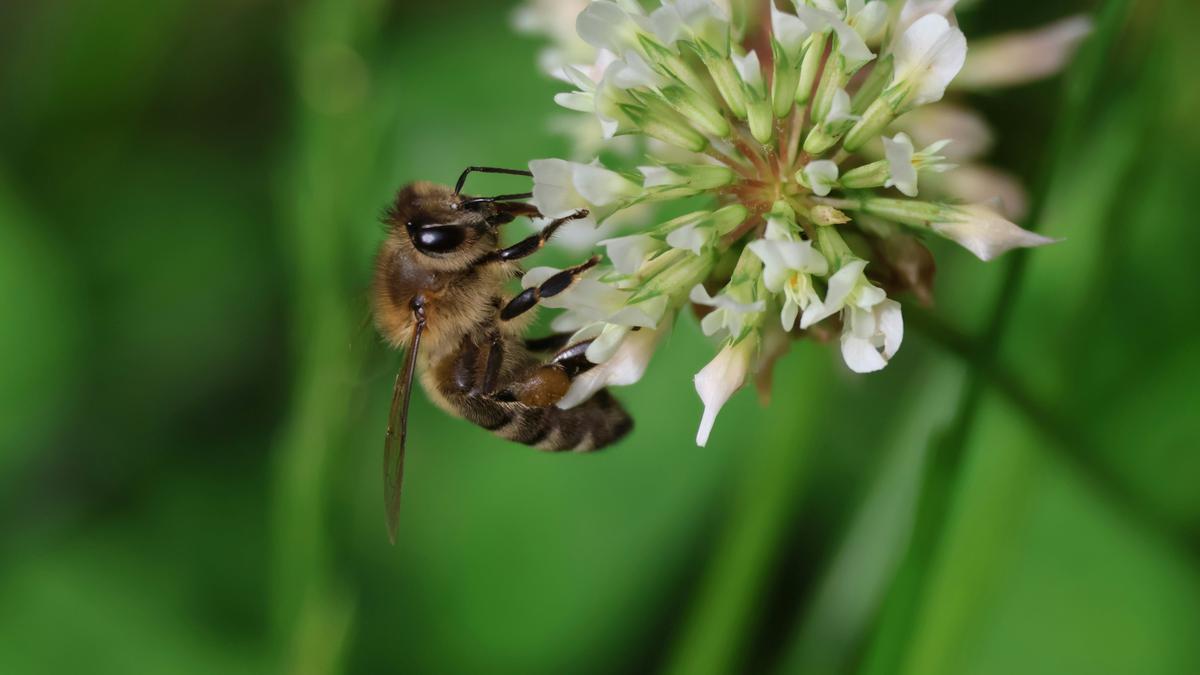
Research has uncovered the transmission of pathogens between managed honey bees and wild pollinators, a process called pathogen spillover and spillback. Western honey bees are often viral reservoirs and can infect wild species when they share habitats. These emerging infectious diseases also threaten the wider pollinator community.
Maurer and her team recently published a paper in Nature Ecology and Evolution exploring the presence of deformed wing virus and black queen virus in 19 wild bee and hoverfly species across different landscapes in Switzerland. They found higher loads of these pathogens in wild pollinators that used floral resources the honey bees accessed as well. The loads were 10-times higher among the wild pollinators in these shared habitats.
Based on these findings, the researchers suggested that diverse pollinator-friendly habitats with more floral resources lowered the chance of pathogens being transmitted between wild pollinators and managed western honey bees. Habitat loss, on the other hand, could force pollinators into smaller suitable habitats and increase the risk of disease transmission.


The BMW X3 30 xDrive M Sport Pro blends sporty performance with everyday luxury, powered by a 258 hp 2.0-litre TwinPower Turbo engine and BMW’s xDrive all-wheel-drive system. With bold M Sport styling, a high-tech Curved Display running Operating System 9, advanced driver assistance features, and genuine off-road capability, the latest X3 delivers a versatile premium SUV experience that excels on city roads, highways, and beyond.

Explore the concept of 'snowball earth' and recent findings on climate variability during this ancient icy period.

A riot of capes, corsets, and carefully crafted armour took centrestage as Chennai Comic Con wrapped up at the Chennai Trade Centre, with cosplay emerging as the undisputed showstopper. From anime icons and gaming legends to beloved Indian comic characters, over 500 fans transformed the venue into a living, breathing multiverse, showcasing how Chennai’s fandom culture has evolved, placing the city on India’s pop culture map.

Warmer oceans and depleting food have affected the ubiquitous loggerhead turtle’s reproductive and migratory patterns — and even its size.

Toyota Urban Cruiser Ebella review: Explore design, range, features, ride comfort and safety of Toyota’s new electric SUV for India. Expected price ₹14–18 lakh, with up to 500 km claimed range and practical urban usability.

Explore India's potential in bio-based chemicals and enzymes, highlighting industry leaders and challenges in sustainable manufacturing.

Astronomers discover an unusual planetary system with a rocky planet formed outside its gaseous neighbors, challenging existing formation theories.

Four new astronauts arrive at the ISS to replace a crew evacuated due to a serious health issue.

Neurobehavioural therapy can transform brain connectivity in functional neurological disorders, highlighting the link between cognition, emotion, and behavior.

The centuries-long quest for synthetic diamonds, also known as lab-grown diamonds or human-made diamonds, came to an end in 1954-55. On February 15, 1955, the creation of the first synthetic diamonds were announced, and it was quickly picked-up by newspapers around the world. A.S.Ganesh tells you more about these diamonds and the man who first made it happen…

Kadhambari S. Viswanathan highlights online education's evolution and its coexistence with traditional methods at The Hindu Tech Summit 2026.

The Hindu science quiz on Charles Darwin on February 13 2026

Explore the immersive art exhibit "A Story in Red" in Fort Kochi, featuring 13 installations celebrating memory, culture, and emotion.