NEP 2020 focuses on skills, but are students really learning? Experts explain
India Today
As NEP 2020 places strong emphasis on skill-based education, education leaders at the India Today Education Conclave 2026 evaluate whether classroom learning is improving and producing measurable outcomes.
Even as India has largely addressed the challenge of school access, the crisis of learning remains unresolved. This was the central takeaway from a wide-ranging discussion at the India Today Education Conclave 2026, where education leaders cautioned that high enrolment figures often mask deep and persistent learning deficits, particularly beyond the primary years.
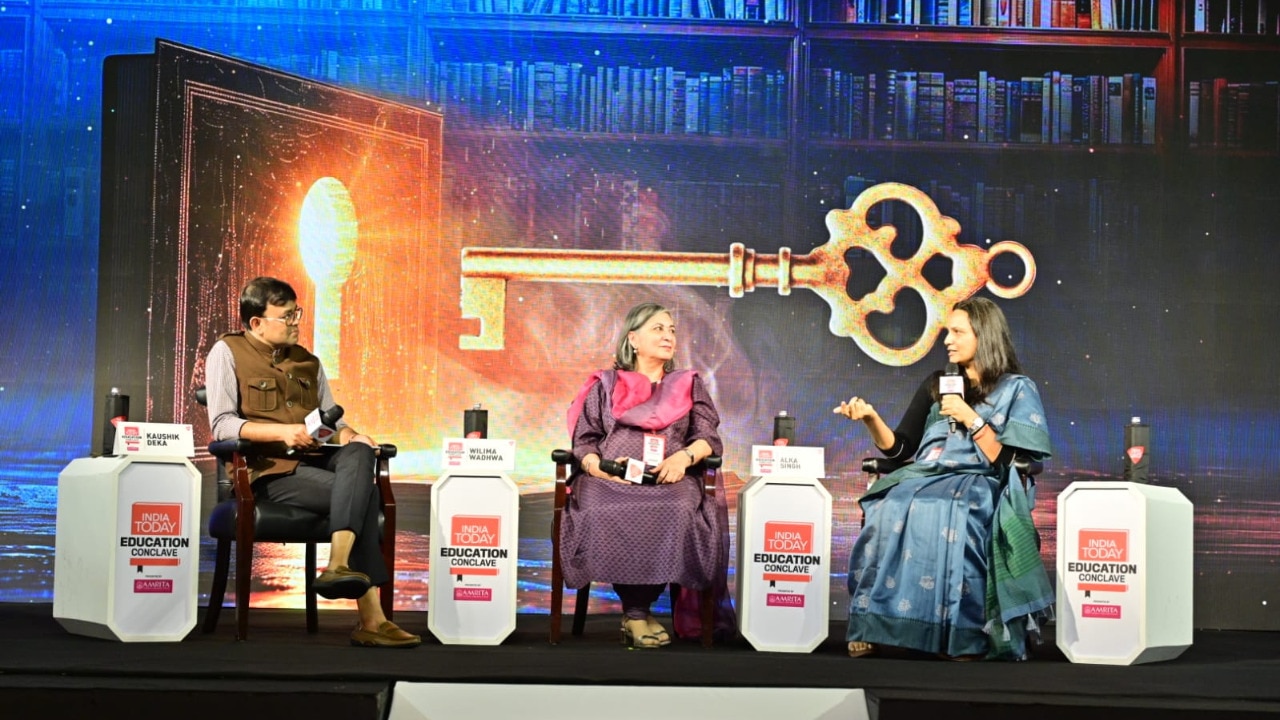
Speaking during the session “From Enrollment to Outcomes: How to Fix India’s Learning Gap”, Wilima Wadhwa, Director of the ASER Centre, and Alka Singh, Head of Partnerships at Educate Girls, offered a ground-level perspective on why many children continue to fall behind despite being in school, and outlined what systemic changes are needed to reverse the trend and improve learning outcomes.
Opening the conversation, Wilima Wadhwa traced the roots of India's learning crisis back to a long-standing assumption: that schooling automatically leads to learning.
"We began ASER in 2005 when nobody was really talking about learning outcomes," Wadhwa said, recalling how global and national policy debates were then focused almost entirely on enrolment. "Schooling was equated with learning."
ASER's findings disrupted that belief. Even before the Right to Education Act, more than 90% of children were enrolled in school, yet learning levels were alarmingly low.
"For years, about 50 percent of children in Grade 5 could not read a simple Grade 2-level text. That number just wouldn't move," she said.


Short kurtas paired with loose pants and dupattas were a big trend in the 2000s Bollywood, and now, they seem to be catching on in the West too.

Pinterest CEO Bill Ready wants governments to ban social media for teenagers under 16, saying current platforms are harming young people's mental health and development.

Delhi is strengthening its push for UPSC success by recognising top achievers and improving support for aspirants. In a first-of-its-kind initiative, the government engaged directly with successful candidates to understand their preparation journey.

Paul McCartney's last solo album, McCartney III (2020), recorded during the pandemic, topped UK charts, marking his first solo number one since 1989, showcasing his creative freedom and personal musical expression.

ICAI CA Final January 2026 results have been declared today, March 1. Candidates who appeared for Group 1 and Group 2 exams can now check their scorecards, merit list and All India Rank holders on the official website, icai.nic.in. Direct result link is now active.

Pinterest CEO Bill Ready wants governments to ban social media for teenagers under 16, saying current platforms are harming young people's mental health and development.

Reddit is exploring biometric verification methods such as Face ID and Touch ID to ensure users are real humans, not bots, while pledging to maintain the platform's tradition of anonymity. CEO Steve Huffman said the company is planning to address the rising influence of AI-generated content and protect authentic user engagement.

Delhi is strengthening its push for UPSC success by recognising top achievers and improving support for aspirants. In a first-of-its-kind initiative, the government engaged directly with successful candidates to understand their preparation journey.

WhatsApp is reportedly working on a new privacy feature that will allow messages to automatically disappear shortly after being read. The upcoming feature, called "After reading," is expected to give users more control over their conversations, especially when sharing sensitive information.

RBSE Class 10 Result 2026 is expected to be declared soon, with students eagerly awaiting the official announcement date and time. The Rajasthan Board 10th result will be available online, making it important for students to stay updated on where and how to check their scores quickly.

In a push towards more inclusive school environments, the Central Board of Secondary Education has rolled out fresh directives on menstrual hygiene across its affiliated institutions. The move comes after a landmark ruling by the Supreme Court of India that places menstrual health within the framework of fundamental rights.

Tata Motors has introduced a more affordable dual-motor QWD variant of the Tata Harrier.ev, bringing all-wheel drive capability and strong performance to a wider audience at a lower entry price.