Modakkurichi struggles to bridge gap between agrarian strength and development
The Hindu
Explore Modakkurichi's agrarian challenges, development gaps, and tourism potential as it gears up for the upcoming elections.
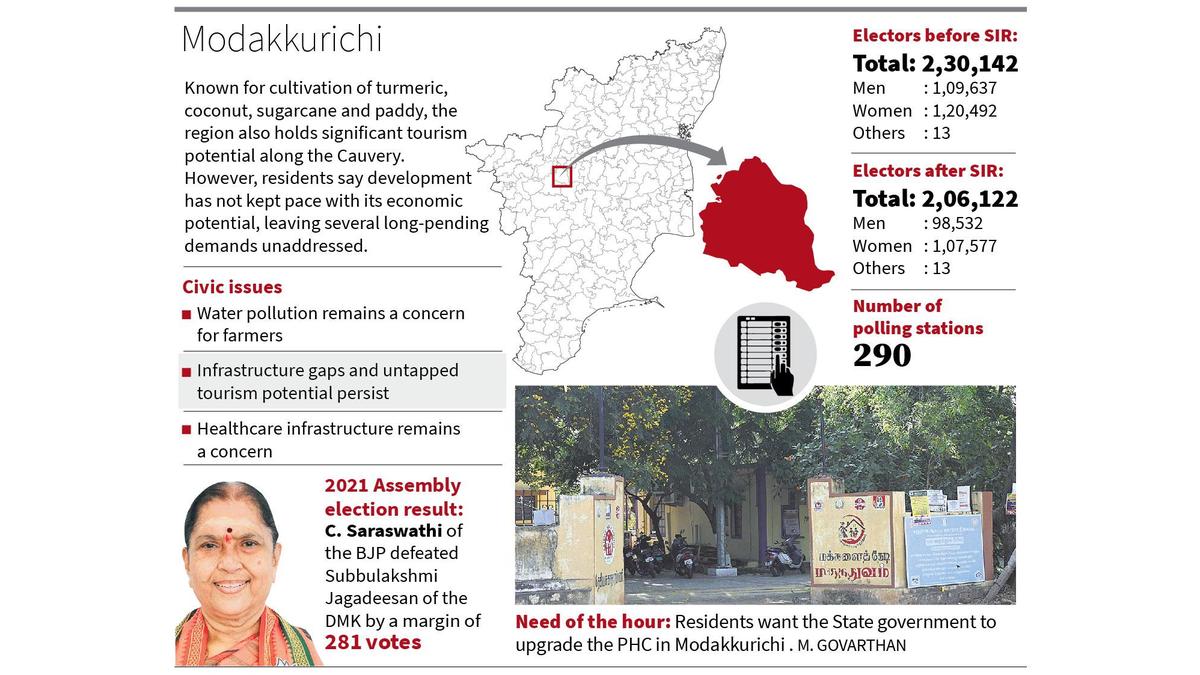
The largely agrarian Modakkurichi constituency continues to suffer from infrastructure gaps and environmental issues.
Known for cultivation of turmeric, coconut, sugarcane and paddy, the region also holds significant tourism potential along the Cauvery. However, residents say development has not kept pace with its economic potential, leaving several long-pending demands unaddressed.
Modakkurichi entered the national spotlight during the 1996 Assembly election, when 1,016 farmers contested as independents to press for their demands. This highlighted deep agrarian distress and contributed to electoral reforms. Many of the issues raised then, particularly those related to farm incomes, irrigation and infrastructure, persist.
Agriculture is supported by the Kalingarayan Canal and the Lower Bhavani Project Canal. In recent years, cultivators have flagged pollution in these channels with release of untreated effluents from textile and dyeing units. The contamination has affected water quality and soil health and farmers are reporting declining yields, labour shortage and rising input costs.
Turmeric, the region’s principal crop, has not ensured stable returns, and the farmers seek a fair and predictable pricing mechanism. Long-pending proposals for cold storage units, food processing industries and other value-addition facilities remain unmet, limiting income prospects. The absence of basic agricultural infrastructure, including soil and water testing laboratories, has compounded these challenges.
The constituency has a notable religious tourism footprint. The Arulmigu Magudeswarar Temple at Kodumudi attracts devotees from across the State and neighbouring regions. The Arulmigu Nattatreeswarar Temple at Kangayampalayam is another unique attraction. Tourism infrastructure, including amenities and accommodation, remain underdeveloped, limiting the region’s ability to fully leverage its potential. While powerlooms, rice mills and small industries provide employment, skilled and educated youth say opportunities remain limited.


India pledges 60% non-fossil fuel power by 2035, targeting 47% emissions reduction per GDP unit and enhanced carbon sinks.

Supreme Court rules land acquisition compensation and interest must uphold constitutional guarantees, unaffected by financial burdens.

Election officials accept 23 nominations for Bagalkot bypolls, rejecting three, with polling scheduled for April 9.

Students and women’s self-help groups in Madurai engage in vibrant voter awareness campaigns promoting 100% voting participation.

Congress signals a "friendly fight" with allies in select Puducherry Assembly seats ahead of the April 9 elections.

Airstrike in western Anbar kills 7 Iraqi soldiers, injures 13, prompting condemnation for violating international laws on medical facilities.

Plaque unveiled in Bengaluru honors 11 victims of RCB stampede, emphasizing safety responsibility for future events.

India and the U.S. reaffirm commitment to enhance strategic defense cooperation at the 18th Defence Policy Group meeting in New Delhi.

Chhattisgarh's Deputy CM reports only 30-40 Maoists remain in Bastar, highlighting recent surrenders and future development plans.

Explore the historical and industrial significance of Ariyalur constituency, highlighting its challenges, agriculture, and political landscape.

Dindigul and Madurai Collectors conduct joint inspection

In this episode, Kalki Subramaniam speaks to us about why the Transgender Persons Amendment Bill has sparked protests, and how these amendments threaten to push a marginalised community back into the shadows.

India's EU FTA is poised to attract more German companies, boosting bilateral trade and investment opportunities.