‘Members of the Problematic Family’ movie review: R Gowtham’s explosive Tamil funeral drama
The Hindu
‘Members of the Problematic Family’ movie review: Tamil indie’s bold new voice R Gowtham’s debut film, which premiered in the Forum sidebar of Berlinale 2026, is an unorthodox, audacious, rare family drama
As R Gowtham’s debut feature rolls out, you wonder if you are in another Ee.Ma.Yau. (Lijo Jose Pelliserry) or Shavam (Don Palathara) ride. Here is yet another funeral film, but unlike anything one has seen before. Gowtham’s Tamil roller-coaster family-drama, Members of the Problematic Family (Sikkalana Kudumbathin Uruppinarhal), goes all Paul Thomas Anderson in Chennai’s Red Hills suburbs.
Gowtham’s film — developed at the NFDC Film Bazaar, produced by him and his friends at Library Narratives and another friend’s outfit Potato Eaters Collective — just premiered in the Forum segment of the 76th Berlin International Film Festival. It is the fourth Tamil film to screen in this segment, after Mani Ratnam’s Alaipayuthey (2001), Ameer’s Paruthiveeran (2008) and PS Vinothraj’s Kottukkaali (2024).
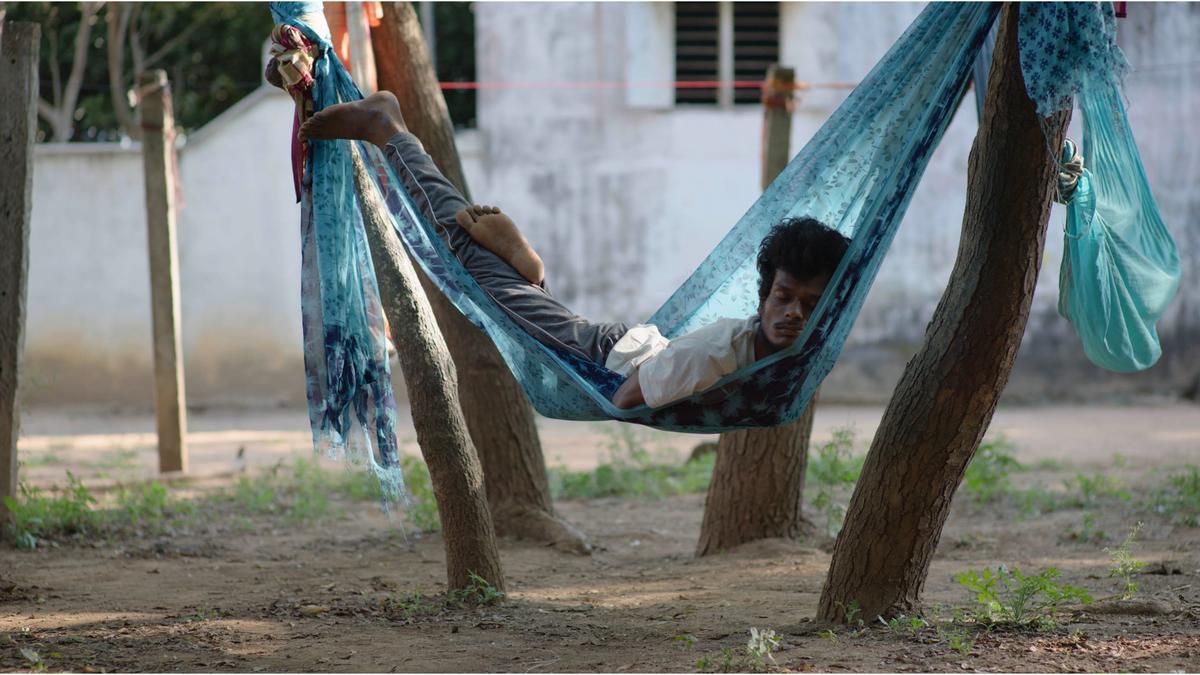
Members of the Problematic Family defies definitions, formal straitjacketing and even cinematic structure. Gowtham throws the plot out of the window. The cultural setting is familiar, but the filmmaker surprises you by sewing images and eking out a singularly riveting non-linear narrative. Raw, absurd, and with a wild energy bubbling over, the film will shock you in every aspect. It upends previously held notions of cinematic formalism. Here is a self-assured debut that unfolds backwards, from a funeral and into a character study of Prabha (A Ra Ajith Kumar) and through him, of others, each character wretched in their own way.
This is also a mother-son story, an upending of the Oedipal complex, of Shanthi and Prabha. One is as busy, running the household round-the-clock, as the wayward other whiles away his time and seeks her attention and lost love for him. Their outbursts and frustrations boomerang off each other. It perhaps draws from one phrase Nietzsche wrote in his Wahnbriefe (“madness letters”), before his death, after his mental collapse to his mother: “Mutter, ich bin dumm (Mom, I am a fool).” That fragile psychological state Prabha embodies, but he couldn’t say those words to his own mother. Prabha is an alcoholic, but his needs are not illogical.
.
Structurally, this film is like a novella. Divided into four incomplete chapters — with Wes Anderson-like titles — the film begins with Prabha’s funeral and ends with his final dream. Gowtham eschews the Aristotelian structure, avoids action and reaction, and instead shows fragments. Each character is incomplete and doubtful.


Medical Education Minister Sharanprakash Patil said in Mangaluru on Friday that the government will invite bids for constructing the Government Medical College at Puttur once the State Cabinet approves the project.

Trinamool Congress celebrates the Supreme Court's order for judicial officers in West Bengal's electoral roll revision, criticizing the Election Commission.

Resonance college achieves unprecedented success in JEE Main

Mahatma Gandhi Park in Shivamogga unveils a Wildlife Interpretation Centre and Science Park, promoting wildlife appreciation and education.

Major crackdown on illegal mining leads to 19 arrests, recovery of 245 MT sand, and seizure of 24 vehicles in Hyderabad.

Book on Medaram Jatara released

CIIL emphasises the importance of multilingualism and mother tongue education for equity and cultural identity on International Mother Language Day.

‘Members of the Problematic Family’ movie review: Tamil indie’s bold new voice R Gowtham’s debut film, which premiered in the Forum sidebar of Berlinale 2026, is an unorthodox, audacious, rare family drama

Akasa Air's Bengaluru-Delhi route is the top choice for pet travel, reflecting a growing trend among pet parents.

Erode–Karur and Erode–Kangeyam roads to be widened to four lanes, enhancing connectivity and reducing traffic congestion.

Mango orchards in Telangana flourish this season but face thrips infestations; experts recommend management practices for farmers.

GBA Chief Commissioner sets July deadline for Bengaluru's Ejipura Flyover completion, urging increased manpower and expedited work.

The Plastic Park project at Ganjimutt on the outskirts of Mangaluru is likely to be inaugurated before this monsoon, according to Dakshina Kannada Member of Parliament Captain Brijesh Chowta.